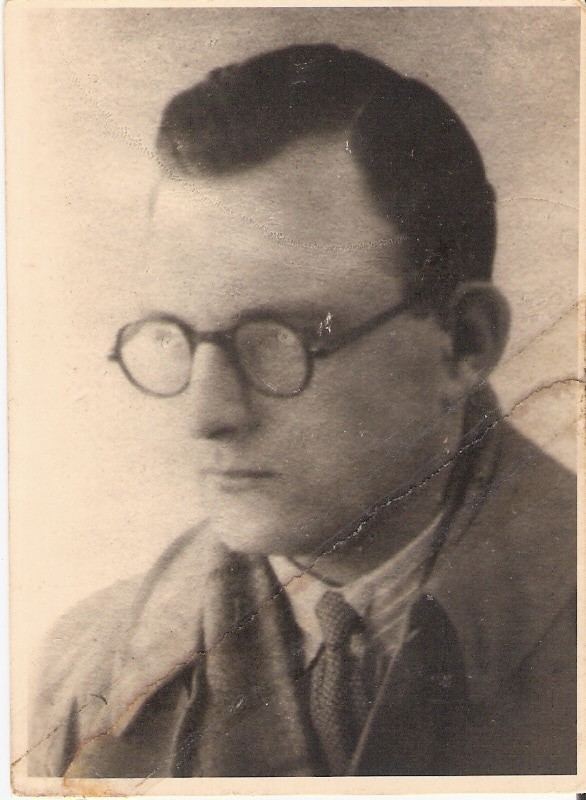
Part 2 of a two-part series on Jan Emmer by Erik Schaap, reproduced with the author’s kind permission from www.meitotmei.nl. For part 1, see: Five “Engelandvaarders” and their nerve-racking crossing – Museum Engelandvaarders.
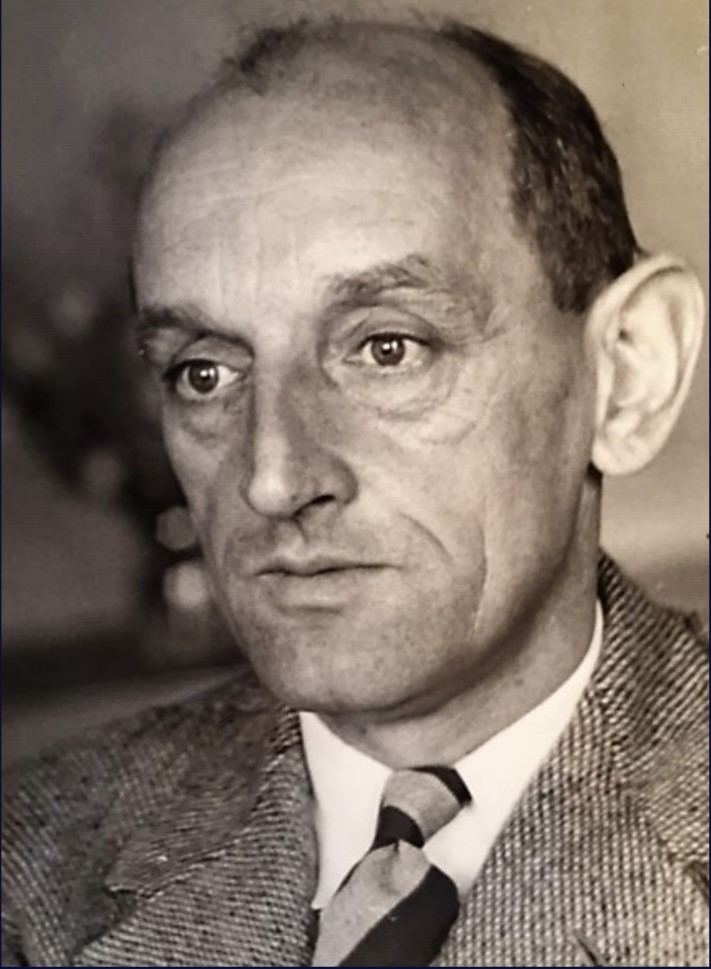
Of the 54 Dutchmen who lost their lives in the so-called Englandspiel, two came from the Zaan region. I wrote an earlier article about George Louis Jambroes. Jan Emmer, born in Wormer, deserves at least as much attention and recognition.
Jan Emmer was born on 6 April 1917 at B32 Da in Wormer, the son of two Zaan natives born and bred: Adrianus Emmer, an electrician, and Maartje Emmer-Boekelaar, who packed soap for a living. Two more sons followed, Reijer and Martin. The children would not have their father for long. In September 1921, while Adrianus was working up an electricity pole in Uitgeest, a metal support gave way and he was electrocuted.
By the time of the fatal accident the family no longer lived in Wormer. In November 1920 they had crossed the Zaan and moved into a modest house at Krommenieërweg 296 in Wormerveer. A few years after her husband’s death Maartje remarried and had two more children; she then divorced, married again and gave birth twice more. All in all, it was an unsettled start in life for Jan.
Armed forces
Having finished only primary school, Jan Emmer was probably glad to be called up for the army at nineteen, as it gave him a way out of the family home. Declared fit for military service in 1936, he was enlisted in the Dutch armed forces in March 1937. He was posted to Haarlem as a military vehicle mechanic, was selected for training as a non-commissioned officer and made sergeant within a year.
It was a wretched time to serve one’s country. Fascism was gaining ground across Europe, and in the late 1930s there was a constant threat on the eastern border, where Hitler had seized power. From August 1939 the Netherlands was under general mobilisation. When the Germans invaded on 10 May 1940, Jan Emmer was ordered to help defend the Grebbe Line. The soldiers there fought back with everything they had. Three sections of Emmer’s battalion – thirty men in all – twice managed to beat off attacks by an entire German regiment. After a few days, however, all resistance proved futile and the Dutch army capitulated. The defeat left Jan deeply frustrated.
Ordedienst
During the first year of the war Jan earned his living transporting food for the occupier in a requisitioned Van Gend&Loos lorry. He stayed in touch with two old comrades in arms, Lieutenant Klaas H. (‘Niek’) Schilp of the Royal Netherlands Navy and Captain Hermanus G. Broekman. Together the three of them tried to set up a branch in Amsterdam-Oost of the Ordedienst, one of the first underground organisations in the Netherlands. They gathered military intelligence in the hope of passing it on to England through other resistance contacts. They had little success: the Dutch resistance was still in its infancy and contact with the other side of the North Sea was extremely difficult.
The trio decided to sail to England themselves and escape the misery at home. They bought a sixteen-foot runabout. It was hardly seaworthy, but in calm weather the crossing ought to be possible. Besides Schilp, Broekman and Emmer, two others would come along: accountant Rudolph E. Sanders and marine engineer Armand E. de Jong. In mid-August 1941 Jan took the boat in ‘his’ lorry to the coast near Callantsoog. The De Jong family – no relation of Armand – agreed to hide the boat and trailer in one of their sheds. Their house was ideally placed: a hundred and fifty metres from the road along the dunes, opposite the narrowest and best spot to cross them. It was pitch dark, as there was a new moon. With great effort the boat and trailer were pushed towards the beach, but the attempt failed and everything ended up in a ditch.
A new attempt followed on 17 September. Despite countless setbacks and dangers, this time they did reach the sea. After two days and nights at sea, the five men were picked up by a British minesweeper and brought ashore. As was usual for “Engelandvaarders”, interrogations followed at the Patriotic School. They came through them without difficulty. On 3 October, like nearly everyone who completed the crossing, they were invited to coffee with Queen Wilhelmina.
Mission
No quiet life awaited Jan Emmer in Britain. Before long he was asked whether he would return to the Continent on a mission. He said yes. Over the following weeks he was secretly prepared for the tasks awaiting him in the Netherlands.
In the dark early hours of 12 March 1942 Erik Hazelhoff Roelfzema – who later became famous as the Soldier of Orange – landed Jan Emmer and his wireless operator Felix Ortt near Katwijk. The secret Special Operations Executive (SOE) had sent Emmer and Ortt from Britain to the Netherlands to gather intelligence and to persuade a number of prominent figures to cross the Channel. It was the day the Englandspiel began. As Emmer and Ortt jumped onto the beach, nobody yet had any idea of the scale and impact this macabre power game between the British and the Germans would take on.
Completely changed
Emmer was back in the country he had left as an “Engelandvaarder” in September 1941, just as secretly as he now returned. One of the first people he called on after his successful crossing was his brother Martin, who lived in The Hague with his wife Geertje. “One evening someone banged on a shutter at our house in the Kerkhoflaan. It was Jan! We nearly died of fright!” Geertje recalled in 1994. “He had completely changed. He wore glasses and had a moustache. You have to remember, I had only ever known him as a soldier. A big man in a tall kepi and a wide cape. Now he was wearing a raincoat, and he showed us the back of his lapel: an NSB badge. Jan didn’t stay long. He was very tense.”
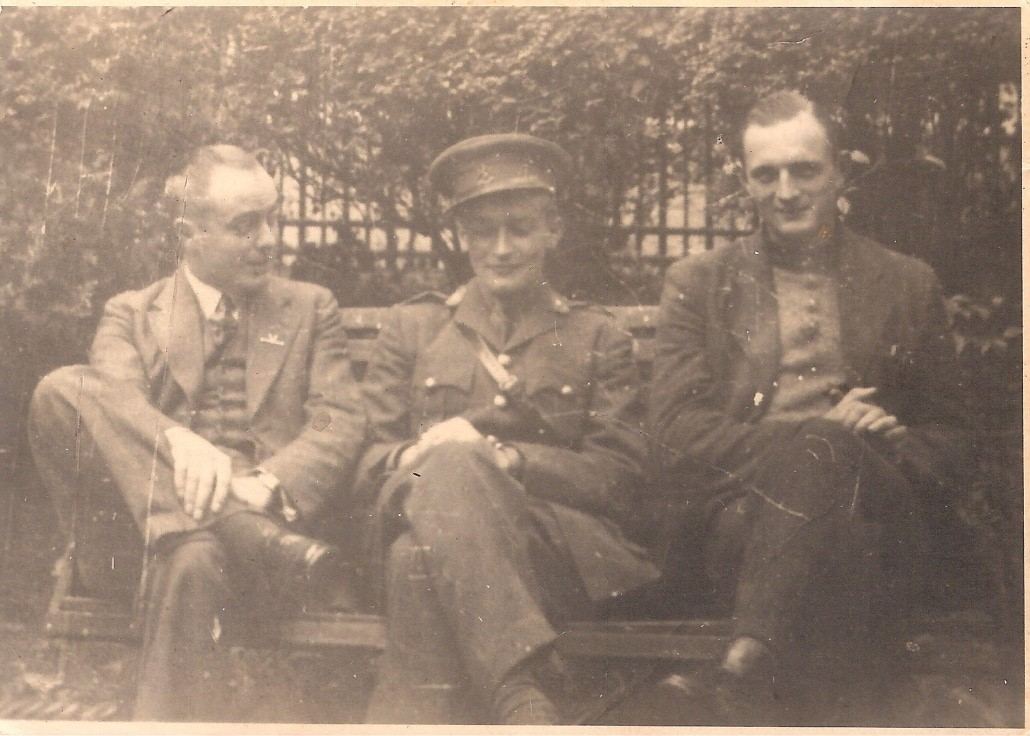
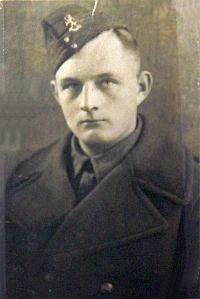
It is easy to see why her brother-in-law was so tense. After his arrival in the Netherlands, all sorts of things turned out to be wrong. Jan’s forged identity card did not meet German requirements. The money he had been given was no longer in circulation. And some of his contact addresses were incorrect. Fortunately, at the end of March he was able to stay with Mr and Mrs Bolle in Pijnacker. They had financed the crossing of Emmer and his companions to Britain, and were therefore known to the secret service across the Channel as reliable. At last Jan could get to work.
His orders included making contact with Hans Linthorst Homan – one of the leaders of the Nederlandse Unie – and with several naval officers, and arranging for them to get to England. He also set up an espionage group in Amsterdam with an old acquaintance, Dick van Dijck. Meanwhile his wireless operator Felix Ortt had begun sending telegrams to London.
In early April 1942 two more secret agents landed on Dutch soil: office clerk Barend (‘Bob’) Klooss and conscript soldier Henk Sebes. They too carried clumsily forged identity cards, and they were caught at a street check in Rotterdam. They managed to overpower their captors and escape. Sebes went to another hiding place in Hengelo. Klooss cycled to Pijnacker. In England he had been given the address of the village doctor, Koert Bolle, who might be able to help him.
Identity cards
Bolle was taken aback. This was the second secret agent London had sent to him without his knowledge in a short space of time. But after a searching conversation with his new guest and a check of his identity papers, he was satisfied the man was genuine. Through his contacts at the town hall he arranged a new identity card for Bob Klooss. Relieved, Klooss soon afterwards showed this precious possession to four fellow agents at a council of war in a café in Utrecht. They too had been sent out with poor papers. They agreed that one of them, Leo Andringa, alias ‘Akki’, would go to Pijnacker to obtain sound identity cards for them all.
What they did not know was that the Sicherheitsdienst was in contact with London through the transmitter of a captured agent, and in this way discovered Andringa’s hiding place. The SD ordered its V-Mann (informer) Leo Poos to go to this address in Haarlem. Poos introduced himself to
Andringa as ‘Dick’, another secret agent who had come over from the United Kingdom. Andringa suspected nothing. Indeed, he gave the cautiously probing Poos all the information he was after. Shortly afterwards the SD made its first arrests, and more followed in the days and weeks after. The Englandspiel was bearing fruit.
Pijnacker
The SD noticed that several of the captured agents were carrying identity cards issued in Pijnacker. Andringa was taken out of prison and escorted by Leo Poos to the town hall of the South Holland village. To stop his prisoner from running off, Poos kept the pistol in his inside pocket trained on Andringa the whole time.
At the end of May Jan Emmer was sitting in his room at the Bolles’ house, downcast. By now he knew about the many arrests; one of the victims was his wireless operator Felix Ortt. Jan racked his brains over how to get back to Britain. The problem was that, first of all, he needed a transmitter to call for British help. Perhaps through Klooss, he reasoned. After consulting Koert Bolle, Klooss went to the municipal secretary, R.H. Heukels, who had also helped him with the false identity cards. Heukels had good news. He had recently met ‘Dick’ and ‘Akki’. Dick had told him that he was the liaison for several secret agents and that he knew Klooss as well. What is more, Dick was organising a boat trip to England. The municipal secretary could certainly arrange a meeting between Dick and Jan Emmer.
‘Stand back!’
A day later Dick walked into the Bolles’ home. A meeting was set for Saturday 30 May: Jan Emmer and Dick would meet at Delftsche Poort railway station in Rotterdam. Waiting there was not only Leo ‘Dick’ Poos, but also a squad from the Sicherheitsdienst.
In his book Het Englandspiel, SD chief Joseph Schreieder gives a cinematic account of Emmer’s arrest. “The arrest team consisted of four men and was led by Kriminalsekretär Nico Johannsen, who had been an instructor in boxing and jiu-jitsu with the Schutzpolizei in Hamburg. At the moment of the arrest – the officers had already taken up their positions – Johannsen seized Emmer to place him under arrest and prevent him from shooting. Because of Emmer’s fierce resistance, Johannsen was thrown to the ground. He realised that Emmer was a sportsman. When the Sipo men saw Johannsen fall, they leapt forward to help him. But he shouted: ‘Stand back! This man is a sportsman. I want to deal with him alone!’ Then a duel began, a mixture of boxing and jiu-jitsu, in which Emmer proved to be an excellent and tough fighter.” Only after a fierce struggle did the SD man manage to subdue the secret agent.
Emmer was taken away and underwent a first interrogation. Schreieder writes that he respected his ‘sporting’ opponent. “That was Jan Emmer, who also stated without beating about the bush: ‘Yes, I have been an agent. Out of love for my country and for my Queen!’ There he stood before me, a tall fellow with blue eyes that spoke of honesty and loyalty.” Honest or not, Jan Emmer met the same fate as the other captured agents. First came a long spell behind bars in Haaren. When the risk of escape there proved too great, the group was deported via Assen and Rawicz in Poland to Mauthausen.
Mauthausen
On the morning of 6 September 1944 one American, seven British and 39 Dutch secret agents arrived at the railway station of the Austrian village. Their heads were shaved, after which they were made to walk to the concentration camp a few kilometres away. There they were briefly interrogated, humiliated and beaten. Most of the men were murdered that same day. The remaining 25 were shot the following morning. During the night of 7 to 8 September all the bodies were burned in the Mauthausen crematorium. A few prisoners from Yugoslavia and the Soviet Union managed to save the victims’ ashes, put them in a tin and hide it in a trench. It was in vain: after the camp’s liberation the tin was never found.
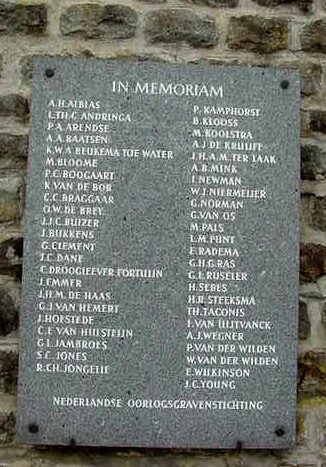
Twenty years after the murders, the Netherlands War Graves Foundation unveiled a plaque at Mauthausen bearing the names of the agents who died there. In the Zaan region, sadly, Emmer’s name appears nowhere in the public domain.