Part 1 of a two-part series on Jan Emmer by Erik Schaap, reproduced with the author’s kind permission from www.meitotmei.nl
Early in the war, resistance man Jan Emmer, born and bred in the Zaan region, decided to risk the crossing to Great Britain with four others. It became a nerve-racking voyage in a boat that was not seaworthy. One of those on board, Klaas H. (‘Niek’) Schilp, kept a meticulous account of the journey. “At the foot of the ladder lies a body, and in one of the bunks lies a wounded man.”
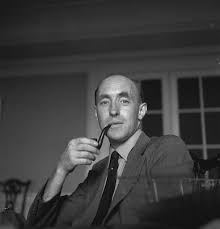
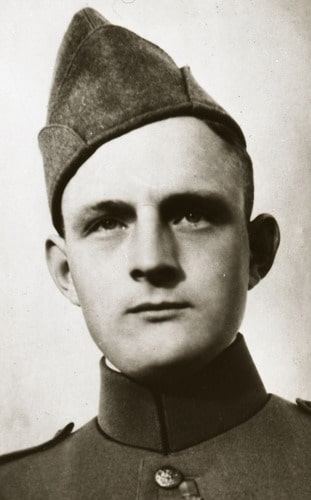
Five men took part in this daring voyage across the North Sea in the late summer of 1941, at a time when many fellow “Engelandvaarders” never reached the other side: Hermanus Gerardus Broekman (1894–1969), Jan Emmer (1917–1944), Rudolph Elkan Sanders (1896–1973), Armand E. (‘Ted’) de Jong (1916–1993) and Klaas H. Schilp (died 1982). Schilp recorded the journey in great detail. This is his account, starting with the first attempt to leave.
Runabout
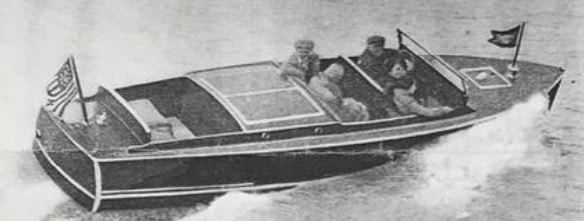
“So we took up the first plan again and decided, once the dinghy had been fitted with a small canopy, to make a trial run on the Diemerplas. We took the dinghy there on a cargo bike and put it in the water at a lonely, deserted spot. Although things went well enough at first with the engine turning slowly, the boat proved insufficiently stable and we had to abandon the plan with this craft. The engine was also playing up and needed an overhaul. So the search for a boat began again. After a while we found a 16-foot runabout. It was hardly a seagoing vessel, but since the crossing would have to be made in calm weather anyway, it was worth a try. As this boat was considerably heavier and larger than the little dinghy, we also had to find another way of transporting it. After talking it over with Jan Emmer, he declared himself willing to bring the boat and its equipment to the departure point, on condition that he came with us to England.
The heavier boat and its gear, however, also called for a vehicle to get it over the dunes. A farmer in Zunderdorp found us the axle of an old car with two wheels, which with a bit of tinkering could serve as a trailer. The engine was overhauled in the workshop of the municipal transport company. That company’s garage also housed a number of Amsterdam police cars, pre-war DKWs. In these little cars it was very easy to drain petrol from the tank using a small tap at the front of the cab.
I made good use of this, regularly collecting a quantity of petrol at night and storing it in jerrycans. In this way we built up enough fuel for the crossing. Since we now had plenty of petrol, we also acquired a second, heavier engine. A fourth person joined the party: De Jong, a mechanical engineer who worked for Broekman and who could make sure the engines ran properly.
Waiting
In the meantime, further arrangements had been made at the departure point. A farmer agreed to hide the boat, its undercarriage and its fittings. The farm lay in a particularly favourable spot: out in the fields, some 150 metres from the road along the dunes and directly opposite the narrowest and most convenient place to cross them. Broekman brought along a fifth fellow traveller, Sanders, an accountant who had every reason to leave the Netherlands. That made the crew more than complete; there was no room left. Long before we were ready, though, a new problem arose. Because transporting boats was forbidden, the boat had to be taken to its destination in a closed lorry. But Jan’s lorry turned out to be only 14 feet long. What to do? Another boat or another lorry? Both solutions were equally difficult. In the end we decided to shorten the boat by two feet and fit a new transom. At the same time we gave it a canvas canopy and painted the whole thing grey. All these preparations took up most of the spring of 1941, and by then the nights had become so short that it was better to wait until they lengthened again.
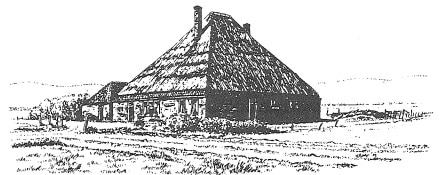
There was a new moon in mid-August, and we decided to take advantage of it and make an attempt if the weather allowed. A few days before the middle of the month, the boat and its gear were loaded into the lorry and taken to the farm. This went off without any difficulty. De Jong stayed in the area to keep us informed of anything unusual and of the local weather and sea conditions. In mid-August the weather was glorious, and on the agreed morning the call came: all was well, the weather good and the sea calm. Everyone was alerted, and we set off for the farm at different times. When we had all arrived towards evening, we got the boat ready, lashed it to the undercarriage, mounted the engine, stowed the other engine and the petrol in the boat, and waited until it was dark enough and the German patrol had passed along the road.
As we had to haul the boat up a dune slope of about 45 degrees, the farmer’s son and some friends were to help us. The evening was dark, very dark in fact, with a light drizzle. At 9.30 our helpers arrived and we left at once. One of them went ahead to scout the ground. Thanks to its grey camouflage paint, the boat was invisible from just a few metres away. Pulled by five men and steered by two behind, the whole rig moved almost silently along the poor track. Everything seemed to be going well when suddenly a loud bang rang out through the silence. We all threw ourselves to the ground. What was it? Had we been discovered? The cause soon became clear: a tyre had burst. So on we went, with one good tyre and one flat.
Back again
Now, however, the going was much heavier: the rig pulled towards the side of the burst tyre and kept getting stuck in the loose soil. At last we reached the little plank bridge over the ditch that led to the road, and we ran across it at a good pace. But on the bridge the boat suddenly lurched to port, the wheel with the burst tyre slid off the planks, something cracked, and boat and undercarriage sank through the bridge. We could not budge it; we had run aground on dry land. It was impossible to go on. We had to turn back. We untied the lashings and pushed the boat into the ditch, and along the ditch we managed to get it back to the farm. Then we brought the undercarriage back too, unpacked everything and, with the help of the farmer and his family, hid and buried the lot. As a new tyre was not easy to come by and we had to return to Amsterdam for one, we decided to give up the attempt, all the more so as the weather was deteriorating, and to wait for a better opportunity. That would be in mid-September, when the moon would again be dark. In the meantime we got hold of a better tyre and inner tube, topped up our petrol supply in the usual way, and considered whether we could use a horse for the journey across the meadow and the dunes.
Our disappearance for a few days had not gone unnoticed, however, and there had been vague rumours that we had left for England. Our return had shown this to be untrue, but something of the story had stuck. Several times I was approached by people who thought I knew a way to England. Shortly before our final departure we were approached by someone seeking a place for a very important person who held a leading position in the ‘triumvirate’, and by a man calling himself Gerbrandy who claimed to be a nephew of Minister Gerbrandy [probably the V-Mann (German informer) Anton van der Waals, who often posed as Gerbrandy’s nephew, E.S.]. Not only was there no room left, but a few days later we were gone.
Favourable conditions
Monday 15 September 1941. Conditions look favourable. The moon is dark, the weather calm. Broekman and De Jong come to see me to hear what I think. It seemed to me a good idea to go and look at the situation on the spot. We agreed that De Jong would go to the farm to discuss things and warn us if all looked good. He was to check everything, look into the German posts and assess the weather and the sea. He would phone on Tuesday morning in any case, even if the opportunity was not right, to let us know that nothing else had changed. After that he would only call once he and our helper had decided the weather was good.
Tuesday 16 September. The weather is excellent. Broekman is with me at 8.30. De Jong calls. No opportunity. He will ring again in a few days. Asks Sanders to bring a bicycle. We don’t understand what is going on. Decide to wait. Emmer calls. Called off. Afternoon: Emmer comes in person. Can’t see the objection. We agree that if there is no news tomorrow he will go north to find out more. The weather holds.
Cheese
Wednesday 17 September. Broekman arrives at 9.00. At 9.30 De Jong calls. All clear. Broekman phones Sanders and Emmer. Sanders will come in the afternoon. Emmer will be at the bus in Alkmaar at 1 o’clock. I pack some clothes and toiletries, some bread and sandwich fillings, and the cheese that farmer Van der Hoeven [= Cornelis Hoeve from Zuinderdorp] gave me to present to Queen Wilhelmina. Then I go to Heck’s on the Damrak, where I meet Broekman at 11.30. We eat a meatball with hutspot (mashed potato, carrot and onion) as our last hot meal and at 12 take the train to Alkmaar from Central Station. At 1 o’clock we met Emmer at Alkmaar station. Emmer has a parcel of food with him; Broekman and I each carry a briefcase. We take the bus to ’t Zand. The bus is packed. Standing room only.
After a laborious ride we arrive in ’t Zand. Emmer and I lead the way, Broekman follows 500 metres behind. At the dyke we wait for Broekman to confer. We decide to leave the main road and take a sandy back lane. Broekman and I go ahead, Emmer follows well behind. A horse and cart full of German soldiers overtakes us. At 3 o’clock we arrive at the Oranje Vrijstaathoeve farm. We greet the farmer and his wife and their daughter Trijntje, and get straight down to preparing everything. Trijntje and De Jong have already pulled the boat out from under the hay and assembled the undercarriage in the cowshed. We set the boat on it, fit the canopy and the lashings, and tighten the turnbuckles until the load is even and boat and undercarriage form a single unit. Then we carefully stow and lash everything: the petrol forward, the Johnson to port and the Penta at the stern.
Across the meadow
At five the farmer goes to milk the cows and we have to stop for a while. At 6 our helper arrives; that morning he had still doubted whether the moment was right, but De Jong had pressed on. The weather is good: no wind, overcast sky. Our helper asks what we have decided. Go. Which route? The road to Groote Keeten has the advantage of being paved all the way to the beach, with hardly any slope; its drawback is the distance, a long way from home for the helpers. They prefer the route through the dunes with a horse. After consulting the farmer we decide to go with the horse across the meadow, then about 50 metres along the road and then through the dunes. We agree to leave the farm at 9.45. For their work the helpers receive the agreed sum of 210 guilders.
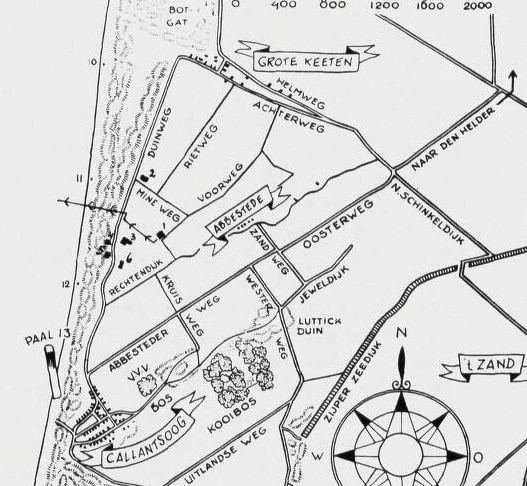
At the farm we have a simple meal with a few glasses of milk and then wait in the stable until it is time. Everything is ready to go. At half past nine one of the helpers arrives with the horse. At a quarter to ten precisely we set off. It is good and dark. From ten metres away you can see nothing of the boat, the horse or the people. We move briskly across the meadow and over the crossings between the ditches until we are about ten metres from the road. Here we wait. The cows bother us, coming over out of curiosity and starting to low. We sit beside the boat waiting for one of the helpers, who soon comes to report that the German patrol has passed and the road is clear. Forward again, and we turn onto the road. The horse’s hooves sound alarmingly loud on the surface. The helper leading the horse now walks it beside the road while the boat rolls along the tarmac. Now we move almost soundlessly fifty metres along the road, then turn sharply into the dunes. With a jolt we cross the shallow ditch along the road, then let out the tow line as the horse climbs the dune. The line tightens again and the boat moves smoothly up the slope.
Soft sand
Halfway up, the right wheel drops into a hollow and everything comes to a halt. With great effort we get the wheel out, and by having the horse pull more to port we get the whole rig moving again. Now we are on top of the dune, where it is fairly flat, and we trot towards the outermost row of dunes. Running, we struggle to keep the boat balanced, and so we reach the crest of the last dune. We get stuck in the soft sand, but by pulling together we get it moving again and find ourselves on the slope down to the beach. The horse is unhitched and disappears with the helpers as fast as possible. Now we haul the boat down onto the beach ourselves.
We get stuck once more in the soft sand, but soon we are on the wet part and roll smoothly into the water. The tide is low, and as we walk Sanders and I have taken off our shoes and thrown them into the boat. The boat rolls into the sea and is soon afloat, undercarriage and all. Sanders, De Jong and I climb in. Emmer and Broekman wade further out with the boat while I cut the engine lashing and lower the engine. Broekman and Emmer are up to their necks in water. De Jong tries to start the engine. It won’t catch. The beam of the Callantsoog light sweeps over us. Still the engine won’t start. Broekman and Emmer lose their footing. We pull them into the boat and start paddling. De Jong and I try to start the engine. At last it begins to splutter. It’s running. We see the land as a faint line behind us. Progress is slow, but at least we are moving. It is midnight.
Undercarriage
Thursday 18 September. The undercarriage is still under the boat. I order the fore and aft lashings cut and the ropes brought inboard. We hold on to the undercarriage and cut the middle lashing. The undercarriage stays put; it floats. We push it out from under the boat with the paddles. The engine stops. We tilt it up and find a piece of rope caught in the propeller. De Jong cuts it free and we start the engine again. It is a clear night, and I steer by the stars, keeping the Pole Star abeam to starboard. We are not making much speed. There is quite a heavy swell. Broekman, Emmer and De Jong change their clothes. We refuel. The engine now keeps running well. The paint is burning off, but it doesn’t overheat. The Callantsoog light remains clearly visible. We keep a sharp lookout. It turns chilly. We put up the canopy. We try to take a log reading, but the line runs out only very slowly. Our speed is low: between two and three knots. At 4 in the morning the engine stops. We top up the petrol and it starts again easily. De Jong is seasick and has toothache. He vomits. Emmer takes his place. We adjust the ignition and fuel supply, and the engine runs much better. According to our bearing on Callantsoog, the current is setting us northwards. We hold a course of SW to WSW, partly because of the rising sea and wind. The boat rides well but sits too low at the stern. We are taking on water, and to make bailing easier we throw a couple of suitcases and a floorboard overboard. It soon turns out, however, that the leak is not serious.
Three aircraft
A heavy swell is now running, with an occasional sea. Our speed stays low. At daybreak the wind drops and I now steer west (magnetic). Broekman relieves me. The sea goes down, the swell remains. Nothing in sight. At ten o’clock we decide to change engines. We untie the Johnson and move it aft. It is very awkward in the cramped space; we have to take down the canopy. We remove the Penta, which is hot and hard to handle, mount the Johnson and start it. It runs at once, but cuts out after a few minutes and will not start again. We dry and degrease the spark plugs and flush the engine. It does no good; it refuses to go. We put the Penta back on and get under way again. The swell is fairly high.
In the afternoon the wind and sea pick up again. We ship water over the bow now and then. The engine sometimes cuts out but usually restarts quite readily. The fuel supply and ignition are very sensitive to the right setting. Now and then the engine gets soaked by water coming over the stern; it stalls and we have to dry everything. We solve this by hanging towels around and over it. We refuel regularly. The engine is very economical, using an estimated 1.5 litres an hour. Emmer is tireless in refuelling, starting and tending the engine. De Jong is unable to do anything. Broekman and I take turns at the helm. Changing places is difficult in the very limited space. We move De Jong as far forward as we can, since the boat is riding bow-down. Sanders helps with refuelling. At about 6 in the evening an aircraft passes to starboard and quickly disappears towards England. A few moments later three aircraft in formation appear astern to the right. We are ready to use the flag, but see just in time that they are Huns. They fly over us at about 150 metres and are soon out of sight.
Paddling
Evening begins to fall. The second night is upon us. The engine cuts out yet again. De Jong tries to coax it back to life but doesn’t get far. He is not much use. Emmer and I paddle. It grows dark. We must get the engine going again. I send De Jong forward again. Emmer and I check the engine. We disconnect the fuel line and blow it through, inspect the spark plugs and carburettor and carefully clean everything. We refuel, and after a few attempts the engine fires again. We steer west.
Friday 19 September. After midnight we see a light ahead, sometimes very bright, sometimes only a glow. Sea and swell are confused, but easing. The boat is now going quite well. We hope to sight land in the morning. At daybreak Broekman thinks he sees land ahead, but it is a bank of cloud. The boat is still sitting heavily by the stern, partly because the petrol stored forward is running low. Since the Johnson would use too much fuel even if we could start it, we decide to put it overboard to gain room and lighten the boat. Over goes the Johnson. The wind drops and the swell eases. Visibility is very clear. I suspect we are too far north. We decide to carry on as long as our petrol lasts on a west-south-westerly course. We think we have about 12 hours’ fuel left.
Sail in sight
At around 10 o’clock we sight a sail just off the starboard bow and head straight for it. We think it is an English fishing boat. It seems to be fishing or lying at anchor, as we close on it quickly. When we get nearer we wave the flag and see someone on deck waving back. We come alongside and stop the engine. The man on deck speaks no English, so I go aboard. He shows me the way to the forecastle and I go below. At the foot of the ladder lies a body, and in one of the bunks lies a wounded man, very crudely bandaged. The wounded man speaks some English and tells me they are Norwegians who have been on their way to England for eleven days. A few days ago, however, a German aircraft strafed them, leaving the vessel helpless, killing one man and wounding him. During the night they thought they had seen lights to the west. They ask for something to drink and we give them half our water. Beyond that we could do nothing for them except promise to send help once we reached land.
We carry on westwards. Visibility is very clear, and after a while I think I see smoke on the horizon. We head for the smoke and keep to that course when it disappears. After about an hour we see smoke on the horizon again. Once more we steer for it and shortly afterwards see two ships. As we draw closer they turn out to be trawlers, probably minesweepers. Now we see a buoy to port. The minesweepers approach. We wave the flag. One of the vessels answers with a light signal, so they have seen us. I steer straight towards them, and soon we can make out members of the crew. Above each ship a small balloon hangs from a cable. The British naval ensign flies from the gaff. We come alongside and stop the engine. A line is thrown to us and a rope ladder lowered over the side. I climb aboard, followed by the others, helped by the crew. I report to the commanding officer and tell him of our intentions and the position of the Norwegian fishing boat. He orders the other minesweeper to take our boat aboard, hauls in his sweeping gear and heads for where the Norwegian should be. We are taken to the mess room and treated to rum, tea, food and cigarettes. Then the commanding officer comes to tell us that, to his regret, his orders require him to put us under guard. We are given a cabin with an armed sailor at the door, and served gin and cigarettes.
Crippled vessel
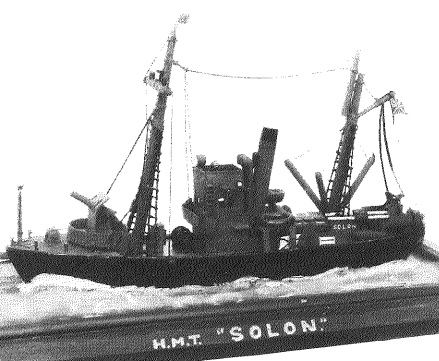
Soon we are alongside the Norwegian fishing boat. The dead man, the wounded man and the third man are taken aboard with their few belongings, after which the crippled vessel is sunk with a few rounds of gunfire. According to the Norwegians, a German aircraft had fired on them again half an hour earlier, and the minesweepers had indeed seen it, though they themselves were not attacked. Now it was full speed for port. The commanding officer of the minesweeper, H.M.T. ‘SOLON’, asked if he might keep as a souvenir the Dutch flag we had waved. I gladly gave it to him, and in return he presented me with a model of his minesweeper.
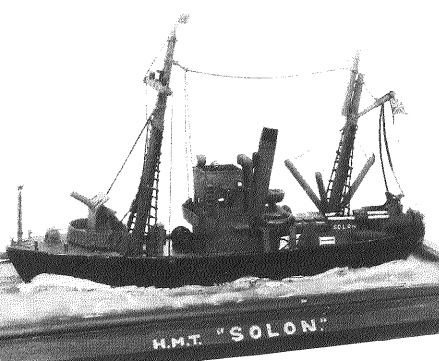
After a short passage we reached the fairway buoy off Great Yarmouth and sailed into the harbour. The commanding officer had evidently already signalled his base about his unusual catch. A large crowd had gathered on the quay and everything was ready to receive us. We were handed over with our luggage to the police, who questioned us over tea and sandwiches. Then we were allowed to take a bath and went to sleep under guard in a school.
On Friday 3 October we were received by Her Majesty Queen Wilhelmina at her house in Chester Square. There I had the chance to present Her Majesty with the cheese that farmer V.d. Hoeven, who among other things had helped me with the undercarriage, had given me for her.”
Poem
Years later this poem, inspired by the crossing described above, appeared in the magazine of the Historische Vereniging van Callantsoog (Callantsoog Historical Society). The author is unknown.
Escaped
As I sat staring out at night
in those dark hours full of fright,
a thousand thoughts would storm my mind –
of hope for freedom, liberty to find.
With a few friends we talked through a plan that seemed impossible to do.
At last a proposal we could hold on to.
In a tiny boat, with discomforts galore,
we managed to slip past the Jerries on shore.
Helped by a farmer and his horse,
we reached the sea; worth all of it, of course.
After many, many anxious hours,
while the lookout strained his powers,
and breaking seas struck him in the face.
Nothing could harm us now; one goal alone, one place.
Far in the distance we saw a boat.
Oh, lads, how our joy swelled in our throat.
But closer up, they were Norwegians, we found,
bound by the very same thought, the same ground.
They had been shot at by the Hun,
and overjoyed that friends had come.
We gave them all the help we could,
and soon they had wolfed our water and food.
Then, as fine a sight as there could be,
a British mine destroyer came to see.
We told them of the Norwegians’ boat,
and for us five, the day of freedom was reborn afloat.