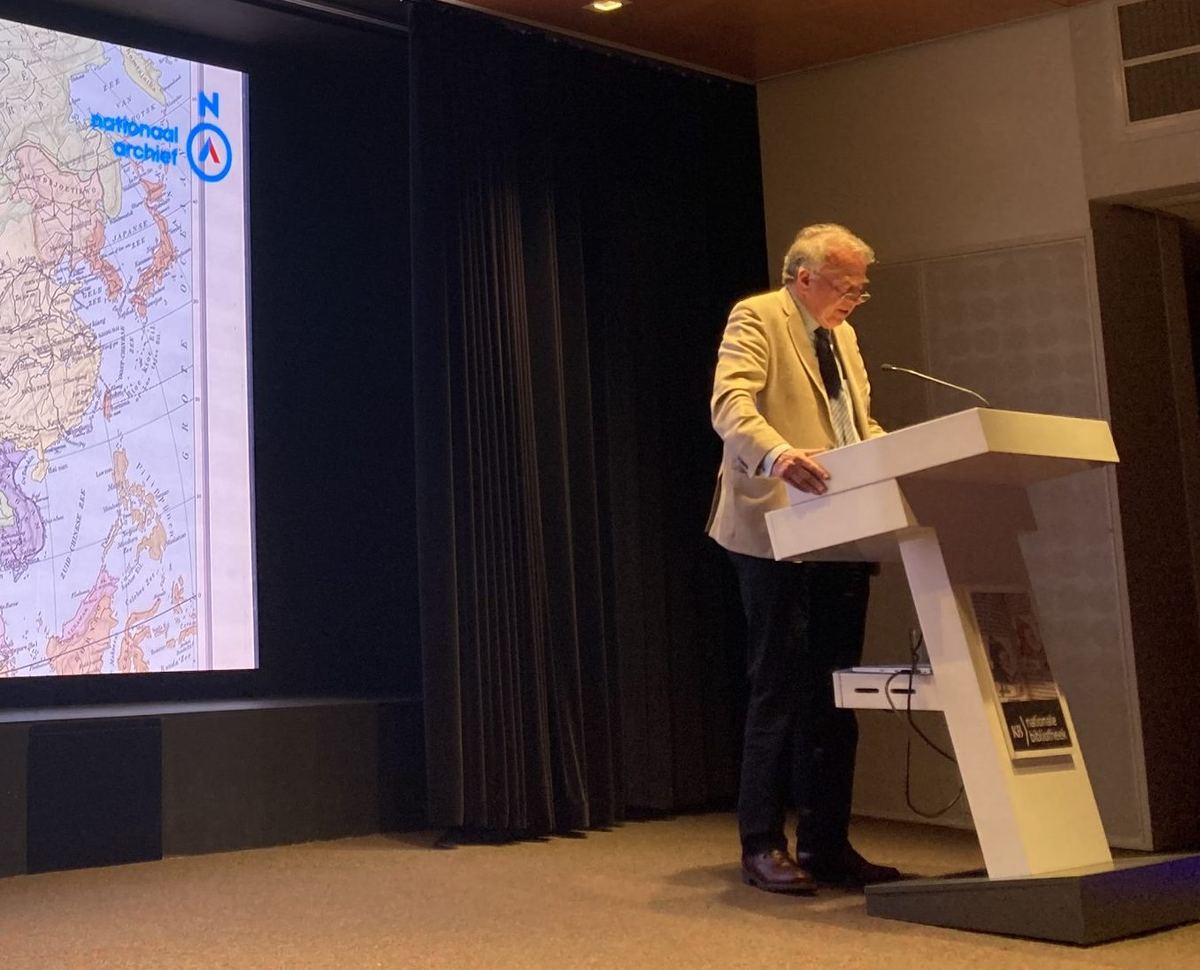
Text of the lecture Sierk Plantinga gave on 26 March 2024 at the Nationaal Archief (Dutch National Archives) to mark the completion of the “Engelandvaarders” project; also published in: Mars et Historia, 2024, no. 2
Most visitors to Museum Engelandvaarders in Noordwijk assume that the “Engelandvaarders” all sailed from the Dutch coast across the North Sea to England. They are then very surprised to learn that this was not the case. Of the more than 2,000 “Engelandvaarders”, some 420 attempts across the North Sea have been counted, of which only around 178 arrived: the great majority drowned on the way. Here in Noordwijk the sea could look calm and peaceful, but some 80 kilometres out there could be a force 6 or 7 wind – something almost no canoe or dinghy could withstand.
Visitors’ assumption is easy to explain: 1. by the great popularity of K. Norel’s book “Engelandvaarders”, first published in 1945, which had reached its 52nd printing by 2020 (I myself received the 12th printing for Sinterklaas in 1961); 2. by the much-watched 1977 film Soldaat van Oranje (Soldier of Orange); and 3. by the 2010 musical Soldaat van Oranje, still running in Valkenburg. In all three of these well-known stories about “Engelandvaarders”, the crossing of the North Sea features prominently.
The Moscow route
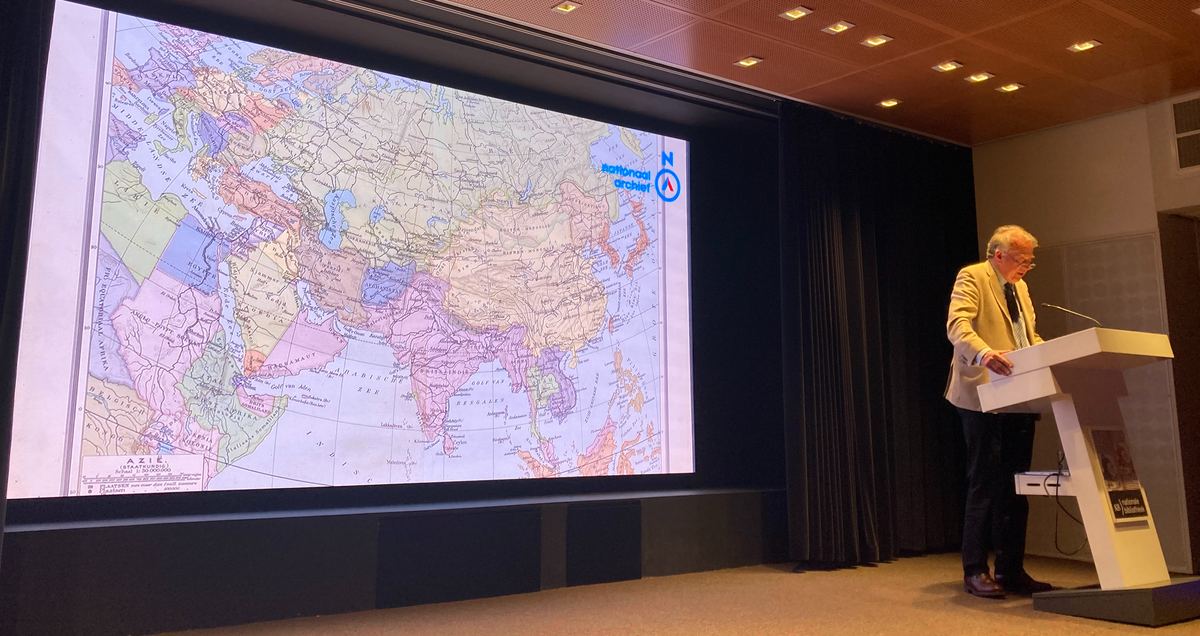
It is therefore worth saying something about an almost unknown route (1), which for convenience I will call the Moscow route. This route existed from June 1940 until mid-June 1941, when Nazi Germany invaded the Soviet Union.
The first person to use this route was the son of the Dutch envoy in Stockholm, 17-year-old Egbert-Joost van Nagell (1923-1944), who lived in Stockholm. As his father stated to the PEC (parliamentary commission of inquiry) after the war, he wanted to ‘fight’. But England could not be reached by the western route, because the Germans had occupied both Denmark and Norway, along with the Sound between them, and aircraft would have had to fly very high to avoid being shot down; the aircraft capacity for that was lacking.
In Stockholm, at all kinds of official occasions, including at the Swedish court, Van Nagell senior was the neighbour of the Russian envoy, Mrs Alexandra Kollontay (1872-1952). In their conversations Van Nagell told her that he knew Russia – he had travelled there – and that evidently created enough trust for him to ask her for help for his son: a visa for the Soviet Union to Japan and then on to the Dutch East Indies. After a while word came from her that young Van Nagell was permitted to travel from Sweden via Moscow and Vladivostok to Japan. He did need to take some money for the journey – the train from Moscow to Vladivostok took a good 12 days – and he also needed some money for the rest of the trip. He would be accompanied by a Japanese consul who happened to be going to Kobe.(2)
Here we come up against a phenomenon that was very common at the time: without a visa you could not enter most countries. Visas were obtained through the legations, consulates and foreign ministries of the country concerned. Without a visa you were almost always in that country illegally. Conditions were often attached to visas: the applicant had to show proof, for example, that he would leave the country again within a certain time. If, say, an “Engelandvaarder” wanted to travel legally from France through Spain and Portugal to his destination, he needed a French residence permit, a French exit visa (permission to leave the country), and a Spanish and a Portuguese transit visa. It was a whole chain. In Lisbon there was a Dutch diplomat who would buy someone a ticket for the boat and show that ticket to the Portuguese authorities, who would then grant a transit visa. This Portuguese transit visa was then sent to Madrid and shown to the Spanish authorities, on the strength of which the Spanish granted their transit visa. The French then gave the applicant their exit visa. A rather time-consuming procedure in the days before mobile phones or similar fast means of communication. In short, you were allowed to travel through the country but then had to leave it again as quickly as possible.
Until 1942 deserters in Sweden ran the risk of being returned to their ship by the Swedish police: political reasons for fleeing were not accepted. It was therefore necessary to hide until the ship had left the Swedish port again; the legation and consulates helped with this.(3)
When young Van Nagell had managed to travel via Vladivostok and Japan to Batavia in June 1940, the next candidate presented himself at the Dutch legation in Stockholm. In mid-September 1940 Andries Woudhuysen reported in Stockholm: he had jumped ship in Sweden because he wanted to fight the Germans, so he knocked on the legation’s door for help. Once again Mrs Kollontai was called in; Woudhuysen was appointed a diplomatic courier pro forma, and at the end of November that year he was able to travel via Riga to Moscow, from there by train to Vladivostok, by boat to Japan and Tokyo, and then via Honolulu and San Francisco to New York, where he arrived in January 1941. There, after all that effort, he was declared medically unfit for military service. In the end he managed to be passed fit on condition that the State bore no responsibility should anything happen to him, and he reached England in March 1943.(4)
The route via Stockholm was also used at the end of 1940 by a number of Leiden students. Some of them had grown restless at the news of escapes from the Netherlands, such as those of Hazelhoff Roelfzema and a few others. They wanted to go too! They signed on in Delfzijl, as a ship’s cook for example, and travelled to Stockholm. Sometimes an opportunity to escape arose in Finland, and from there they tried to obtain a Russian transit visa. Hugo Pos, a newly qualified lawyer from Leiden, tells in his memoirs how he deserted his ship in Finland and there, with much time, effort and patience, finally obtained a transit visa for Russia at the end of December 1940.(5) Watze Hepkema, who had also deserted in Finland, likewise had to wait several months before receiving his Russian transit visa in early May 1941.(6) The fact that the Netherlands had no diplomatic relations with the Soviet Union was one of the reasons for the delay.
Intourist
Once in Moscow, Pos had to wait a few days for the train to Vladivostok. Meanwhile he was taken under the wing of ladies from Intourist, who showed him various splendid museums and only left him once they had put him on the train. What he did not know was that Intourist was entirely a KGB institution. For Stalin it was intolerable for a group of foreigners to wander around Moscow unsupervised – far too dangerous. All those who passed through Moscow would have the same experience. Halfway through his train journey east, in Omsk, Pos bought a postcard and sent it, with some cryptic texts on it, to his regular pub on the Boommarkt in Leiden. The card arrived without fail and its meaning was clear to his student friends. The train journey to Vladivostok went without a hitch: ‘The people with whom I shared the third-class compartment were generous and shared their currant bread with me. The shelf above the seats, used as a luggage rack by day, was my bed for twelve nights. In the dining car you got quite decent food for the first ten days. Then it ran out’.(7) In Vladivostok Pos ran into a couple of other acquaintances from Leiden: Herman van Brero and Chris Krediet. Chris Krediet would later become known for his work with Contact Holland (landing agents on the coast near Scheveningen), for which he was awarded the Militaire Willemsorde (Military William Order).
The journey from Stockholm to Moscow was considered cumbersome: by boat to Finland, by train through Finland and then on several trains via St Petersburg to Moscow. It could be done faster. And so, quite soon afterwards, the “Engelandvaarders” flew from Bromma airfield near Stockholm to Moscow with one short stopover. It was quite an experience for all of them: none of them had ever flown before. Their reactions varied. H. Klapwijk writes in his unpublished memoirs ‘Matroos van Oranje’ (Sailor of Orange): ‘Not only for me, but for each of us it was the first time he had sat in an aeroplane and actually flown! Now I have never been a hero in aeroplanes, but I don’t think my eyes bulged quite so much, nor did I clutch my seat so violently, as the seaman sitting next to me. For he was already pouring with sweat before the machine had even started, and when we began to taxi to the take-off point he was already changing colour. His fearful opinion was that we would never get off the ground. It cost the airline a lot of money in paper bags, which he filled regularly all the way to Moscow’.(8) Several “Engelandvaarders” wrote short letters or postcards to the consul-general in Stockholm describing their experiences and suggesting improvements. One wrote about his first experience of flying: ‘But what I’d imagined of a flying machine, it’s much finer than I thought. I’ve made up my mind at least that when my rich days come I’ll buy myself one of them machines’.(9)
The experiences on the Japanese boat from Vladivostok to Tsuruga in Japan were a good deal worse. They were packed into a hold with many others, with little fresh air, poor-quality food and unfriendly treatment from the crew. Everyone put up with it; after all, they were well on their way towards free England. The Japanese transit visas had been issued in Stockholm for transit to the Dutch East Indies, and travelling to America and Canada on that visa was not permitted for political reasons. Consul-General A.M. de Jong had therefore bought tickets in Stockholm for the voyage to the Dutch East Indies; but it had been agreed with the travel agency in Stockholm that these tickets could be exchanged at the travel agency in Japan for the destination Vancouver, as he later stated to the PEC.
J. Tjaardstra, in Japan on his way to his boat to the Dutch East Indies, was asked by the Dutch envoy in Japan to help with the heavy workload at the consulate in Kobe. After some hesitation he agreed. After Pearl Harbor he was allowed to leave Japan with the other diplomatic and consular staff, and he did eventually reach England. Tjaardstra had some negative experiences in Russia, incidentally. His diary notes about Russia were torn out of his notebook in Vladivostok. He had ‘never undergone such a strict search as in Vladivostok, which involved a body search and in the end made you feel like someone accused of a crime’.(10)
In total, about sixteen people were able to use the route via Vladivostok, until at the end of March 1941 the war with Japan cut it off.
The southern route
When the route via Vladivostok had become impossible, it was diverted south from Moscow. People travelled by train to Baku, then crossed the Caspian Sea to Iran. After a stay in Tehran, the “Engelandvaarders” travelled by train to the south of Iran and drove by car to the Tigris. They crossed that river and travelled in a canoe-like boat to a border village, where they could transfer to an English warship bound for Basra. From Basra the “Engelandvaarders” sailed on an English troopship via the Persian Gulf to Bombay in India. In Bombay they signed on to a Dutch cargo ship, such as the ss Blommersdijk, and sailed on it to Cape Town, Trinidad and Halifax in Canada. In Canada the “Engelandvaarders” often received initial military training, and then went on to England aboard a troopship. The journey took a year on average. There were several variants of the route described here. René Borgerhoff Mulder, for example, travelled from Moscow to Odessa and from there via Istanbul, Ankara, Baghdad and Basra to Bombay. In Baghdad he and Ab Roessingh were caught up in a revolution and could only save their skins by climbing over the fence of the Dutch legation.(11)
After Ankara, Roessingh went via Syria and Cairo to Cape Town, where he boarded the Dutch cargo ship coming from Bombay.
The Dutchmen who travelled via Tehran were fêted there; “Engelandvaarder” H. Klapwijk writes about it at length in his memoirs. They were put up in a ‘fine hotel with a large garden, where in the evenings we dined at tables under trees hung with Chinese lanterns. We were allowed to order anything in the hotel and drink anything except water. That was contaminated in the city, and we even had to brush our teeth in lemonade. We didn’t need telling twice, and spent a few royal weeks in Tehran. We were invited by the English and French ambassadors to tell them and various guests about our escape, because we were the first escapees from occupied territory. Sometimes the Dutch ambassador came to eat with us at the hotel and was then received by a row of servants (..). Or we went swimming with a Dutch or English family, where we again had to tell about our experiences’. Tehran itself was of course visited extensively too, as were the various great bazaars: ‘Here Middle Eastern merchants palmed off all kinds of exotic goods on each of us’.(12) But according to one of them, Tehran was also a nest of spies. A couple of Germans there tried to persuade the Dutchmen, with fine promises, to return to the Netherlands via Berlin. No one in the group took them up on it.
Of course this pleasant break came to an end and they travelled on again by the routes described above. Only H. Beens stayed behind, because of acute appendicitis for which he needed an operation. But in the end he too reached England, by a detour via Java. Aboard the Dutch merchant ships in Bombay, such as the ss Blommersdijk but also the ss Alphacca and the ss Trompenburg, they were signed on in roles such as second cook, third mate, ordinary seaman or stoker’s boy, all quite officially.(13) Sailing to New York or Canada was relatively uneventful by comparison. The only real danger was a possible torpedo attack by a German U-boat, for which they kept a constant lookout.
Operation Barbarossa
The possibility of travelling to England via Moscow ended on 22 June 1941 with the German invasion of the Soviet Union, Operation Barbarossa. Russian airfields were closed to civil aviation. Thanks to this Moscow route, some 55 young Dutchmen, with an average age of about 25, reached their goal after roughly a year of wandering the world (around 23,000 km). Most of them finally arrived in England between September and November 1941. There the great majority joined the Royal Netherlands Navy, and some the merchant navy. That was logical too, because their personal records show that most of them had a seafaring-related occupation: mate on a coaster or in ocean shipping, pilot, seaman.
The citation for the award of the Kruis van Verdienste (Cross of Merit) to a number of them read: ‘For showing courage, initiative and perseverance by, after leaving in neutral territory the enemy merchant ship on which they had signed on, completing on their own initiative and without means the journey to England via Moscow, Odessa, Bombay and Cape Town, in the course of which they endured great sacrifices over a long period’.(14)
Ils ont bien mérités de la patrie – they deserved well of their country – as the French would say.
(1) Both authors mentioned below have paid some attention to it: Dick Brongers, Op tegengestelde koersen. De kustvaart in oorlogstijd, Deventer 1996, pages 88-94; Agnes Dessing, Tulpen voor Wilhelmina. De geschiedenis van de “Engelandvaarders”, Amsterdam 2004, pages 153-156.
(2) Parlementaire Enquête Commissie Tweede Wereldoorlog (Parliamentary Commission of Inquiry into the Second World War), session of Wednesday 28 July 1948, Sub-Committee III; examination of mr J.E.H. baron van Nagell. Egbert-Joost van Nagell was shot down in his Spitfire over Merville (dép. Nord), France, on 28-1-1944 and was killed.
(3) See Nationaal Archief (NA) The Hague, archive of the Gezantschap Zweden (Legation in Sweden) (2.05.219), inv. no. 478.
(4) An account of his journey appeared in De Schakel, quarterly of the Genootschap Engelandvaarders, 1996, nos. 68 and 69. See also NA, archive of the Ministerie van Justitie, Afdeling Politie, Bureau Kabinet en Juridische Zaken (2.09.107), inv. no. 1140.
(5) Hugo Pos, In Triplo. Autobiografie, Amsterdam 1995, 44 ff.
(6) Watze Hepkema’s diary is held at Tresoar in Leeuwarden (formerly the Rijksarchief in Friesland). Hepkema was killed in a flying accident at Madioen (Dutch East Indies) on 21-1-1942.
(7) Pos, In Triplo, 48-51.
(8) NA, archive of the Genootschap Engelandvaarders, 106, Henk Klapwijk, Matroos van Oranje, typescript 1984, 27.
(9) NA, archive of the Gezantschap Zweden, 507, J.P. Muller on 20-3-1941, presumably to A.M. de Jong.
(10) NA, archive of the Gezantschap Zweden, 515. The quotation is from a letter to A.M. de Jong of 22-7-1941.
(11) De Schakel, 1997, no. 72.
(12) Henk Klapwijk, Matroos van Oranje, 46.
(13) Brongers, p. 89 ff.; Dessing, p. 153 ff.
(14) Erik Müller, Het Kruis van Verdienste 1941-2016, Studiekring Ridderorden en Onderscheidingen, p. 51, Royal Decree 2-9-1942 no. 7.