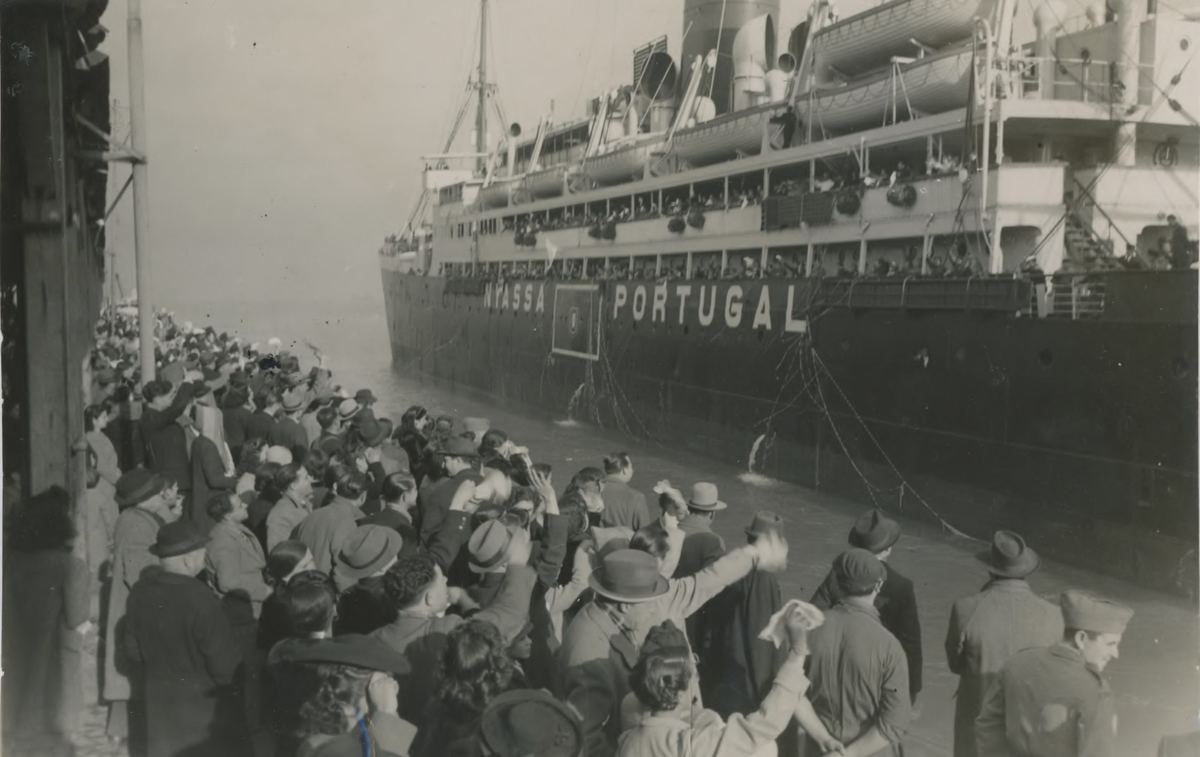
SS Nyassa
By Pepijn Lucker
“This is the story of “trois jeune filles” who did everything they could to reach England. It was on a Wednesday evening, the sixth of August ’42, that Babs and I decided to leave.”
So begins the account of the Jewish sisters Edith Carla and Beatrice ‘Babs’ Musaph, who had left the Netherlands for England together with Rachel ‘Tox’ Waterman. The first part of their journey through occupied Europe was described in an earlier article.1 That account ends with their arrival in Madrid, after overcoming many setbacks, where they had placed themselves at the disposal of the Dutch government.
SS Nyassa
The three women had endured all the hardship they had been through in the hope that “our reward will be that we can help in the great struggle for final victory”. The Dutch representatives in Spain, however, saw things differently. At the end of November 1942 the women were sent on to Lisbon, where they were put up in a guesthouse for a few days. There, as Babs later described it, the Consul General, Baron van Harinxma thoe Slooten, “presented us with the fait accompli … of leaving for Suriname”. Not only that: they had to sign an acknowledgement of debt for the travel and accommodation costs incurred, a total of around $460 each. 2
On 5 December they boarded the Portuguese steamship Nyassa, which sailed that day bound for Paramaribo. Among those on board were more than a hundred refugees from the occupied Netherlands, most of them Jewish.3
In Suriname
The Nyassa arrived in the port of Paramaribo on 24 December 1942. It was not the destination the three women had hoped for, but they had had no choice. And once in Suriname they had to contact the colonial government straight away to make arrangements for repaying the financial support they had received.
They were soon put to work, all three being assigned administrative posts. For Rachel Waterman, at least, this was nothing new: in the Netherlands she had already worked as a secretary at the law firm Perlstein & Roeper Bosch.
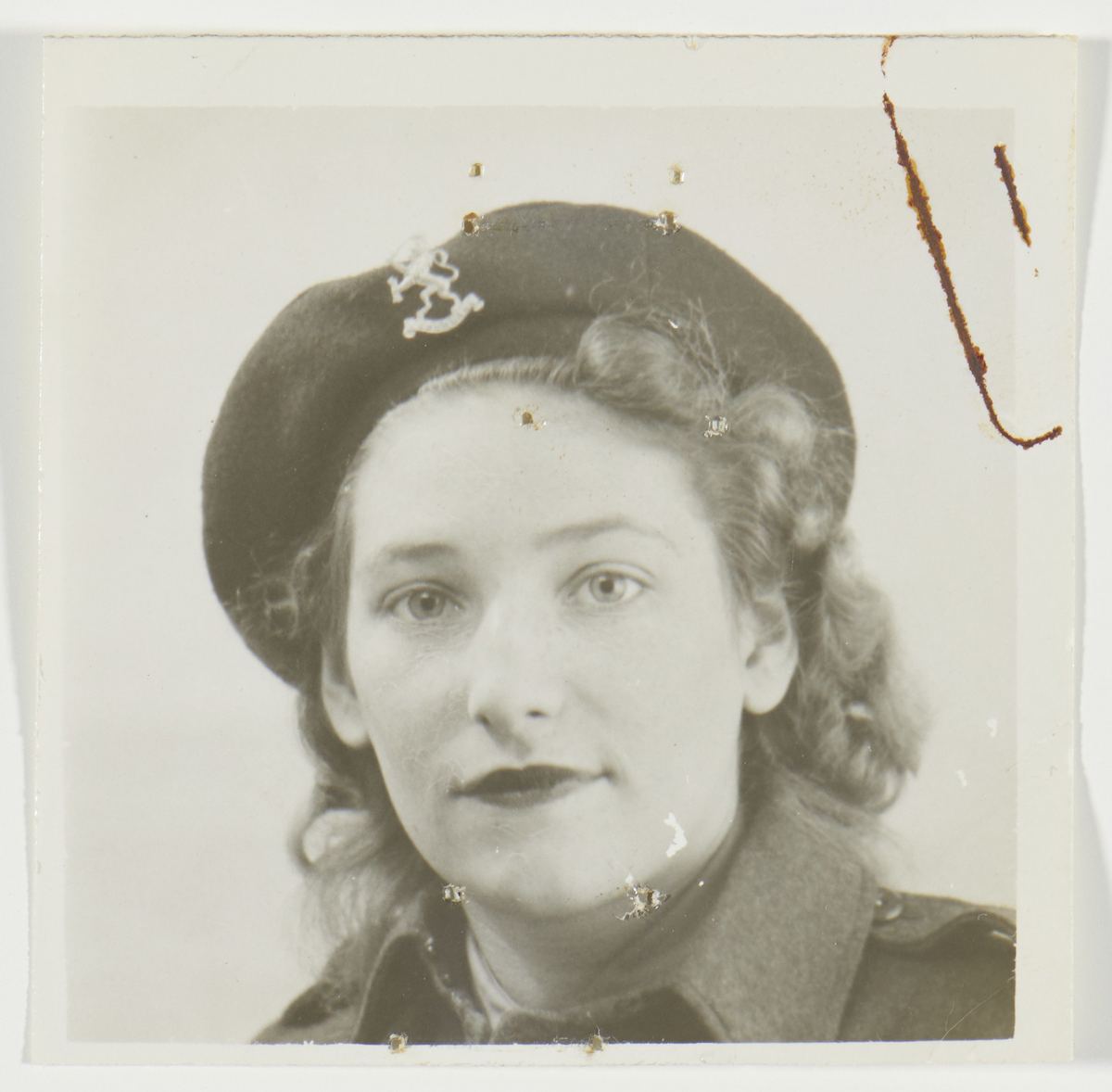
Alongside their administrative jobs, the Musaph sisters enlisted in the women’s auxiliary company “of the Korps Stads- en Landwachten of the Surinamese armed forces, in the firm expectation of being able to take an active part in the struggle”.4 For the time being, that would not happen.
The trio splits up
After six months Tox was summoned to England by the Dutch government. There was a shortage of good administrative staff in London, and she was given a post with the so-called “Shipping”. She flew from Paramaribo to Miami and then travelled on to New York, where she stayed for a few weeks. On 8 August 1943 she sailed for Liverpool, arriving nine days later. Once screened by the British and Dutch security services, she went to work first for the Ministry of the Navy and then for the Ministry of the Colonies.
Tox eventually married (exactly when is unknown) the “Engelandvaarder” Joseph Enger. After the war she emigrated to Victoria (Queensland, Australia), where she died on 17 October 2001.
To England at last
In March 1944 Carla and Babs Musaph were also summoned from Suriname to England. A note from the Ministry of the Interior dated 2 March reads: “The Head of the Bureau Inlichtingen and my Ministry attach great importance to the arrival of both ladies, as they are to be employed as shorthand typists”.5 Of Carla, however, it was also remarked: “has technical competence as a shorthand typist but works sloppily, which a change of surroundings may well remedy”6.
According to the head of the Politie Buitendienst in London, they were also “eligible for a decoration, since they left the Netherlands in order to place themselves at the service of the Netherlands Government and since they completed a dangerous crossing”7.
They took the same route as Rachel to New York, where they were forced to wait four months “because England was closed during that period”.8 From 1 June until their departure at the end of September, Babs worked for the Netherland Shipping Inspection, while Carla worked for the Dutch consul.
Once in England, the Musaph sisters were employed as typists at various Dutch ministries in London, Carla at the Ministry of the Navy. But both would much rather have played a more active role. Almost as soon as they arrived in the United Kingdom, they therefore also joined the Vrouwen Hulp Korps (VHK, Women’s Auxiliary Corps).
Even in England they were still confronted with the debts they had run up earlier. Part of their VHK pay was withheld to pay them off. Babs therefore wrote several letters to the Minister of War asking for the outstanding debt to be waived. Whether she ever received a reply is unknown.9 During this period, however, the commander of the VHK did present them with the Cross of Merit for their dangerous journey.
Pepijn Lucker is a historian who has worked at the Nationaal Archief since 2015. He is currently involved as a researcher and project leader in the “Engelandvaarders” project, a joint project of the Nationaal Archief, Museum Engelandvaarders and Netwerk Oorlogsbronnen.
It is made possible in part by the Mondriaan Fonds, the public fund for visual art and cultural heritage, and by the Ministry of Health, Welfare and Sport (VWS).
(1) See Trois jeunes filles, part 1
(2) Source: Nationaal Archief, access 2.04.77 (Bureau Invordering), inventory number 904
(3) Source: https://www.oorlogsbronnen.nl/thema/Vertrek%20van%20Nyassa%20uit%20Lissabon “The group of refugees was interned in the Refugee Home in Paramaribo. After a few months to a year they left it and emigrated within the Caribbean region or even to the United States.”
(4) Source: Nationaal Archief, access 2.04.77 (Bureau Invordering), inventory number 904
(5) Source: Nationaal Archief, access 2.09.06 (Ministerie van Justitie Londen), inventory number 12492
(6) Source: Nationaal Archief, access 2.04.77 (Bureau Invordering), inventory number 904
(7) Source: Nationaal Archief, access 2.09.06 (Ministerie van Justitie Londen), inventory number 12495
(8) Source: Nationaal Archief, access 2.04.77 (Bureau Invordering), inventory number 904
(9) Source: Nationaal Archief, access 2.04.77 (Bureau Invordering), inventory number 904