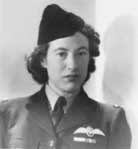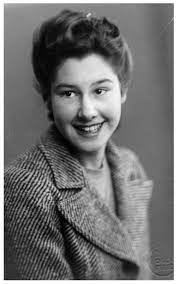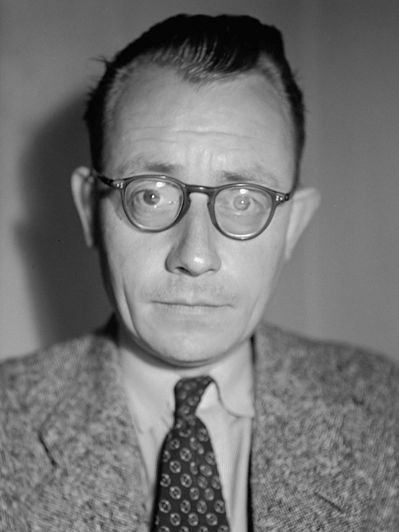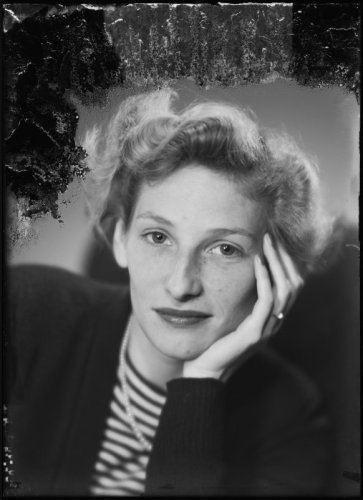
Beatrice ‘Babs’ Musaph
By Pepijn Lucker
“This is the story of ‘trois jeunes filles’ who did everything in their power to get to England. It was on a Wednesday evening, 6 August ’42, that Babs and I decided to leave.”
So begins the account by the Jewish sisters Edith Carla and Beatrice ‘Babs’ Musaph. Together with Rachel ‘Tox’ Waterman, the third of the three young women in the title, they describe the many setbacks they had to cope with on their dangerous journey from the Netherlands. Their two older brothers, Hans and Freddy Wolf Musaph, had already left: Hans in June 1940 via Bordeaux and Lisbon to New York, and Freddy Wolf in early July 1942 (he would reach England more than a year later). A month after Freddy left, Carla and Babs decided to go themselves.
Swindled
Their first destination was Toulouse, from where, they had been told, it was possible to travel on to England. They had met a young man, one Jan Smit, who claimed to know a route there. On Smit’s advice the Musaph sisters took the train to Tilburg, where they met Tox Waterman (Smit had sent Tox to Tilburg too). There they each paid Smit 500 guilders and took a bus to the village of Hooge Mierde on the Belgian border. Smit was to change their money and then follow them. The three women waited for him in vain: “the young man had vanished without trace, with the money and all the valuable information.”
Across three borders
Despite this bad start, the three decided to press on without papers and with what little money they had left. They found two smugglers who helped them across the border at night. They walked to Poppel and on to Turnhout, where they caught a tram to Antwerp, then a train to Brussels and further south. Bad luck kept dogging them – so much so that they gave it a name: the daily “blow on the head”. In Mons the hotel they had been given turned out not to exist; in the café where they ended up, the landlord got handsy (nipped in the bud by “firm action”); and at the French border they nearly fell into the hands of customs officers. But they managed to dodge every check and cross the border on foot. Then luck deserted them again, as they missed their train. They had to cross the fields on foot to avoid police checks. With blistered feet, and hands blistered from lugging suitcases, they finally reached Maubeuge – just as the train to Paris left. They had no choice but to spend the night among the ruins of the town (which the Germans had set ablaze with shellfire in 1940), and took the morning train to Paris. From Paris they soon moved on to Tours, where once again they had to sleep in the open. There, for once, they were in luck: they met a man who could take them across the Demarcation Line. On 12 August, “after five days without food, with 50 guilders in our pockets”, they reached “Free France”.
To Spain
But their troubles were far from over. Immediately after crossing the line, Babs, Carla and Tox were arrested by French gendarmes and sent to the labour camp at Châteauneuf-les-Bains. Conditions there were bad. Their account speaks of “untenable hygienic conditions” and says “no provision at all had been made for girls”. After two months they managed to escape to Toulouse, but the alerted gendarmerie soon brought them back. Two weeks later, however, the three were allowed to leave the camp. They made their way to the village of Capendu, east of Toulouse, to the villa of the widow Lil van Wijhe. Freddy Wolf Musaph, Babs and Carla’s brother, had known her before the war and had passed through a few weeks earlier. Van Wijhe was a flamboyant woman who was said to have worked for the British secret service in the First World War and to have known Mata Hari. She gave the three young women shelter for a while. Having regained some strength in Capendu, they moved on, still without papers. On foot and without a guide they went into the Pyrenees, and after 48 hours of wandering they found they had crossed the border. Once in Spain they were soon arrested by border guards, “who found us all the more suspicious because they could not understand that three girls had come on their own”. Again they spent months in prison, in Figueras, Gerona and Barcelona. There the Dutch consul finally freed them (“bought our release”) and sent them to Madrid. “We have crossed four borders illegally, we have fought for our ideal, and we hope our reward will be that we may help in the great struggle for final victory. Long live the Queen.”
That is where the account of the “trois jeunes filles” ends. A future newsletter will follow their onward journey to Suriname and finally to England.
Pepijn Lucker is a historian who has worked at the Nationaal Archief (Dutch National Archives) since 2015. He is currently a researcher and project leader on the “Engelandvaarders” project, a joint project of the Nationaal Archief, Museum Engelandvaarders and the Netwerk Oorlogsbronnen. It is made possible in part by the Mondriaan Fonds, the public fund for visual art and cultural heritage, and the Ministry of Health, Welfare and Sport.
The Mondriaan Fonds sponsors the project, and one of its conditions is that the author always acknowledges this properly in his communications.