Ida Veldhuyzen van Zanten
By Agnes Dessing
In my series on the motives of the “Engelandvaarders” in the newsletter De Schakel, I identified roughly five reasons why they made the journey:
- Love of country
- Loyalty to the House of Orange
- Love of freedom
- Thirst for adventure
- Personal problems (such as a divorce or trouble at work)
I also tried to show that motive and trigger were closely intertwined. Certain measures taken by the German occupiers (compare the forced labour of Dutch people in Germany, the Arbeitseinsatz; the declaration of loyalty students had to sign in 1943; or the deportation of Jewish Dutch citizens that began in 1942) led to a clear rise in the number of “Engelandvaarders”. In other words, these were push factors: adverse circumstances that turned vague plans to escape to England into a firm decision to go.
In this third instalment I want to look at the motives of one particular group: the women. They were very much in the minority. Of the 1,706 “Engelandvaarders” in my original research group, only 48 were women – just 2.8 per cent. Why was that? Did women find the crossing to England too dangerous? Were they less willing to resist at all?
Research into the role of women in the resistance shows that the latter is highly doubtful. Women did, however, tend to prefer the so-called “caring side” of the resistance, working as couriers or helping people in hiding.
Another possible explanation for the small number of women among the “Engelandvaarders” is that non-Jewish women had fewer reasons to leave the country. The German measures concerning the Arbeitseinsatz, and those aimed at students and servicemen, did not apply to women. Moreover, because so many men had to work in Germany, it fell to women, and mothers in particular, to keep their families going, which in itself was seen as “work for the good cause”. Finally, women may not have seen a role for themselves in England, as the Netherlands had no military service for women.
You might therefore expect most of the 48 women in my study to have been young, single and childless. They were indeed young, but more than half were married or engaged, and many had come with their husbands. Fourteen were single and two divorced. Most of the women were, in fact, childless. Some 35 per cent were of Jewish origin, which supports the idea that non-Jewish women had fewer reasons to leave the country.
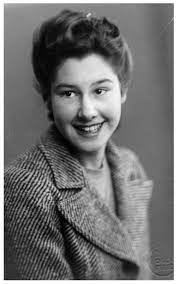
Married women who had followed their husbands were not even asked about their motives on arrival; their interrogation reports simply referred to their husbands’. Unmarried women were asked, and two things stand out. First, the only motives these women gave were love of country and loyalty to the House of Orange. Numbers 3, 4 and 5 on the list above (love of freedom, thirst for adventure and personal problems) were at any rate not mentioned. Second, many of the women had a rather military motivation: like the men, they wanted to fight for the liberation of the Netherlands. Lidy Keg (1920-2002), for example, said during her interrogation that she had heard an appeal on Radio Oranje for young men to come to England:
‘I thought then(1.) : if I were a boy I would do it. I have no ties at all. I want to do my bit for the war […] I want to do something to free our country from the German yoke.
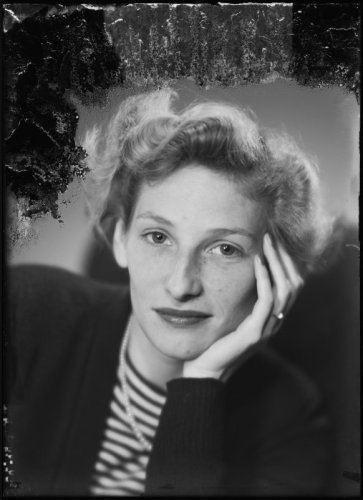
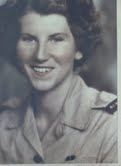
“Engelandvaarder” Ida Veldhuyzen van Zanten (1911-2000) also knew exactly how she wanted to take on the enemy: she wanted to fly. Even before the war she had gained her pilot’s licence, and she worked as a stewardess for KLM.
But as there was no Dutch military service for women, the female “Engelandvaarders” ended up in all kinds of administrative jobs at the various ministries of the Dutch government in exile. Ellis Brandon, for instance, an “Engelandvaarder” and resistance worker who had fled to England because the Gestapo was on her trail, worked at the Ministry of the Interior, where she had the far from thrilling task of recording every birth, marriage and death of Dutch nationals in England in large ledgers(2.).
Fortunately for Ellis, at the end of 1943 the Minister of War, Van Lidth de Jeude, set up a Women’s Auxiliary Corps (Vrouwen Hulp Korps, VHK), which she and many other female “Engelandvaarders” joined. At the end of 1944 they were finally put to work: they crossed to the liberated south of the Netherlands to provide humanitarian aid and assist the Red Cross
(1) A. Dessing, “Tulpen voor Wilhelmina: de geschiedenis van de Engelandvaarders”, Amsterdam, 2004, p. 54
(2) NRC.nl Verzetsoma (article)