The interrogations “Engelandvaarders” underwent after arriving in London have recently been made available on the website of the Nationaal Archief (“Engelandvaarders”, 1940-1945 | Nationaal Archief). But who was the man who questioned so many of them?
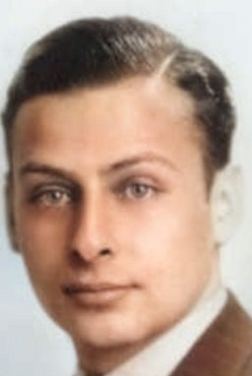
Oreste Pinto was born in Amsterdam in 1889, the late youngest child of the (Jewish) family of Louis Pinto and Annette Rozenboom. After secondary school (HBS) and his military service he studied literature at the Sorbonne in Paris. He had a great gift for languages. Besides Dutch, by his own account he spoke fluent English, French and German, and could get by in Spanish, Portuguese, Danish, Swedish, Norwegian, Romanian and Swahili. From an early age he developed a dislike of Germans because of the ‘lack of modesty, humour and understanding of other people’s ideas, and their contempt for Dutch customs and habits’ that he thought he detected in German tourists.
In his first year in Paris the 20-year-old Oreste had a room in the Rue des Petits Pères. There he became friends with a student five years his senior who called himself ‘Francis Verdier’ but kept his real name from him. Oreste admired ‘Verdier’ for his physical strength and intelligence.
One evening Verdier told him that he secretly worked for the French secret service, the Deuxième Bureau. He invited Oreste to help him catch criminals in shady Parisian bars. Pinto learned to slip unobtrusively into a smoky cellar and ‘hang about with my back to a wall, apparently a half-drunk reveller, but in reality constantly alert to every dangerous and almost hidden movement.’ In the end he also mastered ‘all the dirty tricks’ of hand-to-hand combat.
When the First World War broke out, Verdier played on the 24-year-old Oreste’s thirst for adventure: would he spy for the French in Germany? He agreed. Over the years Pinto’s brother, thirteen years his senior, had built up good relations with German cigar manufacturers.
In Germany Oreste Pinto was to pose as his brother’s representative, but in reality gather intelligence on the arrival and departure of German warships, troop movements and ammunition trains bound for the Western Front. It was a dangerous job, because spies caught in wartime were certain to be executed. But the romantic young Oreste saw it as a marvellous adventure.
At first the spying went like clockwork. He visited German manufacturers to discuss prices and arrange orders. The intelligence his contacts in the port cities of Hamburg and Kiel gave him was written on the back of the labels on the tobacco samples. On receiving them, his brother immediately forwarded the labels to the French headquarters at the British intelligence service in Folkestone.
This went well for nine months, but on 5 June 1915 his contact in Kiel warned him that German counter-intelligence was on to him. Oreste escaped to the Netherlands in the nick of time. For the rest of the war he worked for the Sûreté du Territoire behind the Somme line, interrogating people who had come through the front line.
In the 1920s he owned a translation agency in London. He was also director of several trading companies, including one dealing in citrus and other subtropical fruit, and owned a private animal collection, which he later passed on to London Zoo.
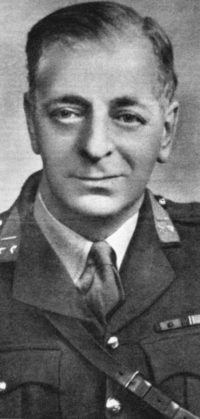
Even before the outbreak of the Second World War he was working for the British security service MI5. In September 1939 he was put in charge of one of MI5’s five reception centres for foreigners arriving in Britain. From April 1941 he worked at the Royal Victoria Patriotic School (RVPS), where the questioning of aliens by the British secret services MI5 and MI19 was centralised. As head of the Dutch section he mainly questioned Dutch “Engelandvaarders”. His intuition, his tenacity and his aim of provoking an emotional crisis in the person being questioned as soon as possible after the start of an interrogation earned him something of a reputation.
In October 1942 he went to work for the Politiebuitendienst, a Dutch security service in London that came under the Dutch Ministry of Justice. Together with another official of this service, J.J. Vrinten, he had a number of successes there. By his own account he unmasked eight spies in London during the war, including the Dutchmen J.M. Dronkers, Ch. A. van der Kieboom and W.J. Pons. Six of them were hanged.
He was also indirectly involved in vetting agents sent to the Netherlands by the Special Operations Executive (SOE). He was astonished at how poorly prepared they were and fiercely criticised the people who sent the agents into the field. The German Abwehr proved him right: almost all the agents SOE dropped over the Netherlands were arrested.
There were at least two Dutch “Engelandvaarders” he could not get a grip on: the engineer Anton Schrader and the civil servant Sophia Mok. In his autobiography De Fuik (The trap) he describes how impressed he was by the intelligence of Schrader, who managed to refute almost every allegation Pinto confronted him with.
The account of his interrogation of Sophia Mok, a senior official at the Ministry of Social Affairs in The Hague, is downright entertaining. After her arrival in England she clashed with Pinto during her interrogation. She did not care for his blunt manner of questioning and contradicted him constantly. Pinto, for his part, found Mok ‘a soured bluestocking, unpleasant in every respect.’ One can imagine Mrs Mok boxing the spy-hunter’s ears with her handbag.
In September 1944 Oreste Pinto left for Brussels as head of the Dutch counter-intelligence section at Allied supreme headquarters, and soon afterwards for Eindhoven, where he questioned people who had come through the lines. His greatest feat in that role was unmasking the double agent Christiaan Lindemans, alias King Kong. Shortly after the failure of the ‘Battle of Arnhem’, Pinto voiced his suspicions about him several times, but because he could not prove them, and Lindemans enjoyed the trust of Prince Bernhard and his aide-de-camp Kas de Graaf, he could not be arrested at first.
Part of the story was probably also the antagonism between Pinto and De Graaf, who had found it hard to swallow Pinto’s intimidating behaviour when he arrived as an “Engelandvaarder”. Only after a German secret agent let slip under questioning by Pinto at the end of October that King Kong was also working for the German counter-intelligence service could he be arrested, on 28 October. To the great displeasure of the Dutch government, Pinto tried to make publicity capital out of the affair.
After the liberation Oreste Pinto joined the Bureau Nationale Veiligheid (BNV, National Security Bureau), where he trained staff and worked on a few espionage cases. During this period he made a misstep by having intimate relations, one after the other, with two female suspects whose cases he was supposed to investigate, and in one case wrongly issuing a declaration of political reliability.
Despite his reputation at the BNV and the Militair Gezag (Military Authority) as ‘the only real professional’ in counter-intelligence in the Netherlands, he had to leave the service as early as 15 October ’45. He was appointed head of the investigations department at the Commissariaat-generaal voor de Nederlandse Economische Belangen in Duitsland (Commissariat-General for Dutch Economic Interests in Germany), where among other things he investigated the illegal export of goods. When a border check revealed that he was trying to smuggle valuables into the Netherlands, he was dismissed in early 1948. He was also suspected of embezzling paintings. This did not lead to an investigation, because he was in South America at the time.
Riding on the huge compliment he once received from the American president Eisenhower – ‘the greatest living expert on security’ – and his reputation as a ‘human bloodhound’ (Daily Telegraph), in the 1950s he wrote a number of books about his achievements with the Allied intelligence services.
His former colleagues, however, could not appreciate the commercial success of his books Spycatcher (1952), Friend or foe (1953), and Spycatcher 2 and Spycatcher 3 (both 1960), because in them he claimed too much credit for other people’s achievements. Even so, his fame as a spy-catcher soared. The BBC and Dutch television devoted a number of radio and television dramas to the Spycatcher.
Pinto spent his last years in poor health in London. He died there of chronic bronchitis on 18 September 1961, aged 71.