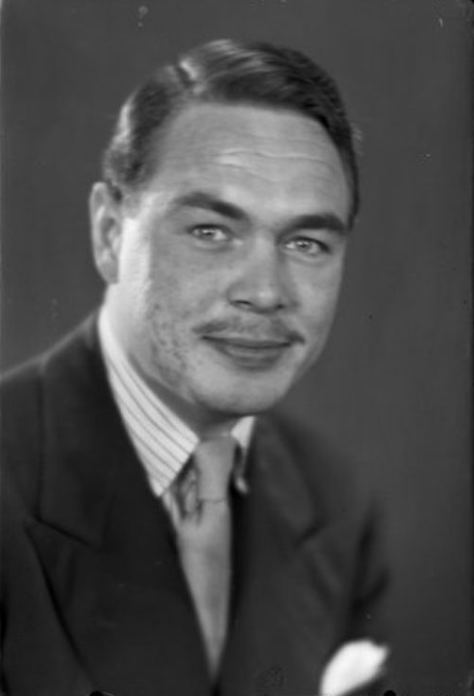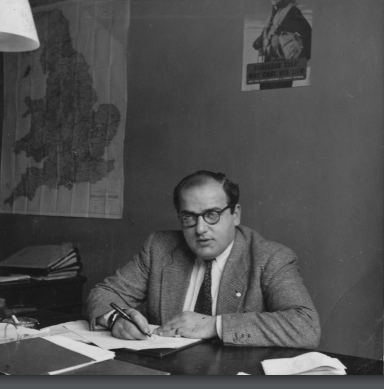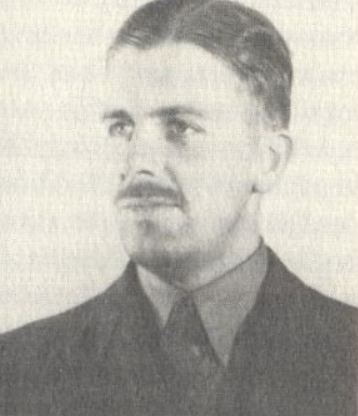
More “Engelandvaarders” served on the Dutch navy’s motor torpedo boats than was previously known. That is the finding of research by military historian Jacques Bartels. He is working on a book about what he calls the ‘invisible’ MTB service of the Royal Netherlands Navy. ‘I want to give the MTB men the attention they deserve.’
Bartels bases his conclusion on research in archives and in the papers of the late “Engelandvaarder” Jacob de Mos, which were entrusted to him. Bartels: ‘I spoke to De Mos a few times, but sadly I was never able to interview him, because talking about his war past would have been too much for him. I did stay in close touch with his family, though.
Through them I came to know him as someone who wanted to keep the MTB service in the public eye, above all because the men who did the exceptionally gruelling work on these fast boats were in danger of being forgotten. A few years after his death in 2016, to my great delight, I was given his entire archive: eight removal boxes full! Whatever was not relevant to my research I passed on to others.’
The municipality of Wassenaar received a box of correspondence about the tragedy involving French commandos on the beach at the Wassenaarse Slag; the Royal House Archives received a box of his correspondence with the Royal House; and Museum Engelandvaarders received everything about his “Engelandvaart” in the hijacked KW 110.
After his spectacular escape from the occupied Netherlands, De Mos served as quartermaster in a flotilla of the Dutch MTB service commanded by the “Engelandvaarder” Hans Larive. The boats operated against the German navy from the port of Dover.
Bartels: ‘The men on the MTBs had an incredibly hard time. The boat raced over the waves at high speed, which meant constant pounding on your lower body. You also had to hold on tight the whole time so as not to go overboard. At the same time you had to do your job: listening for approaching ships with a hydrophone, attacking German convoys, laying mines and taking on German Schnellboote. And all in complete darkness, because the MTBs only went out at night. It’s no wonder the maximum age for MTB service was 35. After that you were too old for it.’
Bartels’ interest in the MTB men was sparked years ago by an uncle of his, Hubert Pontier, who escaped to England as a midshipman on 14 May 1940 and then served on the motor torpedo boats. ‘He was trained by the British and then took part in night actions against Schnellboote, for which he was decorated at a young age. In 1944 he was given command of his own boat, MTB 436.’ The deeper Bartels delved into the history of the Royal Netherlands Navy’s MTB service, the more he realised that no serious study of this branch of the navy had ever been published. Why is that? ‘With barely 300 men, the MTB service was only a small unit within the Royal Netherlands Navy, and so less ‘sexy’ than submarines and destroyers. In my view, that explains why historians have paid it so little attention.’
Bartels set out to change that. He looked for descendants of MTB men, which brought him into contact with the sons and daughters of 20 MTB officers. ‘That produced a great deal of information, including diaries that had never been published. But I could not get hold of personal testimony from the ratings, stokers and other ‘ordinary’ navy men in the MTB service: all brave men who have remained invisible and have never had the attention they deserve.’ Together with genealogical researcher Richard van Arkel, he has since built up a database containing almost everyone who served in the MTB service.
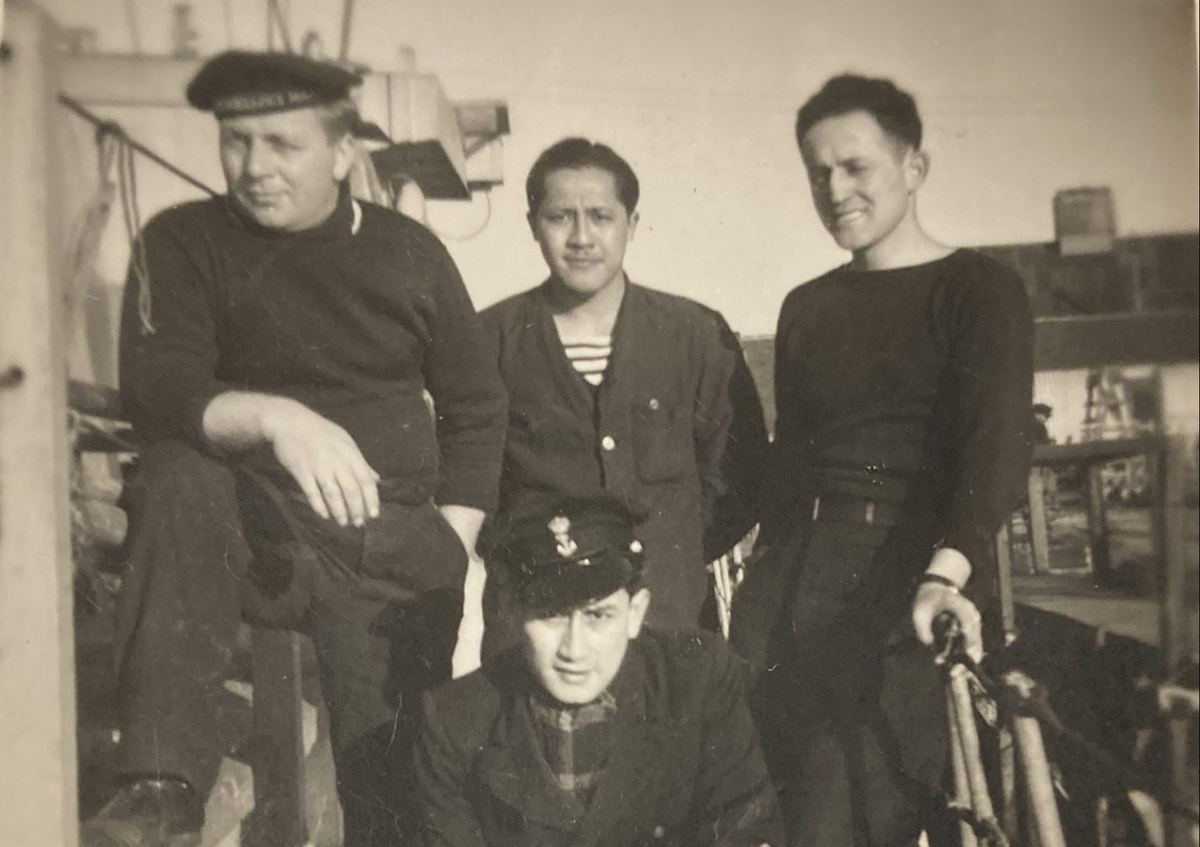
Thanks in part to the De Mos papers, many faces on a group photograph of MTB men can now be matched to names – but not yet all of them. In particular, he would like to know more about stoker A.F. Verbeek. ‘He went down with his boat, MTB 203, on the night of 17 to 18 May 1944, and so he has no grave.
I think he should at the very least have a photograph on the website of the Oorlogsgravenstichting (Netherlands War Graves Foundation) and, of course, in my book. His death is so dramatic.
The 203 struck a German mine in the Channel off Boulogne and could not be saved. Going down alone in the engine room of your boat, never having a grave ashore, and then after your death nobody even knowing what you looked like… That simply can’t be right, can it? I hope I can still give stoker Verbeek a face.’
His research in the Nationaal Archief, the Koninklijke Bibliotheek and the Netherlands Institute of Military History, as well as in British archives, has shown that a number of “Engelandvaarders” who served in ‘the navy’ were in fact serving in the MTB service.
They include the “Engelandvaarders” Robert Broekman, Wiebe Dik, Herman Geraedts, Henk Groen, Harry van Groenendaal, Wim Koole, Daniël Ritmeester, Arie van der Padt, Ton van Schrieck, Gerrit Pieterson, Jan Onderwater and Kees Meijer. A welcome addition!