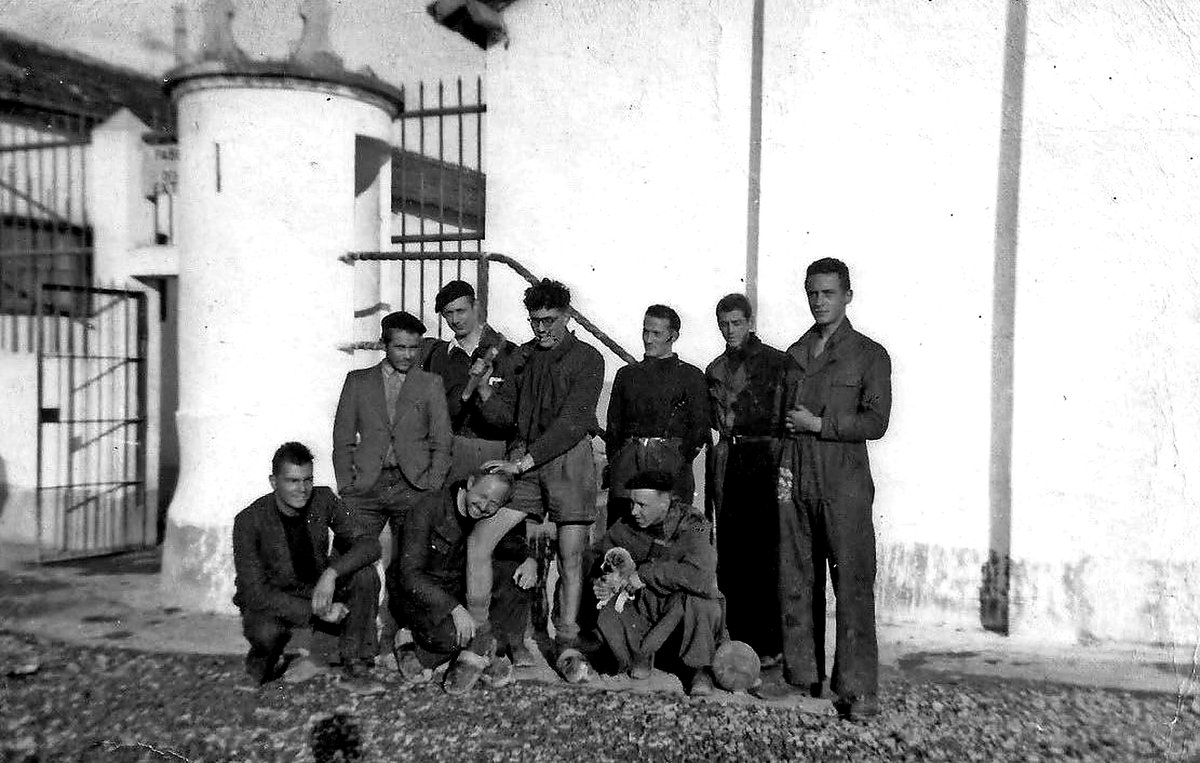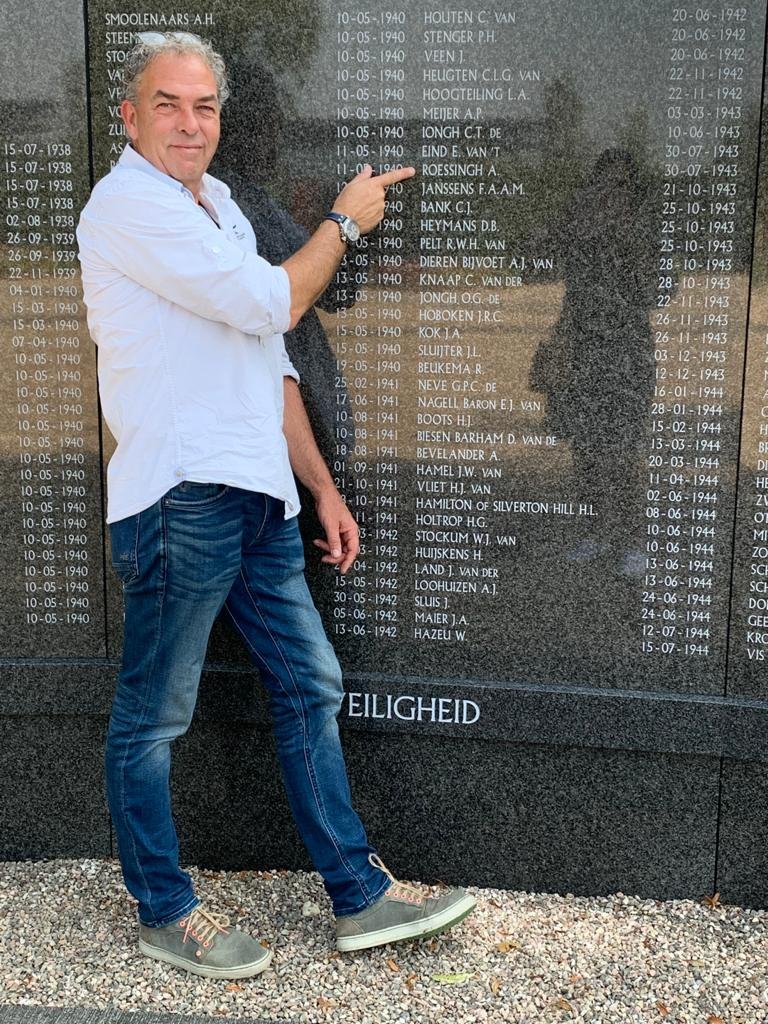
The stories of the “Engelandvaarders” are often remarkable, but the home front sometimes gets less attention. So here is the story of Lucie van der Meij-Kloppenburg, wife of Joop van der Meij, who was left alone with their four children after his failed attempt to escape to England and his deportation to a German prison.
Lucie Elisabeth Kloppenburg was born in 1914 in Semarang, Central Java. The Kloppenburg family had been active around Semarang and in the Javanese princely states since 1860. One Kloppenburg in Semarang was also involved in the “Prauwenveer”, the lighter service that ferried cargo ashore, as Semarang had no harbour for seagoing ships.
My grandfather, A.H. Kloppenburg, had made his name in the trade in coffee, tea, tobacco, sugar and other colonial goods, and as a partner in the firm of Mirandolle Voûte. A Catholic, he was also chairman of the Catholic orphanage in Semarang, while his brother sat on the Volksraad, the colony’s People’s Council, for the Catholic Party.
On the strength of his international trading experience, the colonial government appointed him in 1934 as director of the Netherlands Indies Sugar Marketing Association (NIVAS), based in Surabaya. It was there that Lucie met Joop van der Meij, the most junior officer aboard one of the navy’s submarines, during a visit to the submarine barracks that the commander of the submarine service, Commander L.A.C.M. Doorman, had arranged for Grandfather Kloppenburg and his daughters.
In a conversation I once had with Paul Bartelings, chairman of Museum Engelandvaarders, we wondered why so many “Engelandvaarders” had ties with the Dutch East Indies. I think family ties drew them. Many young people from the Indies traditionally went to secondary school in the Netherlands and were stuck in the occupied country after the capitulation. In Joop van der Meij’s group of “Engelandvaarders”, too, most had an Indies background and wanted to defend the colony against the Japanese. Joop’s war memoirs were published in 1997 by the Institute for Maritime History. He dedicated them to Lucie, our children and grandchildren, and all the navy wives who had to do without their husbands during the war. His book “Op Erewoord… Oorlogsherinneringen van een marineman” (On my word of honour: war memories of a navy man) can be requested through the Dutch library service.
Surabaya
For a woman in the Indies of the 1930s, marrying a serviceman meant facing the real possibility of war with Japan.
When our parents met Joop’s most senior commander, Rear Admiral J.S.C. Olivier, at the Modderlust club in 1934, he warned them: “Is it wise to marry?” He was convinced that a major war was coming, not only in the Indies but in Europe above all.
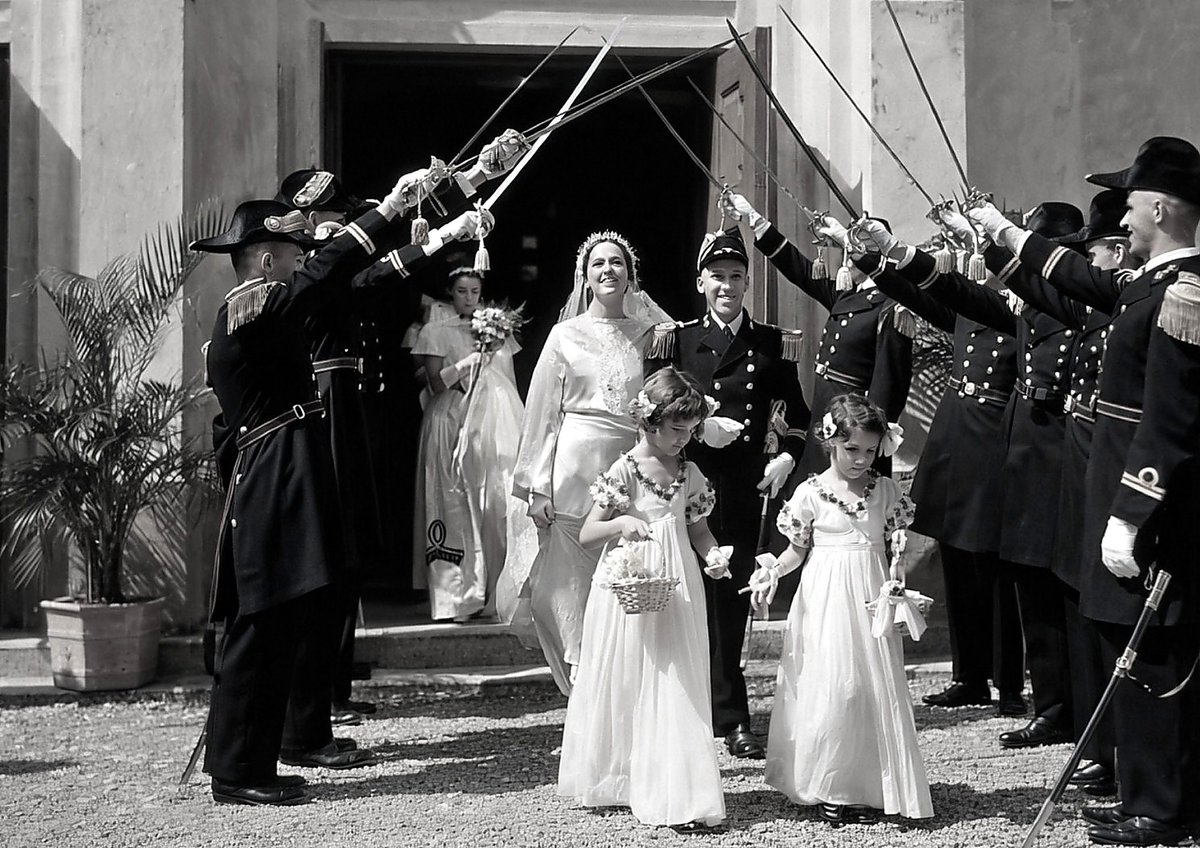
Lucie replied: “We love each other, so we will face the dangers of such a war together and help and support each other.” Joop and Lucie married on 18 May 1935 in the Sacred Heart Church in Surabaya. A marriage asks a great deal of both partners. In hard times, faith in God gave both my parents vital support, alongside a sense of duty and loyalty to Queen Wilhelmina and their country. Most relatives on both the Van der Meij and the Kloppenburg side lived in the Indies; one of Joop’s sisters was a schoolteacher on the very remote island of Banda Neira. In 1936 Joop was posted back to the Netherlands.
Den Helder
From 1936, through the mobilisation and the May days of 1940, Joop and Lucie lived in Den Helder. After the Netherlands capitulated, Den Helder was bombed. Panic broke out as bombs hit houses. Lucie ran to the dyke with baby Lucie and the other children, where a man in clogs almost trod on the baby. The shipyard and the naval base were spared. Although Joop was interned in the naval barracks with the regular crew and the mobilised men, he was able to help Lucie and the children. She managed to get Jan, Huib and little Lucie onto a train packed with refugees to Amsterdam, where her sister Ine lived, and from there on to her parents’ house in The Hague.
The Hague and Scheveningen
Together with Henk Bouvy and John Siliacus, both former officers on the destroyer HNLMS Van Galen, Joop worked out an escape plan. He bought a small boat, and while Bouvy tested the engine and the outboard motor, Joop and Siliacus looked for a good place to set off. To cover the costs, they asked a few more men to join them: Jelke Bosch, Hendrik Cohen, Rudolph Cort van der Linden and Johannes Evert van der Slikke.
On 20 September 1941 the group of “Engelandvaarders” left in the seven-metre outboard boat from the old ferry jetty on Wieringen. Through a clandestine prison telephone in Scheveningen prison (the “Oranjehotel”), Lucie and her mother learned that the German navy had intercepted Joop’s group at sea and locked them up in the prison.
My mother now had to work out how to reach Joop. Because the men had signed a “declaration of honour”, the “Engelandvaarders” faced a court martial that could end in the death penalty. Lucie had no intention of sitting and waiting. With Huib, she cycled to the Binnenhof and rang the bell at the notorious green door of the Gestapo office. A German woman in a grey uniform opened it and asked what she wanted. Lucie said her husband had not come home for several days and that she feared he had been arrested. The woman asked exactly how the name was spelled and went back upstairs. She returned with a large ledger: yes, that was right, he had been captured on the North Sea by the Kriegsmarine along with six others.
The woman told Lucie that the group would be tried by the “Marinekriegsgericht”, the German naval court, and even gave her its address. With this crucial information, Lucie cycled straight there. Again she was treated courteously, and she came home with permission to visit Joop the next day in the notorious “Oranjehotel”.
That was not the end of it. Lucie had to mobilise important allies, starting with the most senior naval officer still in the Netherlands, Rear Admiral L.A.C.M. Doorman (brother of Karel Doorman), who had been a witness at their wedding in Surabaya. Doorman came at once to confer with Lucie and her father. Lucie also informed a few others who knew about the escape, such as the then editor-in-chief of the newspaper De Tijd. She told them about the interception of the boat and that secret documents on German propaganda, censorship and instructions to the press had been thrown overboard in weighted packages before the arrest.
Joop got a good lawyer. The naval court in The Hague proved receptive to the argument that the group had been on its way to the Indies…
In the midst of all this upheaval, my sister Maria Pia was born. At the gate of the Oranjehotel, my aunt was told: “Maria Pia soll sie heißen” (“Maria Pia she shall be called”). So Lucie, still confined after the birth, knew for certain that Joop had heard about his new child.
Laren
Because of the construction of Hitler’s “Atlantikwall”, the Kloppenburg family had to move to Laren in North Holland shortly after the trial. Berlin, however, quashed the verdict against Joop and the others, and the case was transferred to the “Heereskriegsgericht”, the army court, on the Gansstraat in Utrecht. From visits there, my brother Huib remembers that the German staff on the Gansstraat were quite decent compared with those at the Oranjehotel.
Spared the worst, Joop was sentenced by the army court in Utrecht on 27 February 1942 (the same day the fleet was lost in the Battle of the Java Sea) to four years’ imprisonment with hard labour for leaving occupied territory without permission, and sent to Germany. From then on, the only contact was by letter. On an aunt’s advice, letters to Joop were sealed with red wax which, if I remember rightly, bore the imprint of her father’s signet ring to lend them some importance. His replies were read by the German censors too; Huib remembers the blue lines struck through the text.
My mother had no money; only towards the end of the war did a little reach her by clandestine means. My brothers Jan and Huib and our eldest sister Lucie went to school in Laren. My grandfather was there for all of us. He was a far-sighted man who bought coal in good time, put up a wind turbine with batteries, dug over the garden for runner beans and potatoes, and kept fruit trees, chickens and rabbits. My brother Jan helped him, and that is where his love of farming began. Sadly, our chickens and rabbits were regularly stolen. We also kept two pigs, one (compulsorily) for the Wehrmacht, called “Adolf”, and one for ourselves. When Adolf died, our own pig had to be slaughtered in secret.
Once the general railway strike began after the Allied landings at Arnhem in September 1944, Grandfather Kloppenburg could no longer get to his work in The Hague. From then on he kept a diary, recording everything he did to provide for his large family. He also followed the course of the war and noted black-market food prices.
For Lucie it was an unrelenting struggle to keep her four children healthy. During the Hunger Winter she went “foraging” on a sturdy Fongers bicycle, right through the Eem defence line, without any trouble from German soldiers. Uncle Jan van der Schoot knew the area around Apeldoorn, and they came home safely. The trip was a great success: Lucie returned heavily laden with 35 kilos of rye and wheat, 10 kilos of chicken feed and 35 pounds of oats. She said she had begged for all of it. For bartering, my mother had coffee (still from the Indies) and textiles, which were worth something then. Just how close Laren and its surroundings came to famine became clear when Joop, on his way home after the liberation, visited his old commander, retired Vice Admiral Jonkheer G.L. Schorer, in Baarn and found him suffering from hunger oedema.
Liberation brought relief, but then war broke out in the Indies. After a short posting in Amsterdam, Joop left in haste for the Indies as first officer of the destroyer Tjerk Hiddes. Lucie faced serious problems: Jan had caught open tuberculosis at school and spent many months in the Catholic Dekkerswald sanatorium in Groesbeek. For that reason Lucie chose not to follow Joop.
From 1947 Lucie lived with the children in Heemstede. It was a time of little coal, little money and very little entertainment, with only the occasional family friend calling by and the odd letter from the Indies. Fortunately there was now and then a phone call or a food parcel with Eastern delicacies, which kept alive the hope that Joop would come home safe and well. In 1949 he did indeed sail home aboard the Johan van Oldenbarnevelt.
I was born in February 1950, and life for the Van der Meij family began to return to normal. In 1972 Lucie and Joop went back to Semarang once more.
Sources
“Op Erewoord, oorlogsherinneringen van een marineman” (war memoirs) – J.N.J. van der Meij
Van der Meij family archive
With thanks to my brother Huib P. van der Mey in Amsterdam