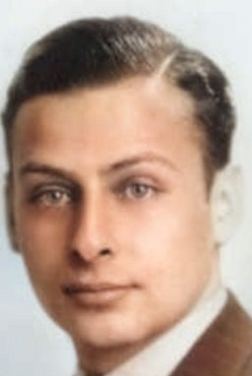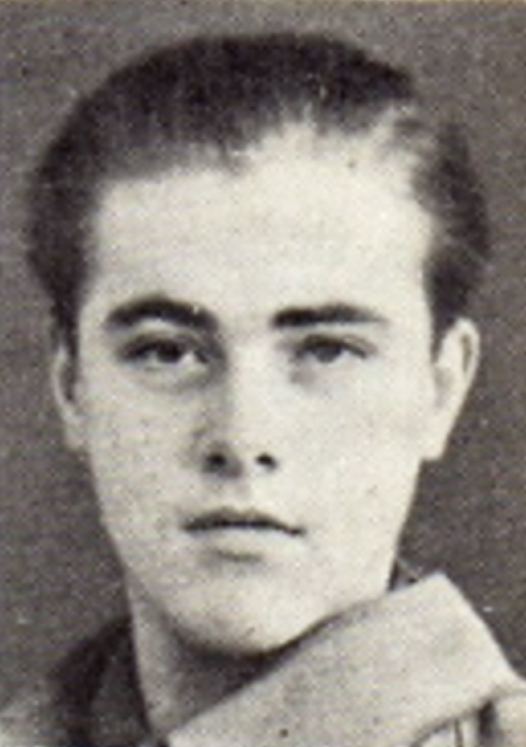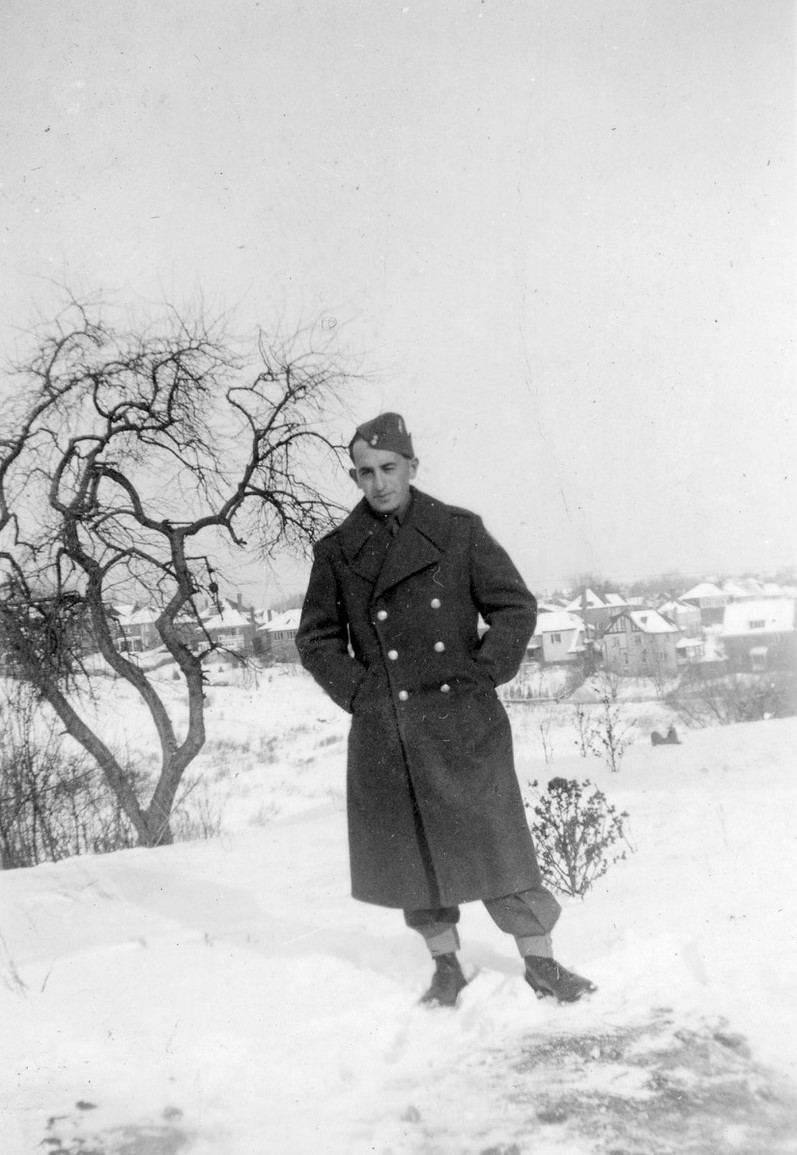
Leo Rodrigues Lopes and the government never made their peace
Like some other “Engelandvaarders”, the journalist Leo Rodrigues Lopes was regarded as a real nuisance by the Dutch government in London. As a political offender, he was even interned for a time on the Isle of Man.
Leonard Alexander Rodrigues Lopes, born in Amsterdam on 28 June 1909, came from a Portuguese-Jewish family. In the 1930s he worked in London on the editorial staff of the Daily Express (then the largest newspaper in the world), and later in Brussels as a correspondent for the Reuters news agency. His divorce forced him to return to Amsterdam with his children in 1939. After the German invasion, he and his friend Sijbren de Hoo, head of the Centraal Distributiekantoor (central rationing office) in Hattem, set up an organisation that found hiding places for Jews.
Little is known about his “Engelandvaart”, but it is certain that in early 1941, after placing his children in hiding, he moved from Amsterdam to Antwerp. He believed the persecution of Jews in Belgium would be less harsh, but he did not feel safe there either. He managed to leave Belgium and travel on through France to Spain. There he went to work for the representative of the Dutch Bureau Inlichtingen (intelligence bureau), H. Maas Geesteranus LLM, who was based at the Dutch legation in Lisbon. When he heard talk in Lisbon of a planned assassination of a Dutchman in Spain, he went to the Portuguese capital to investigate. After seven months in Lisbon he flew to England, where on arrival he was held for questioning at the Royal Victoria Patriotic School. A few weeks later, however, he was back in Lisbon with an assignment from the Dutch secret service that he was to carry out in France. It came to nothing, because the Spanish police sent him back to Portugal.
At the end of February 1944 he arrived in Britain for the second time. This time the British security service spent weeks investigating his political reliability, and he was provisionally interned on the Isle of Man in the Irish Sea, where MI5 held most of its detainees. He was told that this was at the request of the Dutch authorities in London, whom he had called ‘cowardly and corrupt’. On his release he went back to work for the Daily Express. In his articles he gave ample space to the grievances of Dutch seafarers against their government and tried to convince ministers of ‘large-scale wrongdoing’ within the Dutch intelligence services. In July 1945 he was deported to the Netherlands. The book he published about it in 1947 – ‘Het Heilig Huisje – Analyse van het Londensche beleid’ (The Sacred Cow – An Analysis of London Policy) – sold 10,000 copies. But Leo Rodrigues Lopes and the Dutch government never made their peace.
On arriving in the Netherlands, Leo was briefly interned in Kamp Vught. There he found himself among former NSB members (Dutch Nazi party), SS men, collaborators, black marketeers and war criminals, but also among ‘thousands’ who, in his view, had been rounded up ‘indiscriminately’ on mere suspicion or false accusations – ‘an indelible disgrace in the history of Dutch justice’. In the camp he wrote his ‘Witboek betreffende het gebeurde in de Nederlandse internerings- en bewakingskampen in de jaren na de bevrijding’ (White Paper on events in the Dutch internment and detention camps in the years after the liberation), about the abuse, harassment and humiliation inflicted by Dutch guards. In this volume, ‘dedicated to the bona fide resistance’, he claimed that ‘most internees were neither NSB members, nor traitors, nor collaborators to any degree’ and that in Vught ‘murderers were the jailers and thieves the commandants. (…) There are burial grounds near Dutch concentration camps that cry out as loudly as the burial grounds of Auschwitz or Bergen-Belsen’.
After his release he went to work in Amsterdam for the critical weekly De Ochtendpost, where he once again took aim at the government’s years in London. This did not go down well: on 19 September 1945 he was arrested again by two officers of the newly founded Bureau Nationale Veiligheid (BNV, National Security Bureau) and held in custody for some time. In early 1946, in De Ochtendpost, he was the first to expose what would later become known as the Velser Affaire. He set out to answer the question of why the occupying forces had been so successful in Velsen and Kennemerland, where the Germans had arrested and murdered a number of mostly communist resistance fighters, among them Hannie Schaft. His articles fuelled rumours that resistance fighters had been betrayed to the German police by Dutch and Allied authorities in order to damage the left-wing movement. He also suggested that the affair had been hushed up by the political investigation department in Amsterdam, basing this on a file he had received from a dismissed BNV officer. And when the country’s most notorious traitor, Anton van der Waals, vanished without trace, he told his readers that Van der Waals had been smuggled out of the country to Germany with the knowledge of the BNV leadership. A year later, that turned out to be no invention.
After a dispute with his publisher, in 1947 he continued his philippic against the Dutch authorities in a weekly of his own, De Nieuwe Post. In it appeared one libellous piece after another about the abuses in the dozens of ‘detention forts’ the Netherlands had in the first years of the war (besides Vught, these included Duindorp, Blauwkapel, Honswijk, Kamp Ampsen and the remand prison in Almelo). The BNV bore the brunt: its leadership had supposedly been ‘wrong’ during the war themselves and had even set up an ‘elimination squad’ to get rid of resistance fighters with unwelcome political views. But the Directorate-General for Special Jurisdiction and the Political Investigation Services (PODs) came in for criticism too.
Because of the continuing criticism of the BNV, from other quarters as well, the Tweede Kamer (House of Representatives) set up the Wijnvelt Committee, which dismissed Rodrigues Lopes’s accusations as ‘malicious and irresponsible fantasy’. He was sued for libel several times and ordered to pay damages. On the other hand, the court found in his favour in a case brought against him by police detectives involved in the Velser Affaire. Partly because of mounting legal costs, his paper ceased publication after July 1951. In 1952 he suffered a heart attack and fell from his bicycle in the Lutmastraat in Amsterdam. He died on the way to the Wilhelmina Gasthuis hospital. The manuscript of the book he was working on – entitled ‘Fauteuil van bloedrood plûche’ (Armchair of blood-red plush) – has never been found.
Rodrigues Lopes reappears in Marijke Verduijn’s recently published book ‘De verliezers – Straf en heropvoeding in Kamp Vught 1944-1949’ (The Losers – Punishment and Re-education in Kamp Vught 1944–1949). The author quotes extensively from his ‘white paper’ and confirms the conclusion he had already drawn in 1948: with the knowledge of the camp authorities, guards ‘almost everywhere had no scruples about tormenting and abusing defenceless people, adopting methods used by the Germans during the occupation.’ It is remarkable that, almost eighty years on, his testimony is finally receiving the recognition it was denied in the post-war years.
Sources:
Piet Hagen: Dubbel zondebok – Joodse journalisten in tijden van antisemitisme en vervolging 1920-1945. Published by Arbeiderspers, 2022
Marijke Verduijn: De verliezers – Straf en heropvoeding in Kamp Vught 1944-1949. Published by Uitgeverij Balans, 2023
Report of the Wijnvelt Committee, September 1948
Archive of the Ministry of Justice in London 1940-1945, inventory no. 12178
De Telegraaf, 3 December 1952
L. de Jong: De bezetting, volume 9, p. 536