“I’m doing splendidly, truly I am”
by Just Stam
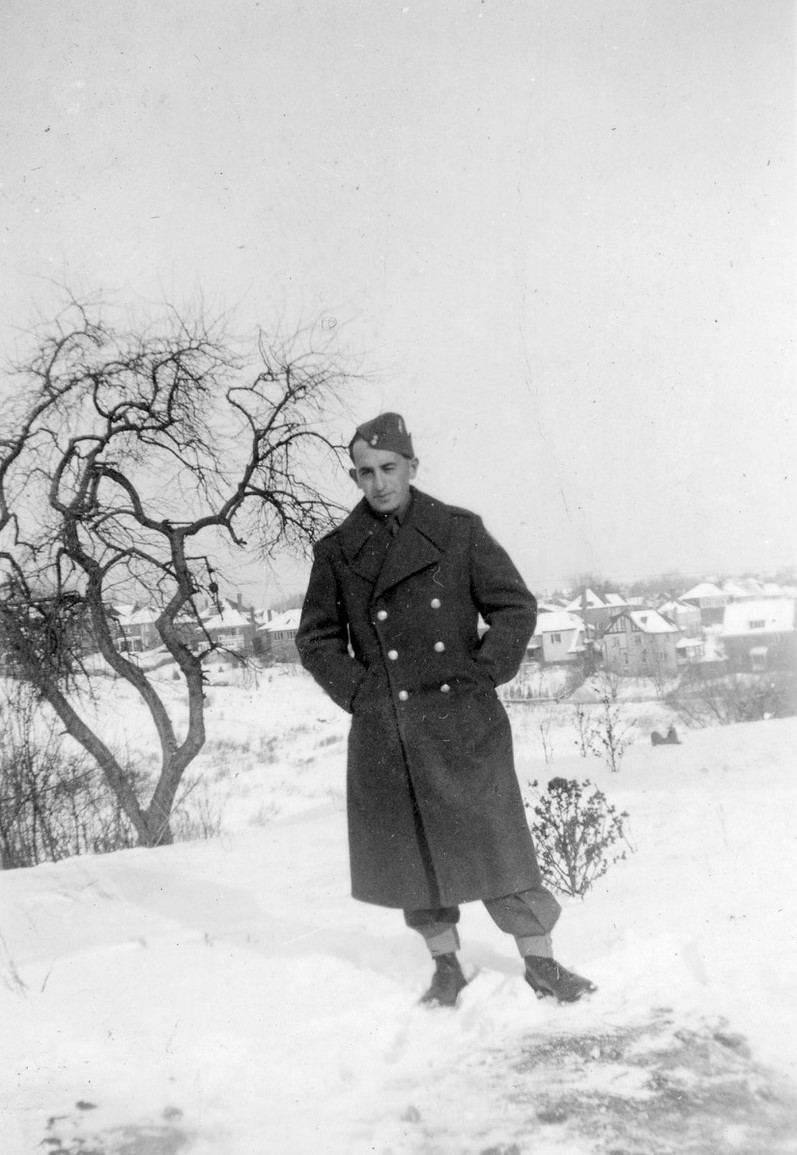
It is spring 1943, and Robert Jongbloed from Groningen, barely twenty, is wondering what to do. Like many young men his age, he has evaded the Arbeitseinsatz, the German forced labour scheme, and wants to get to England so that he can fight the Germans from there. But his mother is seriously ill and has little time left. Can he really leave?
He decides to wait until his mother has died. On 24 July 1943, shortly after her death, he leaves his father Henk, his brothers Frank and Hans and his sister Sonja behind in Groningen and sets out to reach England by way of Spain and Portugal. He gets as far as the south of France, where he is arrested on 30 July 1943.
On 4 September 1943 he writes to his father from a prisoner-of-war camp in Compiègne:
“I tried to get into Spain, but at Tarascon, where there turned out to be a Sperrlinie, I was picked up on the train by the Deutsche Feldgendarmerie. After that I spent two weeks in prison in Toulouse, and I have now been in the prisoner-of-war camp at Compiègne for three weeks. There are still 1,500 men here at the moment (a transport of 1,000 left yesterday), 30 of them Dutch, so I needn’t feel lonely.
We are treated well here, only … we could do with a bit more to eat. To that end you can send colis (= parcels) through the Red Cross, which could contain: bars of chocolate, toothpaste, a good-sized empty vinegar bottle, a bag of salt, boxes of matches, packets of oat and barley meal, packets of grey peas and brown beans and a spiced loaf, a piece of cheese just once if possible and, if you can get it, a tin of condensed milk, my tracksuit, warm underwear, needle and thread, warm socks, two penknives, a pair of pyjamas and then biscuits from Chris – if you let him read this letter, he might sell a kilo a week. For all sorts of details you can turn to the Red Cross. Phew, that’s that.
Well, everyone, you mustn’t worry at all, because I’m doing splendidly, truly I am. We don’t have to do anything here, it’s clean and we can enjoy as much fresh air as we like. All the very best, then – do write soon, and give my regards to all our friends, won’t you? Bye!”
When Robert’s father, Henk Jongbloed, receives this letter on 5 October 1943, another message arrives with it, sent on 15 September. It is a card with a pre-printed text in French, which translates as: “I will have been transferred to another camp. Do not send any more parcels. Wait for my new address.”
On 7 November 1943 Robert writes to his father again, this time from Buchenwald concentration camp, where he was taken on 18 September. When his father receives the letter, he sees that it is written in German, as the German censors required. Translated, it reads:
My dear ones, At last some news again from the prodigal son. Don’t worry about him in the slightest, for he is in good health and always in the best of spirits. How are you all? Please write as soon as you can, because I am longing to hear from you, and from all our friends too, but write in German.
You may also send as many parcels, as large as you like. What I absolutely need – I really can’t manage the winter without it – is one of those woollen hats that covers the whole head down to the shoulders and leaves only the eyes free, a woollen scarf, plenty of thick woollen underwear and a pullover, three pairs of woollen stockings and heavy greased-leather boots (size 43). Also a few bars of soap, a towel and handkerchiefs, a toothbrush and toothpaste. All of this in one parcel, please (…). If you would also like to send food, that would make me very happy, because I always have a good appetite.
Above all, send things that don’t spoil easily, such as spiced loaf, cheese, oat and barley flakes, tinned food and condensed milk. Something to put on bread, like syrup and artificial honey – perhaps Mrs Van Brakel would look in your oven some time – and ask Chris whether he can supply a great deal without coupons. If the “cumin paste” can still be had without coupons, send about ten kilos, well packed in tins, because it is nourishing, very cheap and doesn’t go off quickly (saccharine?). But you will know best what to send. Pack it well and find out the quickest way of sending it. Many kisses and greetings. Bye! Rob.”
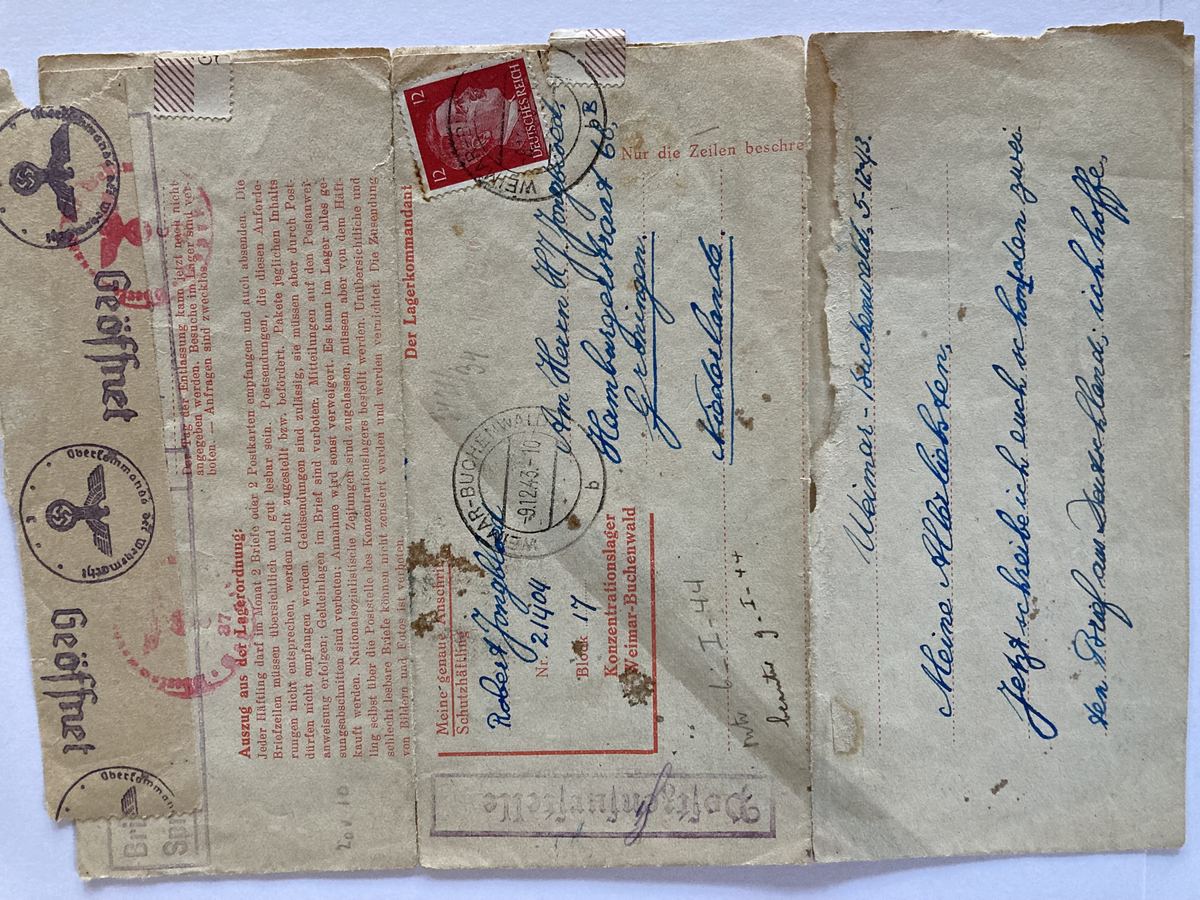
Four weeks later, on 5 December 1943, Robert writes once more:
“My dearest ones, This is already the second letter I have written to you from Germany; I hope you safely received the first one and both letters from France, and that this one arrives safely too. I can still say that I am in good health, and I hope with all my heart that the same is true of you. But first I want to wish you a happy Christmas and a blessed New Year, and my sister and father a happy birthday. I also hope that Hans had a lovely birthday and that you all had a wonderful St Nicholas. Write soon and tell me how you all are – I am tremendously interested.
Do send me the parcel I asked for quickly, with the woollen underwear, gloves, hat, scarf, pullover, stockings and greased-leather boots, and also lots of parcels of food (at least one a week, yes). People here receive a lot of food in their parcels, such as winter carrots, onions, cake, spiced loaf, bacon, all kinds of things to put on bread, and flour – you can send those too – and what I asked for in the other letter, especially the parcel with ten kilos of “cumin paste”, if all this isn’t too much for you. I may also receive 30 marks every month, which would be very useful; you can send it by postal order and the parcels by ordinary post or by rail.
Now I don’t want to write about practical matters any more, only about you and all our friends. How is everyone? I wish you all every good thing with all my heart, and every day I hope for a reply to my first letter. But now I must stop, and I do so with many warm kisses and greetings to all. See you soon, bye! Rob.”
Henk Jongbloed receives his son’s letter on 6 January 1944. That same day he sends Robert a postal order for 30 marks, followed three days later by a reply. Robert never got to read it: on 9 February 1944 the postal order comes back to Henk marked “24/12-43 gestorben” (died 24/12/43). A parcel of goods sent to Robert is also returned.
Only on 14 June 1944 does Henk Jongbloed receive official confirmation from the Sicherheitspolizei that his son has died, of a gastrointestinal infection in the hospital at Buchenwald.
Almost four months later the Afwikkelingsbureau concentratiekampen (concentration camps settlement office) in Vught also confirms Robert’s death. “In accordance with the applicable regulations, his remains were cremated in the crematorium at Buchenwald.” The office names two people who had been taken to Buchenwald on the same transport as Robert: Frans Spierings and Jelle Timmers.
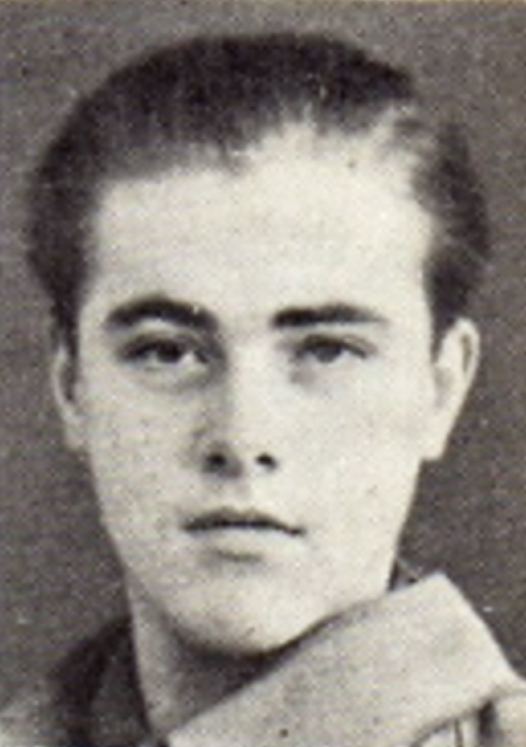
On 11 October 1945 Henk Jongbloed writes to Timmers: “You will understand how eager we are to get in touch with someone who was in the camp with him and could tell us more about his life and wishes in Compiègne and Buchenwald. If you knew my son well, my family would greatly appreciate it if you could give us this information. However unimportant some experiences may seem to you, to us they could be a source of inestimable value.” He encloses a photograph of Robert to help Timmers recognise him.
The letters Timmers sends in reply show that he did know Robert, though not by name. “Yes, the camp, that was something. Like me, your son was neither a communist nor an Orangist, and then you have a very hard time of it in the camp – not from the SS but from your own fellow Dutchmen, because you aren’t a communist.”
Henk also writes to Frans Spierings, asking for information about his son. Spierings replies that he has made enquiries among other former prisoners.
“On the basis of what they have told me, I will try to let you know what I know about your son. Well, on 16 September a general roll call was sounded in the camp at Compiègne and about 1,000 men were selected for transport. Early the next morning we left for the station, where a train of cattle trucks stood ready. We were put fifty men to a wagon. For food we had one loaf of 1½ kilos with a piece of sausage, and one Dutch Red Cross parcel between two. Towards evening we reached the border of Lorraine, many having tried to escape along the way. Once in Germany the wagons were thrown open and everyone had to strip stark naked. Then two or three wagons were emptied and all their occupants crammed into one wagon to prevent escapes. You will understand that the heat in the wagons was tropical. Utterly exhausted – our food had also been taken from us at the border – we arrived in Buchenwald on the evening of 18 September. There we were given a bath and striped clothes, and by about three o’clock we were all in bed.”
“Your son was probably put in Block 55. When the quarantine period was over (two to three weeks), small groups of prisoners were sent off to Arbeitskommandos, and that is probably how your son left too. Each kommando had its own Lager. If someone fell ill there, he went to the sick barrack. This, however, was very primitive and had almost no equipment. If a prisoner became very seriously ill, he was taken back to Buchenwald, the main camp, where he was admitted to the Revier (sick barrack), which was better equipped.”
Spierings ends his letter with these words:
“I can imagine the great grief of your family. Your son, torn away in the prime of his life. Be assured that I share in your sorrow. I would like to comfort you, but here all words are too many. They miss their mark. Only one thought can bring comfort to you and yours. Your son did his duty – indeed, he did more. He suffered under the occupation, not for himself, but for the suffering of your family, of his friends and acquaintances, of our whole nation. In his idealism he saw it as his highest duty to deliver us from this misery, to fight for our freedom. For that he was prepared to give everything, even the greatest and highest thing he could give: his life.”
“May he rest in peace.”
Sources:
Information from Hans and Lex Jongbloed
Letters and other documents by and about Robert Jongbloed, donated to Museum Engelandvaarders