The diaries of “Engelandvaarder” Johannes Beukema
Reproduced from: Marineblad 1-2025, pp. 33-35
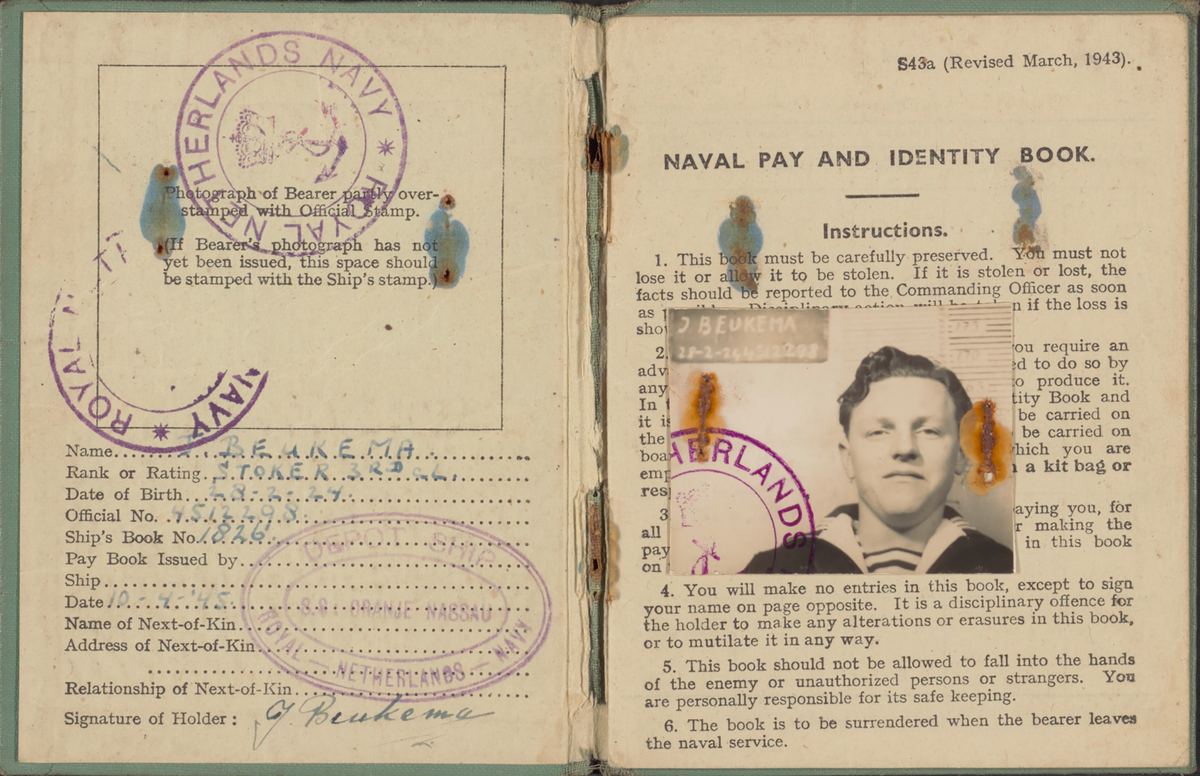
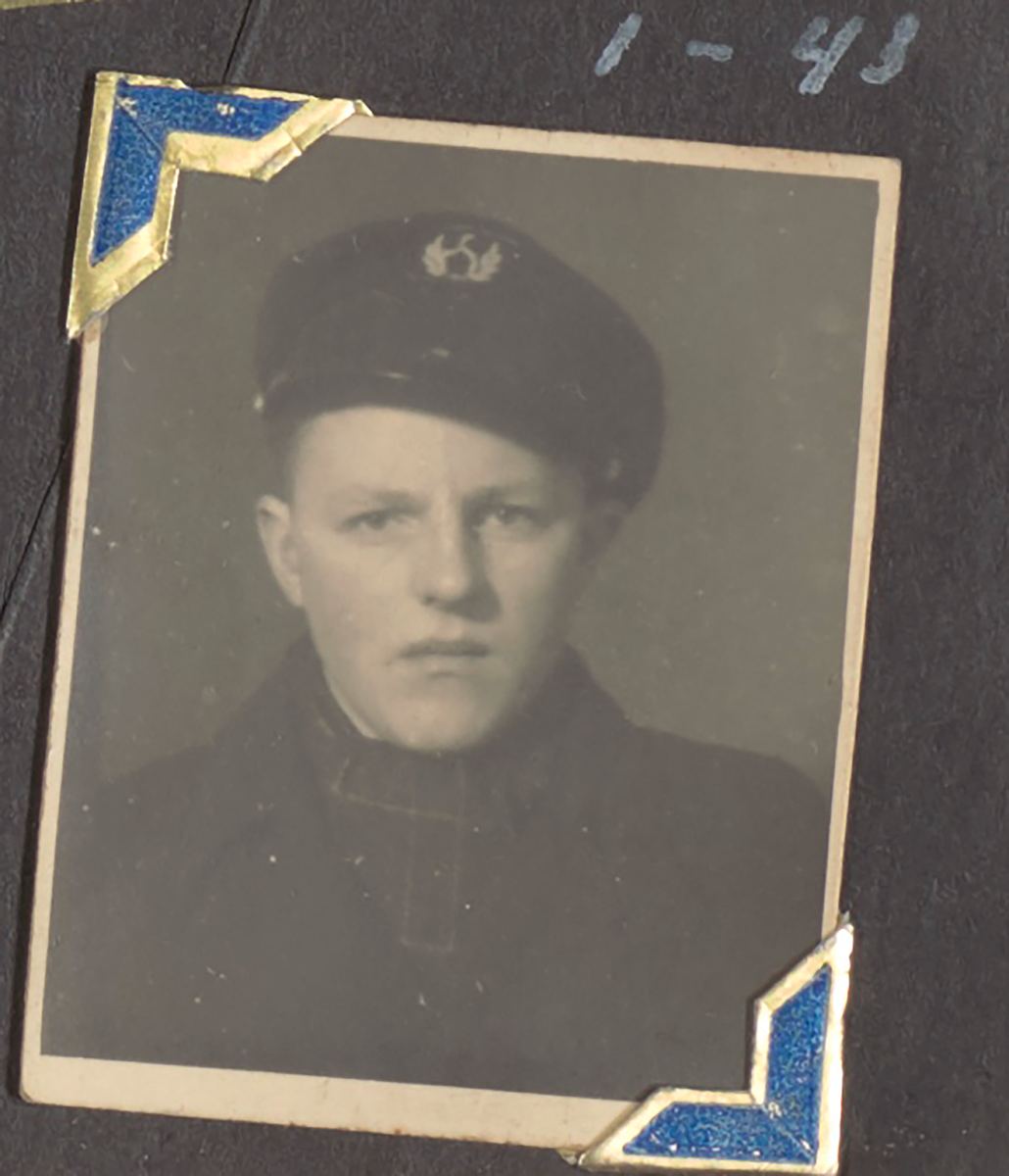
Johannes Beukema is 16 when the Second World War breaks out. The very young lad from Groningen is doing odd jobs as a labourer on local farms. He has no idea yet that the war will send his life in a completely different direction, far from the villages of East Groningen where he is growing up.
For Beukema goes to sea: first in the occupied merchant navy in the Baltic, from where he will attempt his “Engelandvaart”, and later as a war volunteer with the Royal Netherlands Navy in Indonesia. By the time he returns to Groningen at the end of 1948, he has many nautical miles behind him, has lived through two wars, has seen icy fjords and tropical islands, and has recorded his experiences in two diaries.
An “Engelandvaart” from the occupied merchant navy
In August 1942 Beukema ends up as second engineer on the MV Gruno, a coaster requisitioned by the occupying forces. Over the following months he carries iron and concrete from Hamburg to Norway to supply the German troops. It is dangerous work. At the end of August the Gruno strikes a sea mine, but the young man from Groningen has just been transferred to another ship whose second engineer has fallen ill. A few months later he has another narrow escape: sailing into the harbour at Molde on the way to Trondheim, he sees the wrecks of five German ships and a Norwegian one, all sunk by a pair of British cruisers. ‘That had happend [sic] 3 days before our arrival in Molde.’ Twice Beukema escapes an early watery grave, yet he gives it no more than a few lines.
The occupied coastal trade pays well, and despite the danger from cruisers and mines, life on board is good – and about that he writes a great deal. Beukema says he always has plenty of meat, ‘lots of butter’, more cigarettes than he needs and even biscuits and chocolate bars. Yet that is not what he signed up for. On a loose sheet of paper tucked into the front of his first diary he reveals the real reason: ‘Johannes Beukema – born 28-02-1924 – escaped from ship 28 May 1944’. The German transport fleet sails close to the Swedish coast, and he plans to escape through this neutral country to England and join the Allied war effort.
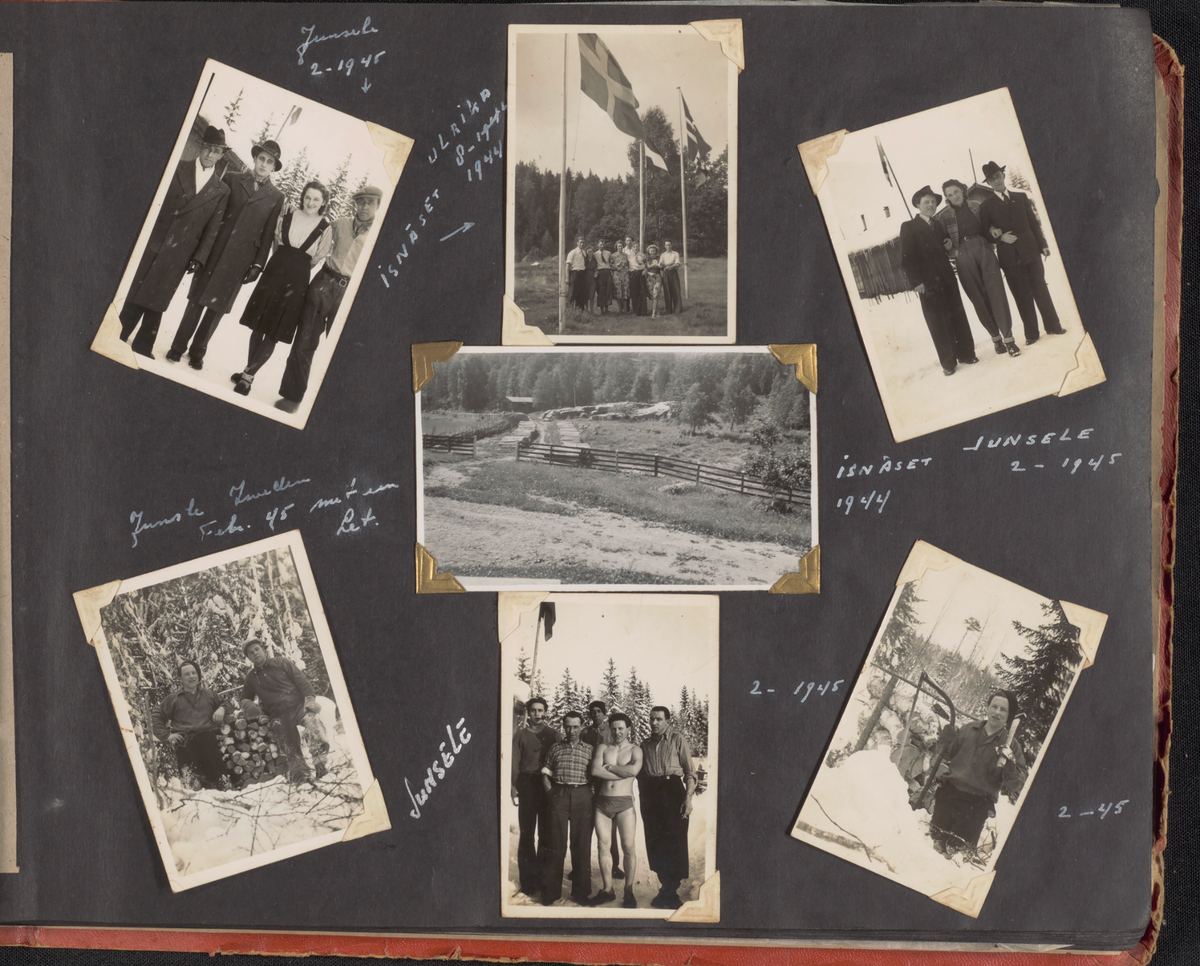
With three companions he gets away in a small boat. They row to the Swedish coastal town of Lysekil, and three days later Beukema reports to the Dutch consul in Stockholm. Unfortunately for the group, so many would-be “Engelandvaarders” have already arrived in Sweden that the crossing is badly delayed. Like many other Dutch refugees, Beukema is therefore put to work as a lumberjack in the Swedish forests, far from Stockholm – which is teeming with German spies.
Beukema writes little about his “Engelandvaart” by the northern route. He notes only where his wanderings in the forests take him and the date on which he is finally allowed to fly to England: 11 March 1945, in the closing weeks of the Second World War.
War volunteer in Indonesia
The second diary opens in Tanjung Priok, the port of Jakarta, in January 1946. These are the first months after the Japanese surrender, and the Indonesian struggle for independence has erupted with great violence. After his “Engelandvaart”, Beukema has done military training in Wales and is now a war volunteer with the Royal Netherlands Navy. He is one of the first Dutch servicemen to arrive in Indonesia to restore colonial rule. Two and a half years after his first diary, he takes up his pen again to describe the chaos he witnesses there:
[Streamer] ‘6 January, Sunday. There is often shooting in the street here. We always take our rifles when we go out. Every day bodies are pulled out of the river.’
Sweep: personal records from the Dutch East Indies, 1945-1950
Beukema keeps a diary in Indonesia for a year. During that time he sails on minesweepers throughout the archipelago. He takes part in rebuilding the naval base in Jakarta and in the recapture of Bangka, and sees the devastation in Surabaya and Ambon.
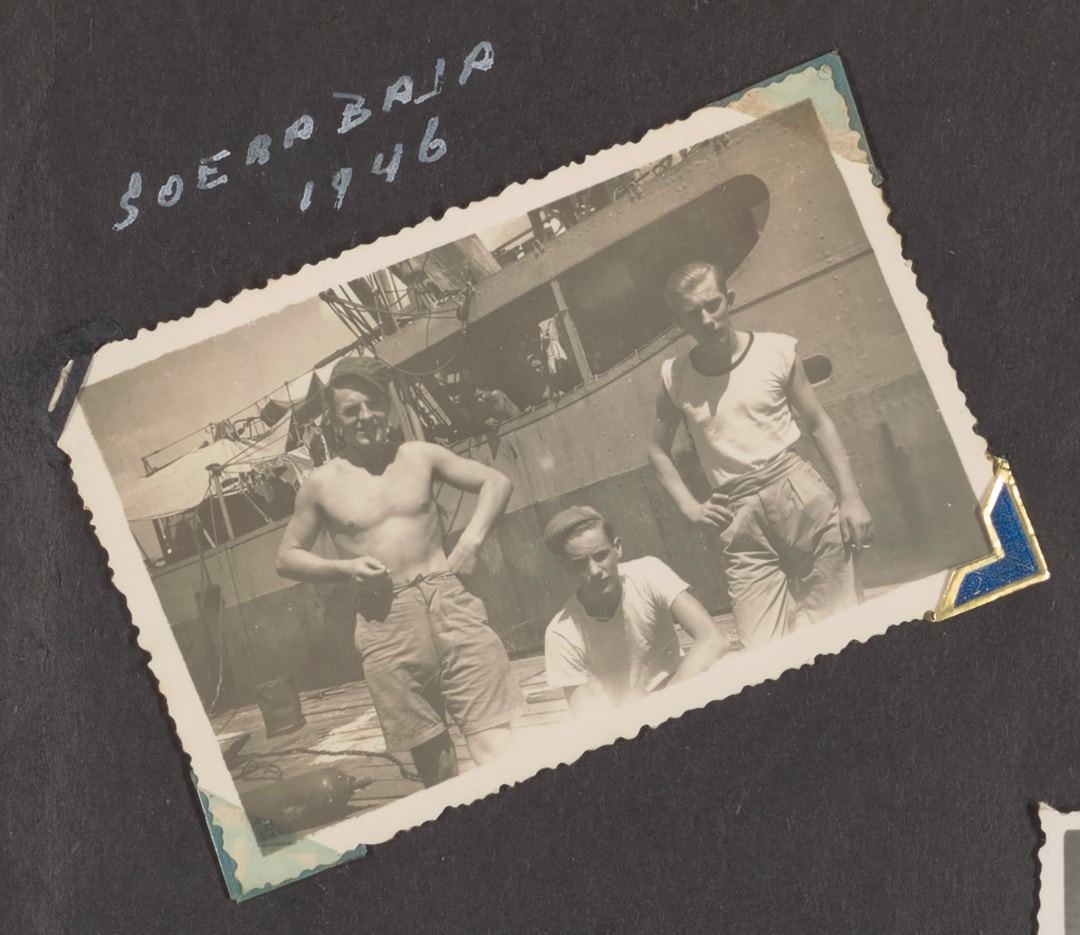
His day-to-day experiences offer a rare glimpse of the first phase of the Indonesian War of Independence – before the military operations Product and Kraai began, while the Netherlands was still busy rebuilding its armed forces. That is why Beukema’s diaries and photographs have been included in Sweep, the NIMH collection of personal papers from veterans of Indonesia, where they can be viewed entirely online.
Donations welcome
The military history of the Netherlands belongs to all of us. That is exactly why the NIMH preserves it for future generations. Whether it is letters, documents or photographs from a distant ancestor, or material from a recent deployment to Iraq, Afghanistan or Mali, your material could be a valuable addition to the NIMH collection. Call us (088-9516655) or email us (informatievragennimh@mindef.nl) for more information; we would be glad to hear from you.
Material added to our collection is public and available for research. By agreement with the owner and/or donor, parts of the archive or collection may be given ‘restricted access’ status for a set period.
NIMH
The Netherlands Institute of Military History (NIMH) preserves the military history of the Netherlands for the future. In all, the institute manages more than ten kilometres of collections and archives, much of which can be consulted in the NIMH reading room. Part of the archive is available online through the website: www.nimh.nl.