A father of six, Huibert van Ginhoven nevertheless wanted to play his part in the fight against Nazi Germany. He gathered information about the German army in the Netherlands and helped young men who wanted to escape to England. He and his family paid the highest price for it.
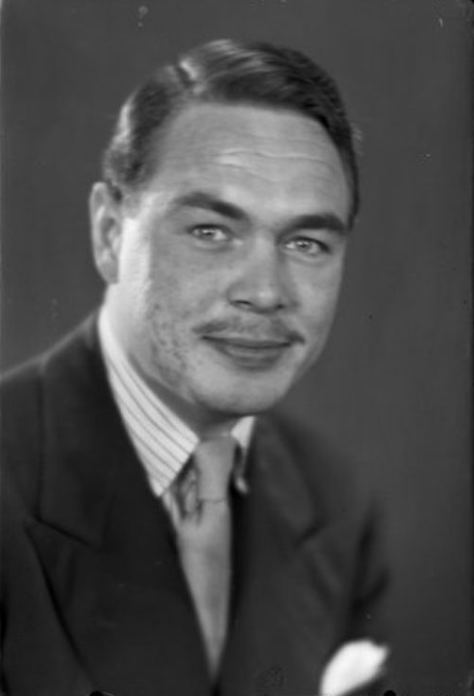
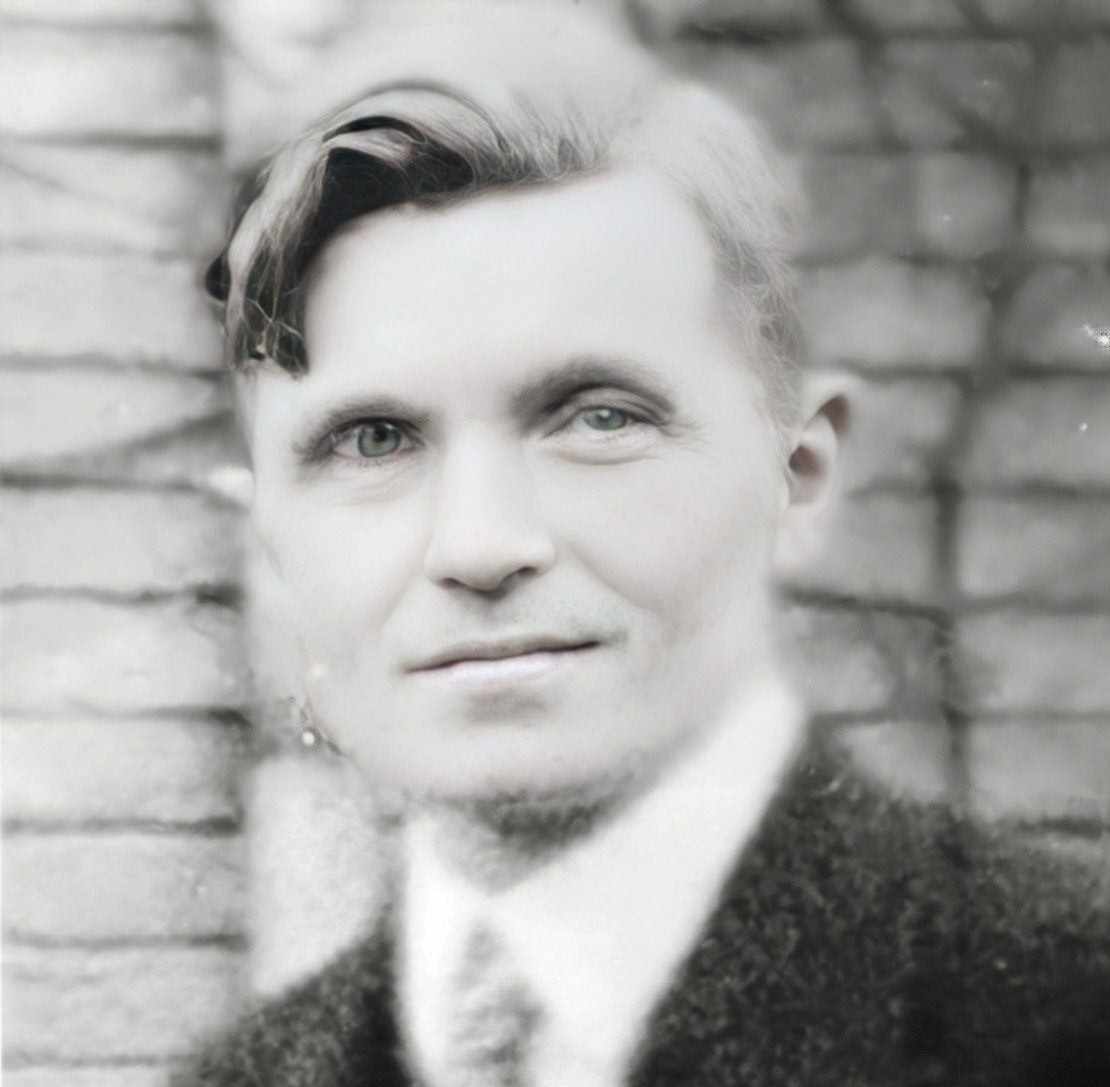
Huibert van Ginhoven was born on 26 December 1896 on the island of Marken. His father was head of the Christian primary school there, and later in Oude Wetering and Barendrecht, where young Huib attended secondary school and teacher training college. From 1915 to 1918 he did his military service, after which he went to work as a teacher. Evidently that was not what he was looking for after all, because he took a job at an accountancy office in Amsterdam. Later still he set up as a self-employed bookkeeper, and in 1932 he started work at the Social Affairs department of the City of Amsterdam.
In 1936 he moved with his wife, Carolina Feij, from Amsterdam to Castricum. The family first lived on the Ruiterweg, and in November 1938 they moved into a larger house at Torenstraat 69. By then the couple had six children, five sons and a daughter. From 1936 to 1941 Huib played the organ at services in the church on the Beverwijkerstraatweg in Castricum, and from 1931 he was a member of the Anti-Revolutionary Party and sat on the committee of its local branch.
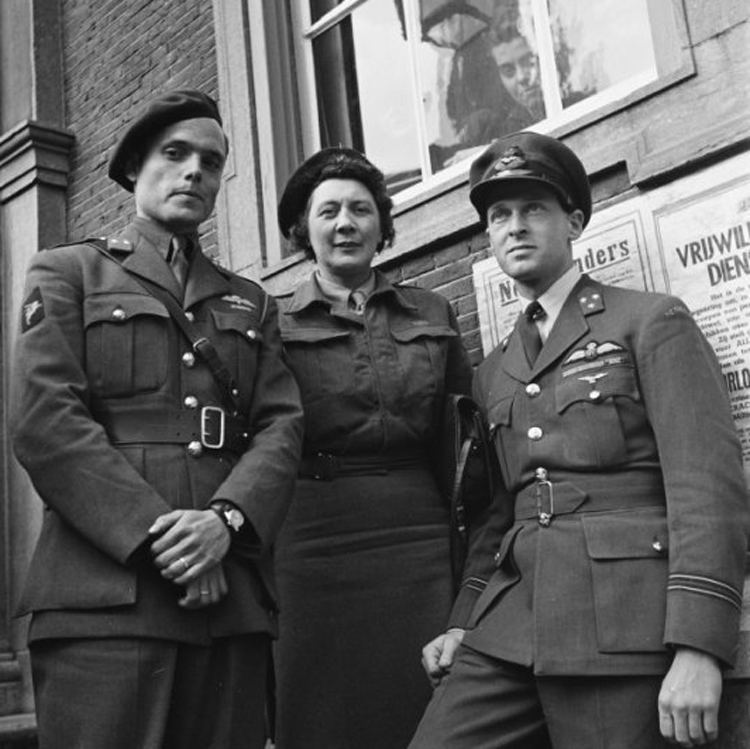
“Engelandvaarder” Bert Ligtvoet
After the German army invaded the Netherlands, everything in him rebelled against the new rulers. The measures against his Jewish fellow citizens in particular fuelled his revulsion. As early as the first year of the war, Huib was arranging hiding places. In his resistance work he often called on the help of people from Reformed church circles and members of the Anti-Revolutionary Party. Through this network he gathered information that might be of use to the Dutch government in England. Among other things, drawings were made of the airfield near Bergen used by the Germans and of the yard in Haarlem where German submarines were repaired.
In December 1940 the 22-year-old chemist Bert Ligtvoet from Amstelveen was given shelter in Huib’s home. Ligtvoet wanted to try to escape to England to join the armed forces there and hand over the material Huib had gathered in London. The plan was for an aircraft to leave for England in February 1941, but a shortage of petrol caused a delay. As a chemist, Ligtvoet saw a way to upgrade ordinary petrol to aviation fuel. Huib persuaded his resistance friend Simon Belgraver, who worked at the laboratory of the Bataafse Petroleum Maatschappij, to smuggle the necessary materials out of the lab. That solved the fuel problem, but at the last moment the departure was delayed again, this time by the weather. To make matters worse, a man whose identity was never discovered appeared in the hangar and warned that the Germans had got wind of the plans. It was decided to call the venture off for the time being.
Ligtvoet went to Amsterdam to look for others who could help him. There he met a certain Gerard Stellbrink, who told him that an aircraft flew from England to Holland every two weeks; Ligtvoet could use it to take the espionage material, including a plan of the Fokker factory in Amsterdam, to England. Until 27 March Ligtvoet stayed at Stellbrink’s home in Leiden. That day a car came to collect him for his crossing to England. It turned out to be a trap… He was arrested in Wassenaar and taken to the remand prison in Scheveningen (the ‘Oranjehotel’). Ligtvoet was put under pressure to reveal every detail of the plans for the “Engelandvaart”.
Meanwhile, unaware of Ligtvoet’s arrest, Huib was working for two other men who wanted to go to England: the electrical engineer Andreas Kop-Jansen and the lorry driver Christian van ’t Schip. On 8 May 1941 he met the two at café Central in Amsterdam. From there they set off in a lorry for The Hague. Near Haarlem they too were arrested. That same day everyone else who had given help or shelter was rounded up. In all, 18 men, Huib among them, were imprisoned in Scheveningen to await their sentence.
During house searches, a package was found in the pedal box of the piano belonging to Huib’s neighbour. It held the drawing Simon Belgraver had made of the work at the airfield near Bergen, and messages intended for England. One of Huib’s sons had asked her to look after it carefully. The prosecutor had little trouble proving that Huib was gathering secret information.
Death sentences
On 29 September all 18 men of the group were transferred from the ‘Oranjehotel’ in Scheveningen to the remand prison on the Weteringschans in Amsterdam. The trial took place on 2, 3 and 4 October 1941. With so much evidence, denying the facts was pointless.
Huib and Ligtvoet were sentenced to death for attempting to ‘aid the enemy’ combined with betraying state secrets. From the verdict: ‘The court is convinced that such irresponsible persons must be mercilessly exterminated.’ The other defendants were sentenced to years of penal servitude in Germany. Simon Belgraver survived four years in a German prison under appalling conditions. In 1951 he emigrated to Australia, where he again found work in a laboratory. He suffered from his wartime experiences for the rest of his life.
The death sentences on Huib and Ligtvoet were to be carried out on 17 November 1941, but the executions were postponed because Ligtvoet was to have a retrial. At that trial, on 11 February 1942, he was again sentenced to death, but on 16 March he was pardoned and his sentence was commuted to life imprisonment in a German prison.
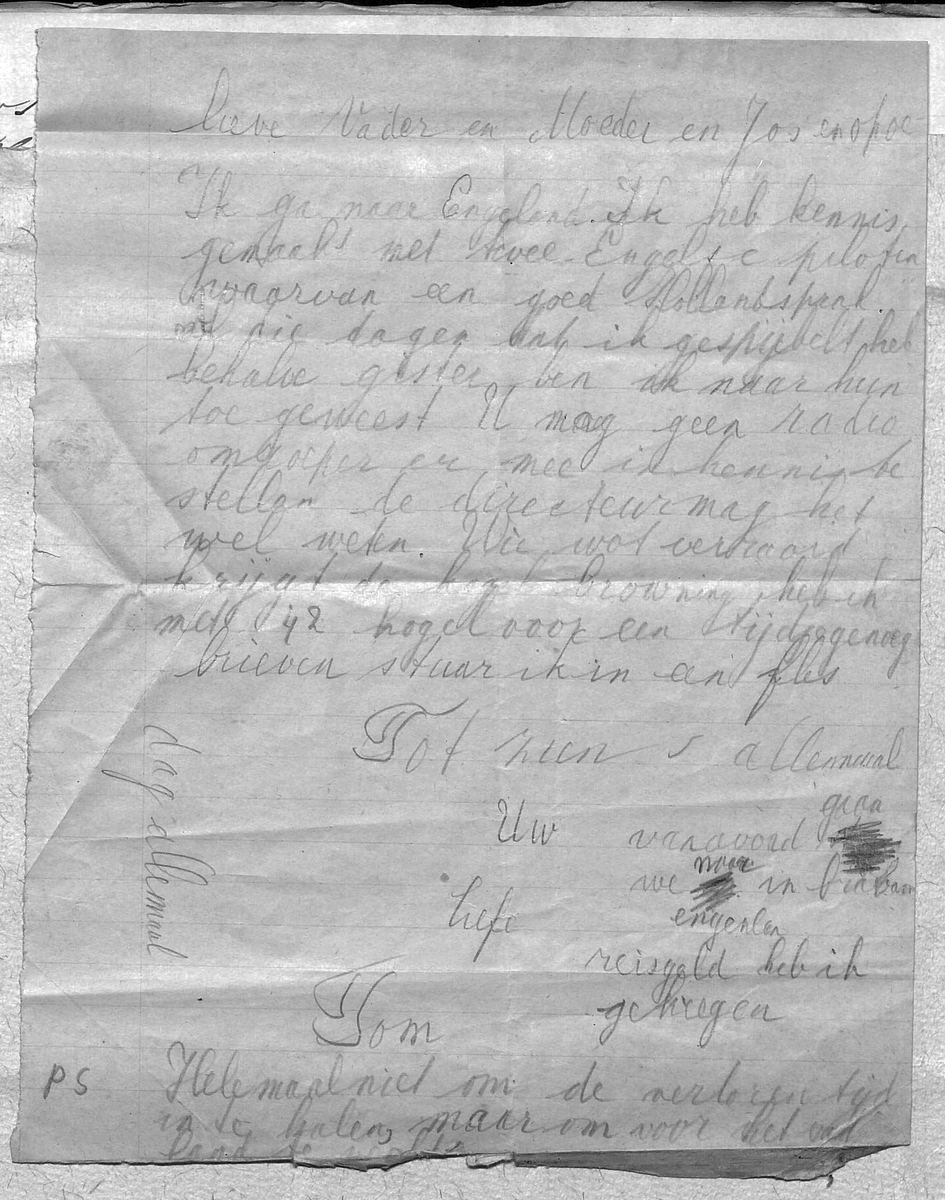
On 17 March 1942, at two minutes past four, Huib was executed at the shooting range in Laren. He wrote a farewell letter to his wife and to each of his children. His son Kees: ‘I was at the Christian school and my little sister came to fetch me and took me to Amsterdam, where, in a first-floor flat on the Lekstraat, with family, my mother, little brother and sister, we lived through the moment of Father’s execution.’
His son Johan: ‘My father suffered greatly from spending five months in prison under sentence of death without anything changing, but on the other hand he was grateful to God that he was given so long to prepare himself, unlike many others.’
Kees: ‘The executed were cremated, and the urn was taken to Germany by a soldier (who was given a few days’ leave for it); in my father’s case to a cemetery east of Berlin (the so-called French cemetery). After the war the urns were traced by the Oorlogsgravenstichting (Netherlands War Graves Foundation) and moved to war cemeteries. My father’s grave is in the Kriegsfriedhof in Osnabrück.
A few weeks after Father’s death we had to leave our home on the Torenstraat. Our furniture was driven to Friesland in a small lorry; my little sister and I sat in the cab beside the driver. My eldest brother, who had been locked up in prison for six months, went into hiding in Surhuisterveen; the second eldest hid on a farm in Ellecom, and the third brother moved in with an uncle in De Steeg (Gelderland).
Mother, my sister and the youngest were taken in by the farmer Reinder de Vries in Opeinde (Smallingerland), and I went to a smaller farm, also in Opeinde. Our belongings were stored in the school attic. In 1944 that attic caught fire, and we lost all our personal things. In mid-May 1944 my mother decided the farm was becoming too dangerous and left with the children for another address. She was proved right in the most terrible way: the farm of De Vries was the base of members of the Smallingerland armed resistance squad and a refuge for Allied airmen who had been shot down. On 21 November 1944 German soldiers raided it. A gunfight followed in which two of the farmer’s sons, Jan and Marten, were also killed. The farm went up in flames.’
‘It was too much’
In 1947 Mother and the three youngest children returned to Castricum, only to move to Amsterdam shortly afterwards because of the children’s studies; Mother could not afford the travel back and forth. After the war all the children emigrated to Canada. That had everything to do with the dismal post-war situation in the Netherlands and the neglect (by the church as well) of the suffering our family had endured.
Ligtvoet returned to Amsterdam after the war, became a doctor and lived with us there for a few years. He suffered badly from guilt; he felt he had survived when he should not have. My whole family was in the resistance and sheltered and saved Jews. Several members of our family have received the Yad Vashem award.
Most of our family, myself included, have been able to give those terrible experiences a private place. They were not talked about; the family had been blown apart. Emotionally (it was all too much), contact between the brothers and sister was never restored. My mother, too, got on with daily life; she had to fight for her daily bread into old age and devoted the best (remaining) part of her life to bringing up the children still living at home.’
In 1946 a memorial window was installed at the municipal social services department in Amsterdam in memory of the department’s Jewish officials and resistance members who died in the war. The window also bears the name of Huibert van Ginhoven and the date of his execution.
This article is adapted from the article Niek Kaan published in 2005 in the yearbook of the Stichting Oud-Castricum, no. 28.