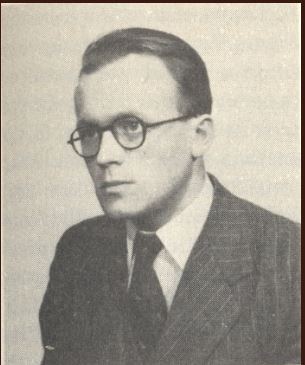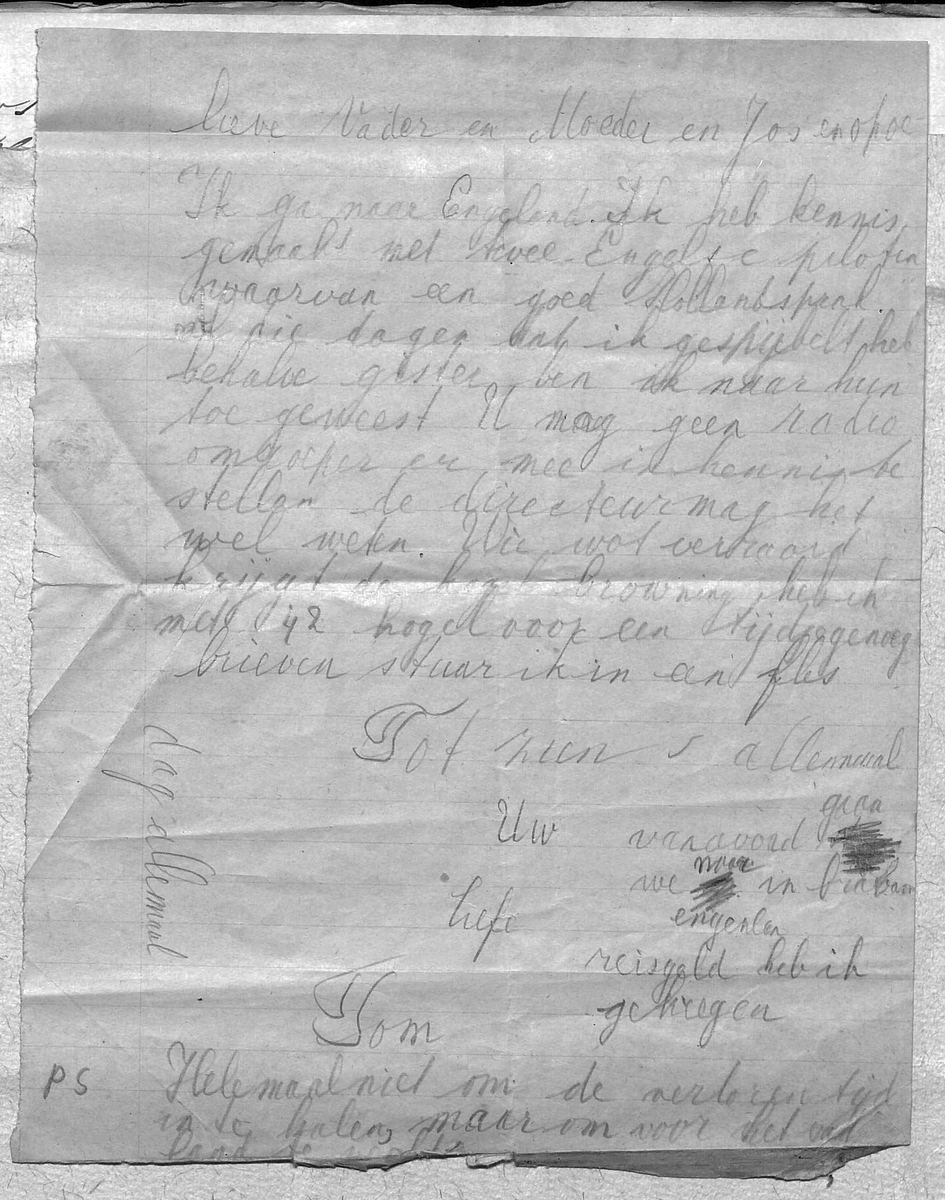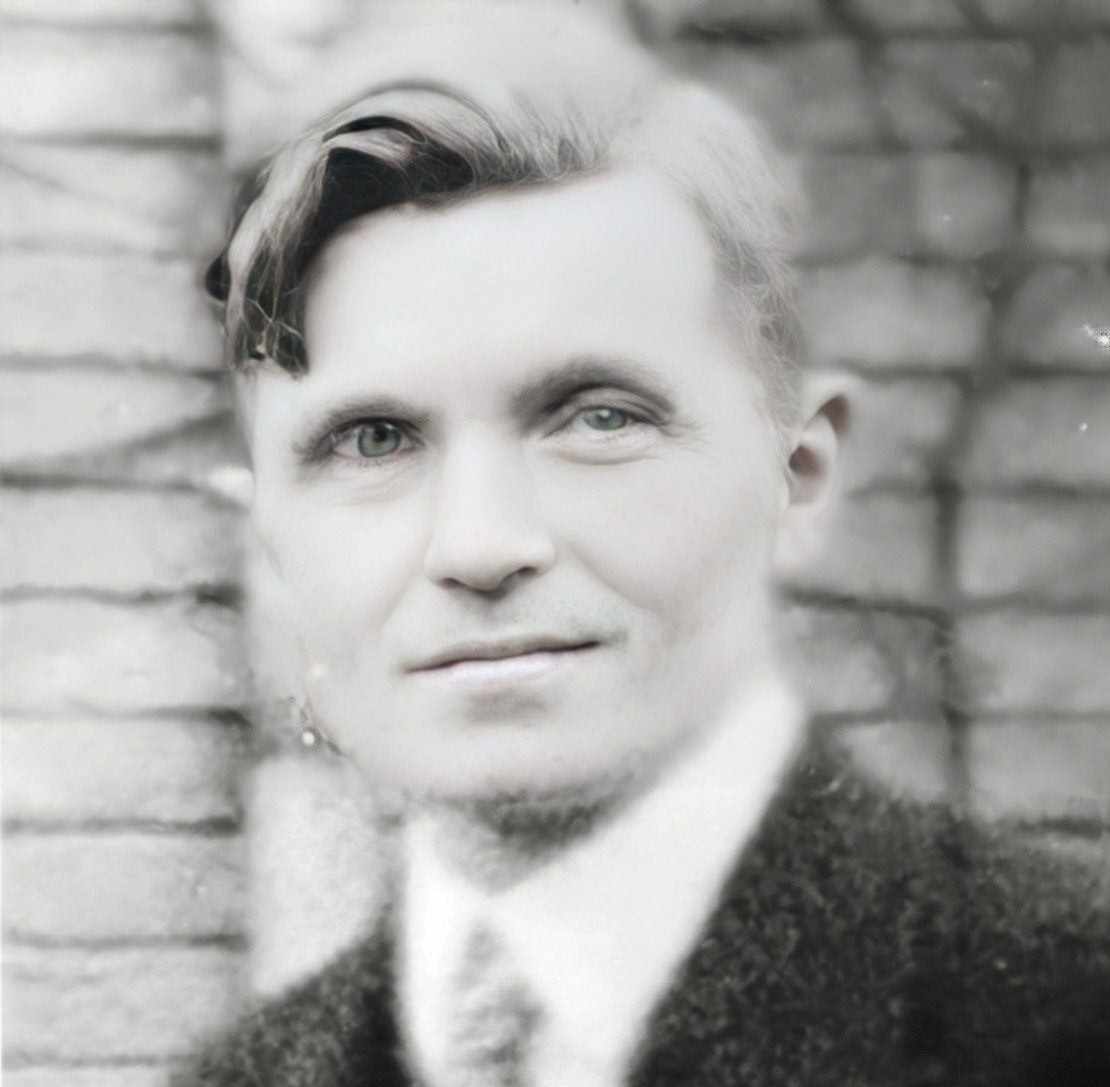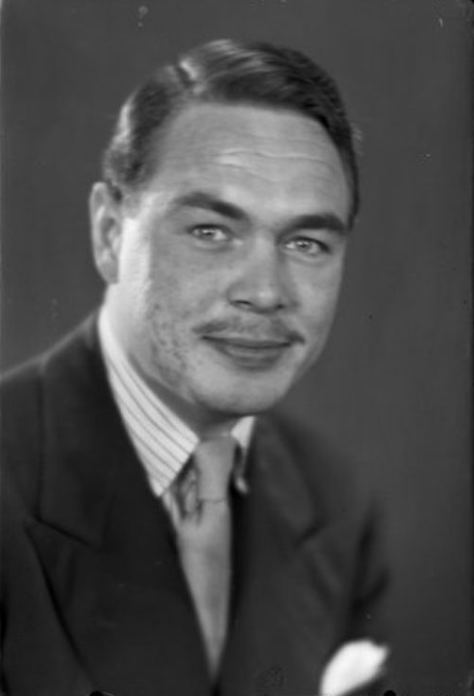
This final part of the series on Herman Friedhoff focuses on his “Engelandvaart” and the rest of his war. The earlier parts appeared in December 2024 and March 2025.
A few years ago I happened to meet Falco Friedhoff at the farewell to the Catalina, the flying boat that, after many years of loyal service, left Lelystad Airport for the United States. Falco has a great love of old machinery and was the in-house filmmaker for the foundation that kept the Catalina flying. By chance we got talking about the wartime history of Falco’s father, Herman Friedhoff.
Falco has always been fascinated by his father’s story. Even as a young boy he sensed that it carried strong emotions that mostly stayed beneath the surface. He played soldiers in the dunes near The Hague and Scheveningen, among the still fresh traces of the war and in bunkers that had not yet been cleared away. Whenever the war came up in conversation, he was all ears. For a fancy-dress party at school he put on his father’s uniform, and was promptly stopped in the street and asked for his papers.
Much later he helped his father write a book about his wartime experiences. It was written in English, because it was meant to give the British, who have no idea what it is like to live under occupation, a picture of that time. Falco also translated it into Dutch as Requiem voor het Verzet.
A life on the move
After escaping from his parents’ home in August 1942, Herman Friedhoff began a life on the move. When the Gestapo rang the bell, he managed to get away through the window of his room. His girlfriend Ellis Brandon talked her way out of a tricky situation by playing dumb with the Germans, then fled to her father’s house, where a few days later she managed to deceive them once again. Friedhoff first hid at a neighbour’s until the immediate danger had passed, and then moved on to a friend from the resistance in Bloemendaal. There Brandon joined him. In the months that followed, the couple stayed at countless hiding places, in the Gooi area, Rotterdam and Amsterdam among others.
Their last address in the Netherlands was with the family of KLM pilot Viruly in the south of Amsterdam. Friedhoff prepared their escape from occupied territory with great care. He had made earlier attempts and had helped others on their journey towards France, which had given him valuable contacts. The night before they left, a British bomber crashed onto the Carlton Hotel in Amsterdam, causing chaos in the city and making their departure easier. Near Valkenswaard they met a friendly military policeman, a member of the Marechaussee, who helped them cross the border.
To England
In Brussels they found shelter with Petronella Van Gellicum-Kamps, a Dutch widow who opened her home to “Engelandvaarders” and Allied airmen. They then spent weeks in France with Paul and Angelique, in a small worker’s cottage they shared with British soldiers. Life there was frugal but orderly. Friedhoff and Brandon learned to adapt, both culturally and practically. With the help of MI9 and local guides they travelled on to Paris, together with three British airmen and a Belgian evader. To avoid arrest they travelled in pairs and used false French identity papers.
In Paris they changed to an express train to Bordeaux. The journey grew more and more dangerous as they went deeper into the zone interdite, where the Nazis checked passengers’ papers thoroughly. At Saubusse their companions, the British and Belgian evaders, were arrested. Friedhoff and Brandon saw it happen and hurriedly got off the train. They continued on foot to Saint-Jean-de-Luz. On the way, cunning and nerve helped them avoid a confrontation with Luftwaffe soldiers. At one point they walked for hours through the mountains, sometimes in the dark and sometimes under a scorching sun, led by a Basque guide. After a long trek they finally reached the river that formed the border with Spain.
In neutral Spain they were helped by the British consulate in San Sebastián and travelled on to Madrid. A distant relative of Brandon’s at the embassy gave them support. Young men were given money for clothes, although some of it disappeared in the bars. The embassy asked Brandon to keep an eye on fellow refugees, because some of them were inclined to steal the silver at official dinners. From Madrid they continued to Portugal, where they stayed for a while in a holiday house at Praia-da-Maçãs while waiting for transport to England. Friedhoff left by ship for Gibraltar; Brandon had to wait for a plane. On 7 November 1943 Friedhoff reached England.
With the Princess Irene Brigade
Once he had arrived, he first found a place at the Ministry of Foreign Affairs, where he went to work for the foreign minister, Van Kleffens. There, people were thinking about the future of Europe after the war. Friedhoff felt at home in the ministry’s intellectual and idealistic atmosphere. Despite his job, however, he formally remained liable for military service, and that status caught up with him: he was called up to report to the Princess Irene Brigade, the Dutch fighting force in exile. He himself felt he was of more use at the ministry and tried to claim conscientious objection , but duty called relentlessly, and on 13 March 1944 he was officially enlisted.
Friedhoff was trained as a driver, first on Bren gun carriers and later on the Buffalo amphibious vehicle. On 8 August 1944 he landed in Normandy with the brigade. In the first week of the operation the Dutch troops saw heavy fighting. After that the Princess Irene Brigade took part in the liberation of the south of the Netherlands, and Friedhoff was involved in this too. He remained a reluctant soldier. He missed the liberation celebrations because he was locked up after a court martial convicted him of absence without leave.
After the war
After the war Friedhoff hoped to build on his experience in international relations, but that wish was never fulfilled. He did make attempts, for example to promote his own solution to the Indonesian War of Independence in a long letter to Queen Juliana. Instead, he found work with the renowned publishing house Tjeenk Willink. He probably owed the position to his contacts from the resistance, in which members of the publishing family had also played a part. In this way he built a career as a publisher.
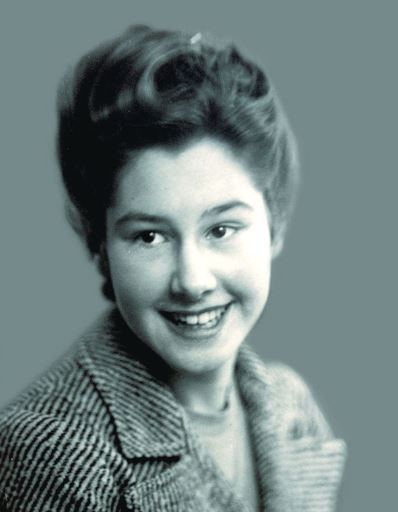
His love for Ellis faded. In 1947 he married Riemke Aten, the girl who had once lived next door. Together they had four sons: Falco (1948), Dennis (1951), Sander (1954–1989) and Gijsbert (1961–1992). In
1968 the marriage broke down. Friedhoff moved to England, where in 1969 he married Polly Davidson. With her he had two more sons, Andrew and Jolyan. Herman Friedhoff died on the day the British remember their dead: 11 November 2000. While living in England he got in touch with fellow “Engelandvaarder” Jan Wackwitz (1921–1998), and from England he was an active member of the Genootschap Engelandvaarders.
It is sometimes remarkable where a chance meeting can lead.
The sources for this series are the records of the interrogations of Brandon, Friedhoff and several others whose paths crossed theirs during earlier attempts, held in the Nationaal Archief (National Archives), and the reconstruction that journalist Carlijn Vis made for NRC of the “Engelandvaart” of her grandmother Ellis Brandon.