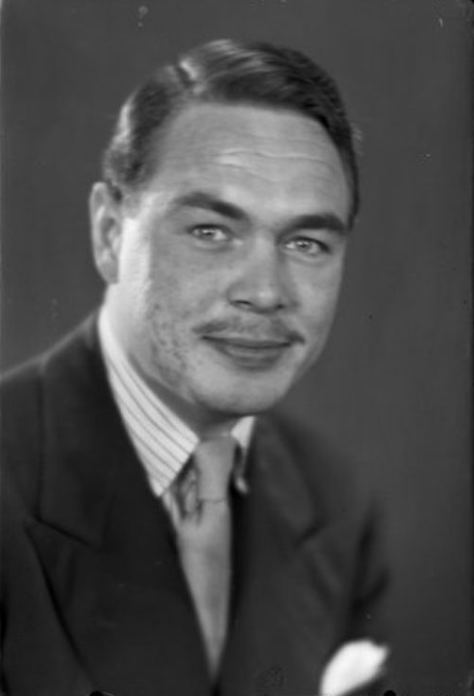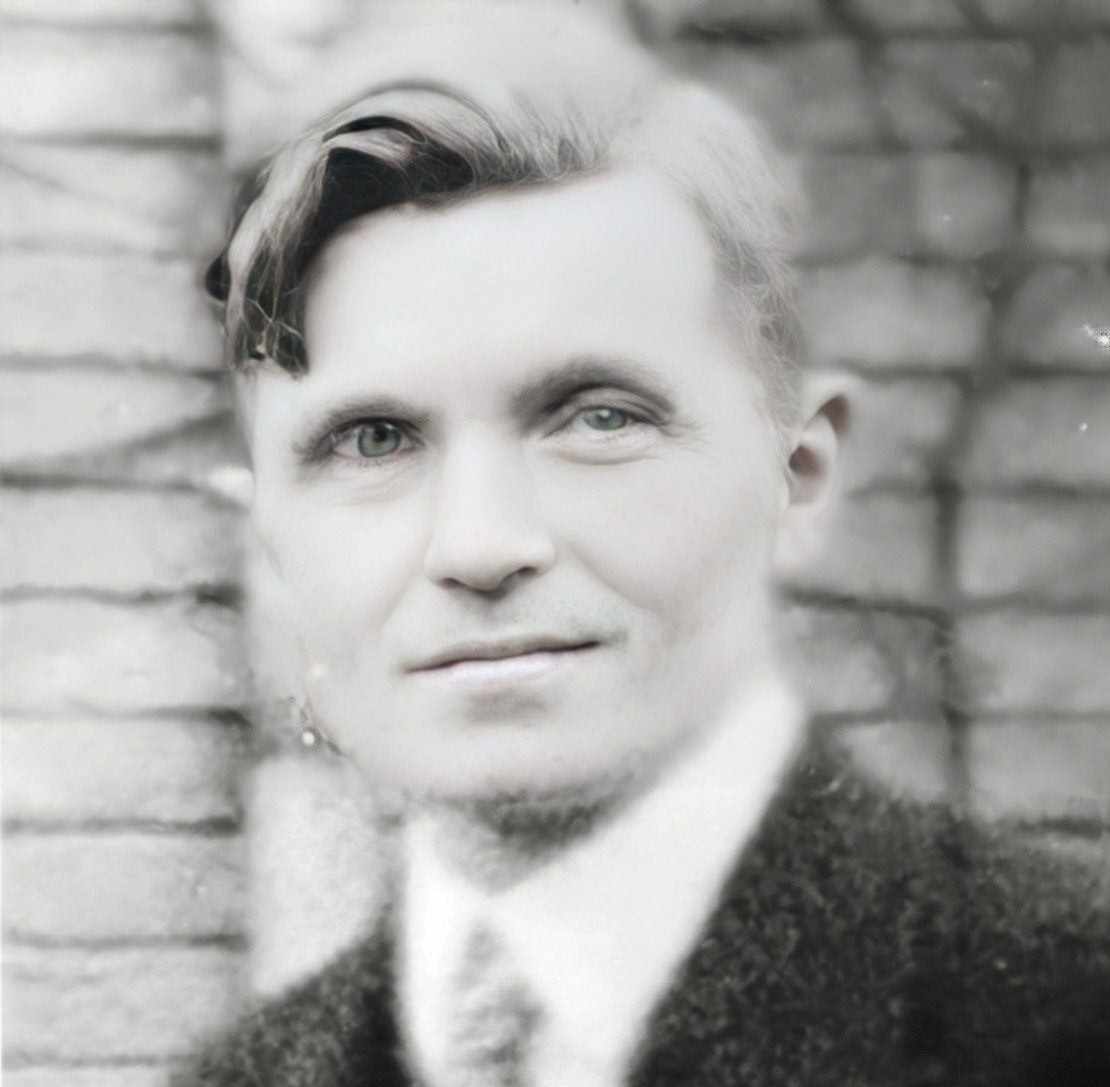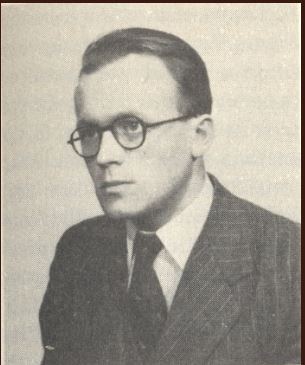
“Mijn schild ende betrouwen zijt gij, o God, mijn Heer” (“My shield and my reliance, O God, Thou art, my Lord”). Hendrik Geert de Jonge (Doorwerth, 28 December 1916 – Capelle aan den IJssel, 12 December 2010) opens his account of the war years with this line from the sixth verse of the Wilhelmus, the Dutch national anthem.
It reveals two things straight away: his loyalty to the House of Orange and his deep religious faith. De Jonge was a communicant member of the Reformed Church, a supporter of the Anti-Revolutionary Party and an ardent patriot. This also comes through in the interrogation he underwent in England, in which he says: “In the spring of 1942 my religious convictions led me to conclude that I had to do something for my country.” According to his interrogator, he should be “given a position that is above all physically demanding … which will also help him find peace of mind.” A demanding position is certainly what he got.
Resisting the Nazis
His file in the Nationaal Archief (Dutch National Archives), opened to the public in early 2024, contains a report he wrote shortly after the liberation about his experiences during the war. In the late 1930s De Jonge had trained as an artillery officer and was then posted to the coastal artillery at Den Helder. He did not see action himself during the May days of 1940. After the capitulation he began studying law at the VU in Amsterdam. Like most regular officers, he had signed the compulsory declaration that he would do the Germans no harm. Over the following years, however, he went back on it. By resisting the Nazis, he reasoned, he would help free the world – and with it the German people – from tyranny. In his own view, this showed that he had the best interests of the German people at heart, both spiritually and materially.
At first his resistance activities met with little success. In the spring of 1942, for example, he planned a raid on Hoek van Holland with a small group of former soldiers. He expected an Allied invasion there before long and believed that “as the morale of the [German] troops was very poor, decisive action and running the officers through would allow us to seize this position.” Nothing came of the plan. Several Reformed fellow students in whom he had confided declared him mad. At their insistence, and that of a Reformed minister, he was then committed for some time to a psychiatric clinic in Amsterdam against his will.
To England
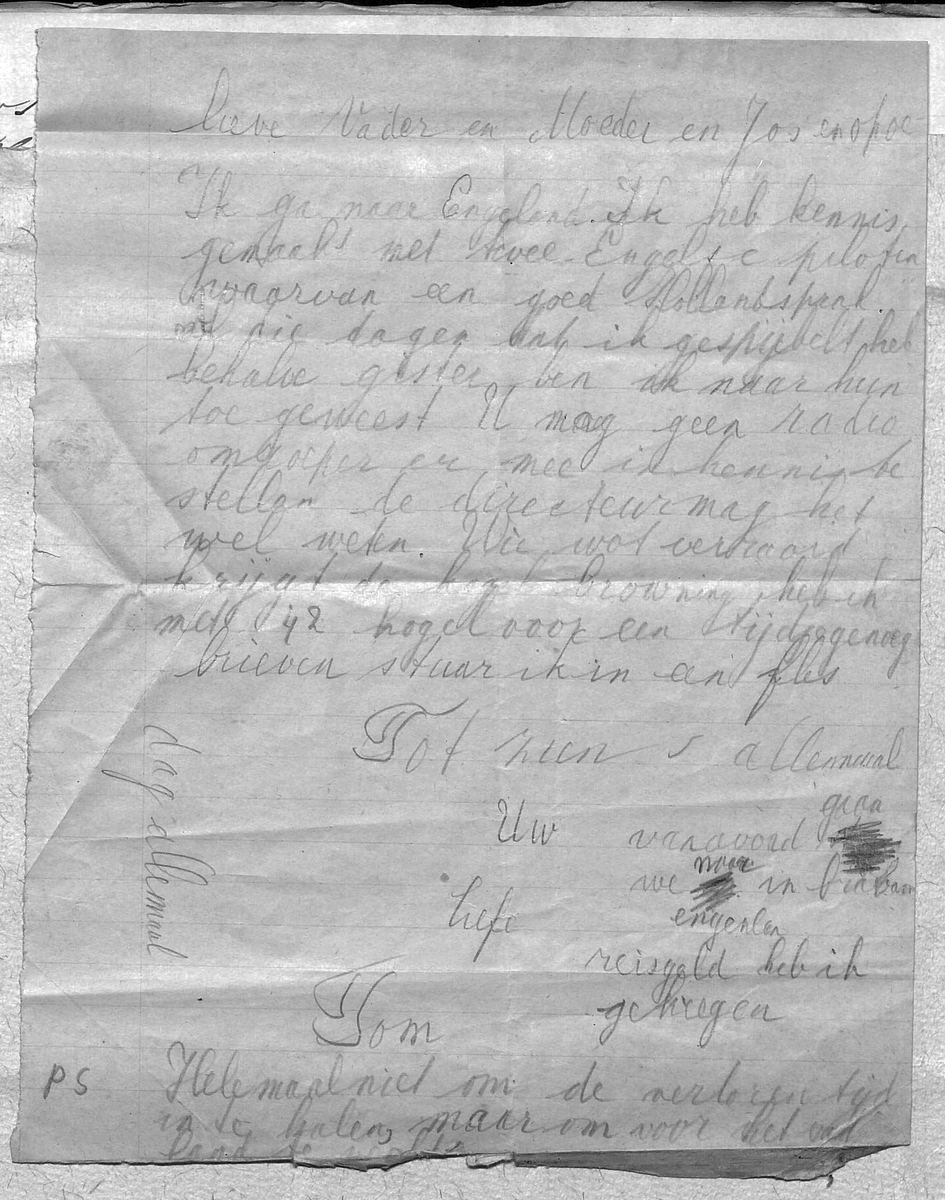
Because of his stay in the clinic, De Jonge had missed a German summons ordering former regular officers to report for internment as prisoners of war. This was what finally prompted him to leave the country. He left the Netherlands in July 1942. Travelling along the Southern Route through Belgium, France and Spain, and by way of a long detour to Curaçao, he finally reached England at the end of November.
After the usual security checks in London, the BBC broadcast the message “HEIN 1728” so that his family would know he had arrived safely: ‘HE’ for the first letters of his first name; ‘IN’ for the first letters of the name of his fiancée, Ina; 17 for her birthday and 28 for his own.
Secret agent Albrecht
On 15 December 1942 De Jonge and three others were presented to Queen Wilhelmina. The following day Major Broekman, acting head of the BI (Bureau Inlichtingen, the Dutch intelligence bureau in London), whom he knew from the Netherlands, asked him to join his service. De Jonge agreed and from then on went by the code name “Albrecht”.
His training as a secret agent began at the end of December. To keep the risks as small as possible, De Jonge preferred to be trained and dropped alone, without a “wireless operator”. Among other things he learned how to shadow people and shake off a tail himself, how to handle radio equipment and how to make a parachute jump (in the course of which he tore a muscle).
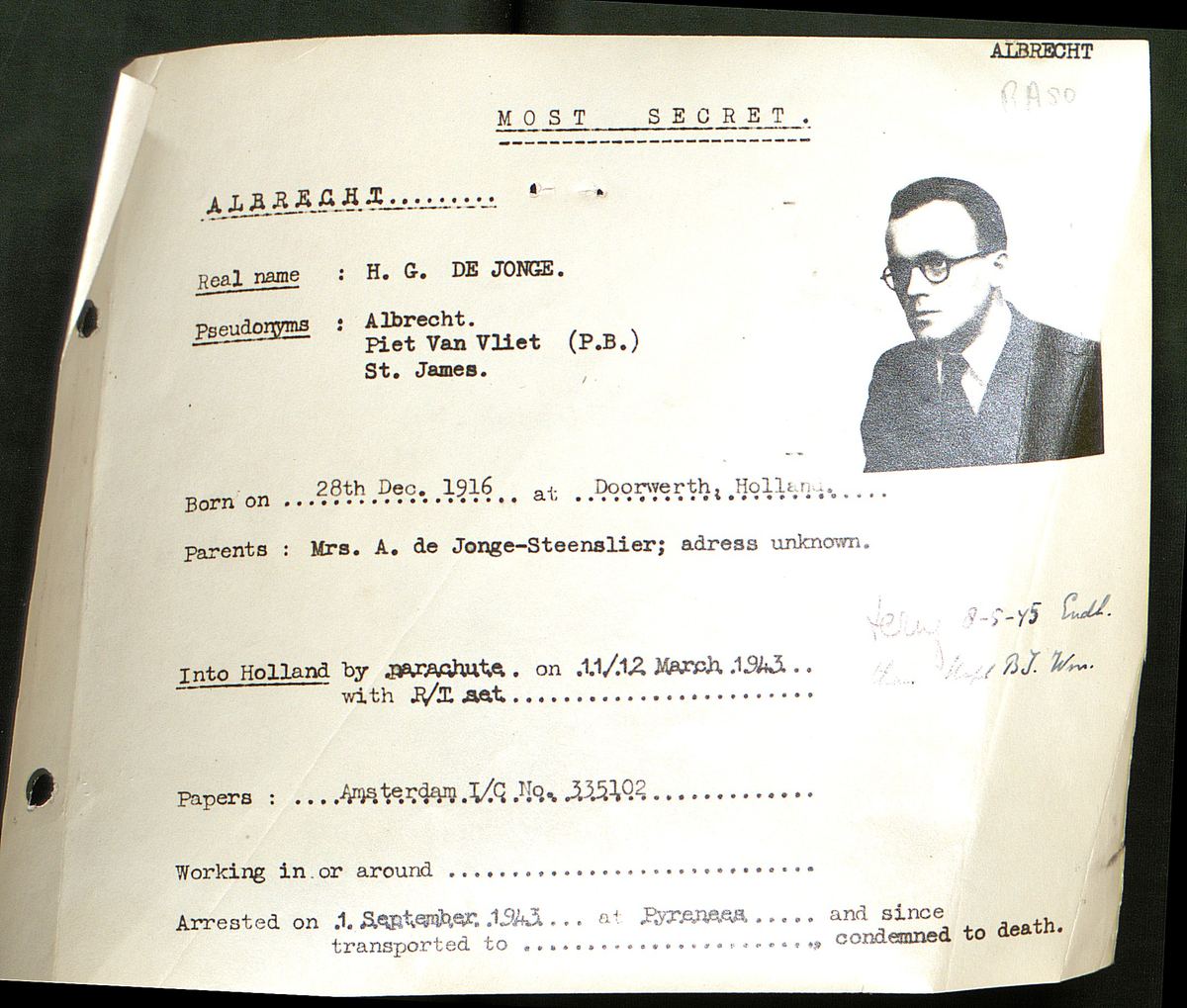
On the night of 11 to 12 March 1943 De Jonge was dropped over Drenthe. His mission had two parts: first, espionage, chiefly military but also economic; and second, to make contact with the so-called National Committee, a group of ten leading politicians.
For this mission he was given, among other things:
- A false identity card in the name of Piet van Vliet, on which the fingerprint had mistakenly been made in blue rather than black ink.
- A pistol and ammunition.
- A camera and film.
- A radiotelephone transmitter/receiver.
- Ration coupons and 10,000 guilders in cash.
- Addresses in Sweden to which he was to send his negatives, hidden in books.
- A reduced photocopy of a statement signed by Prime Minister Gerbrandy, declaring that De Jonge had been sent to the Netherlands on a special mission for the government.
During the jump he became entangled in his parachute and came down head first. Yet he landed “miraculously softly … as an answer to the prayer for help to God”. The contact addresses De Jonge had been given proved reliable. He made contact with several resistance groups and began passing on what he had learned in England, such as how to encode messages. But ‘Albrecht’ had a great deal of trouble with his radio equipment. He could hear clearly what was being said from England, but his own messages hardly ever came through properly. Nor was this the only problem. The ration coupons he had been given turned out to be out of date and could not be exchanged. The same went for the 1,000- and 500-guilder notes he carried, which the Germans had recently declared invalid.
The Albrecht Group
The political side of his mission – making contact with the National Committee – went badly. The people he approached either refused to talk to him or were arrested by the Germans. He therefore decided to abandon this part of his assignment, not least because he considered the military espionage far more important and wanted to devote his energy to it. De Jonge set about this with vigour, building a network from his own circle of friends and acquaintances. The result was the group H.G. – Hollands Glorie (Holland’s Glory), as he called it himself – which eventually became known as the ‘Albrecht Group’.
Like De Jonge, its members were often former soldiers – preferably unmarried, so that they could devote themselves entirely to resistance work. De Jonge did not confine himself to a few provinces but had reconnaissance carried out throughout the Netherlands. In doing so he went beyond his original, limited brief. But he had friends all over the country who were best placed to spy in their own regions. He himself travelled far and wide to keep the contacts going and to collect the information gathered. He kept moving between different addresses in the hope that this would make it harder for the Gestapo to get hold of him. Messages were left at certain secret addresses, and meetings took place preferably in private homes or in public parks.
Reports full of military data were typed up at an address in The Hague and then photographed. But the plan devised in England to send them to Sweden hidden in books proved unworkable: months earlier, the Germans had banned the sending of printed matter to Sweden. As there was no other way of getting the information to London, De Jonge decided to return to England himself and report in person.
Failed attempts
He made several attempts to get away. The first was with the help of the resistance group known as Zwaantje, which smuggled people to Sweden. But at precisely this time the Zwaantje group was betrayed and rounded up by the Germans.
De Jonge then hatched a plan to seize a German motor torpedo boat in Scheveningen. Armed with pistols, he and a small band of resistance fighters climbed aboard. They managed to overpower the crew, but when the engines would not start they had to make a quick getaway.
De Jonge was thus forced to take the long overland route through southern Europe once again. With 650 negatives hidden in his luggage, he crossed the border near Budel with the help of a guide, together with the well-known cavalry captain Charles Pahud de Mortanges, a multiple Olympic equestrian champion before the war. In Brussels they were given false papers. With a new guide they travelled via Roubaix and Paris to Toulouse. Several attempts to cross the Pyrenees failed because of tight border controls and bad weather.
On the third attempt De Jonge walked into a trap. The Germans raided the hotel where he had gathered with a small group of refugees, and he was arrested. He was badly beaten in a Gestapo cell in France before being sent back to the Netherlands.
On the way he made one more attempt to escape, suffering a gunshot wound, but to no avail: on 15 November 1943 he was back in the Netherlands, where he was taken to the prison at Haaren in Brabant.
Imprisonment
There De Jonge was interrogated several times a day for weeks on end. Strengthened by his faith, he managed to give away only scraps of information, which allowed the espionage group he had founded to keep operating until the end of the war. De Jonge himself remained in Haaren until July 1944, when he was suddenly brought before a German court martial. After a brief trial he was sentenced to death three times over – for espionage, possession of weapons and breaking his word of honour – but for reasons that remain unclear the sentence was never carried out. Instead, at the end of July De Jonge was taken with a large group to
Germany, where he spent the rest of the war in various prisons. He was finally liberated in April 1945 in a labour camp near Holzen.
Decorations
After the war De Jonge received several decorations, including the Military William Order. The recommendation for the Bronze Lion states that the Albrecht Group “[has] been the most valuable source of military intelligence for the Allied war effort”.
He emigrated to Australia and then to Israel, but eventually returned to the Netherlands, where he died in 2010.
Sources, Nationaal Archief:
2.09.06 Archief van het ministerie van Justitie te Londen, inv. no. 13056
2.13.71 Archieven van het ministerie van Defensie te Londen, inv. no. 2789
2.02.32 Archief van de Kanselarij der Nederlandse Orden (Chancery of the Netherlands Orders), 1815-1994