In the first instalment of this series about “Engelandvaarder” Rie Knapper, we saw how, after a long and dangerous journey via France, Switzerland, Spain, Curaçao and the US, she arrived in England on 20 November 1942.
While she was still stuck in Switzerland, on the strength of her experience as an auxiliary nurse at the Burgerziekenhuis in Amsterdam, she had written to the London branch of the Netherlands Red Cross offering her services as a nurse in a British hospital. She hoped this would get her permission from the Dutch authorities in London to travel on to England. And – not unimportantly – she also hoped the Dutch government in exile would be willing to advance her travel costs.
The chairman of the Netherlands Red Cross, Mr van Lidth de Jeude, who was appointed Minister of War later in 1942, was not prepared to agree to this without a fight. After extensive correspondence and much wrangling, it was agreed that Knapper would receive a modest advance, which she would repay from the wages she would earn as a nurse.(1)
Once in London, after being questioned by the British and Dutch security services and after the honour of taking tea with Queen Wilhelmina, Rie Knapper therefore had to “follow her posting”, as it is called in official language. She was placed as an assistant student nurse at the Military Hospital in Wolverhampton. According to an undated account by Rie herself, she was by then no longer so enthusiastic about the nursing plan, for she writes:
‘It seemed to me that I could do work in another field which was more in my line and in which I could make better use of my education and experience. I knew myself to be bound, however, and decided in any case to serve out the three-month trial period.(2)
But things turned out differently than expected. After working at the hospital for a week, Rie had to be admitted with influenzal pneumonia. She also suffered from abdominal complaints, for which the doctors initially wanted to operate. Dr C.F Koch, an “Engelandvaarder” and a surgeon attached to the Military Hospital, told her to return to London, where the operation could take place later if necessary. Because of all this Rie thought she was considered physically unfit to be a nurse, reported back in London and began looking for a new “posting”.
She could of course have taken a job as a secretary or typist at one of the Dutch government’s ministries in London. But that was not what Rie had come to England for! She wanted to do something, to make a real contribution to the liberation of the occupied Netherlands. And she was not the only Dutch woman in Great Britain (whether an “Engelandvaarder” or already living in England before 1940) who felt this way.
These Dutch women looked with great envy at the situation in Great Britain, where conscription for women had existed since the end of 1941. British women could then choose from various military women’s corps. These were:
- in the British Army, the ATS (Auxiliary Territorial Service)
- in the Royal Navy, the WRENS (Women’s Royal Naval Service)
- in the Royal Air Force, the WAAFS (Women’s Auxiliary Airforce).
More and more voices called for conscription for Dutch women, not only among female “Engelandvaarders” but also among Dutch women in the US, Suriname and the Netherlands Antilles. In the summer of 1942 a Bond van Nederlandse vrouwen in Groot Brittannië (League of Dutch Women in Great Britain) had even been founded, with the specific aim of establishing a women’s auxiliary corps. In these circles the military aspect was not considered so important; people were thinking more of a kind of Red Cross auxiliary corps.(3) Queen Wilhelmina, too, was very much IN FAVOUR of a women’s auxiliary corps. She had taken a keen interest in military matters from an early age.
Jhr. O.C.A. van Lidth de Jeude, the Minister of War, had listened carefully to all these voices. In February 1943, just as Rie Knapper had returned to London from Wolverhampton, he put a proposal for women’s conscription to the Council of Ministers. It was immediately shot down by the other ministers, who feared that the measure would cost them all their secretaries and typists. Queen Wilhelmina was not so pleased either. Van Lidth de Jeude writes in his war diary that ‘ Madam’, as the Queen was called by the cabinet members, ‘that Madam had apparently had the plan herself of gathering the women around her’.(4) Finally, the Bond van Nederlands vrouwen in Groot-Brittannië declared that it would rather see an organisation based on voluntary service.
The Minister of War then dropped the women’s conscription plan and worked towards a voluntary women’s auxiliary corps. Another major player in the creation of the Vrouwen Hulp Korps (Women’s Auxiliary Corps) was the London branch of the Netherlands Red Cross. This is also clear from the fact that prospective members had to sign two contracts: a military contract and a Red Cross contract.
In this connection one military man must also be named: Colonel (later General) H.J. Kruls, who became head of the Militair Gezag (Military Authority) in 1944, was a great advocate of the VHK.
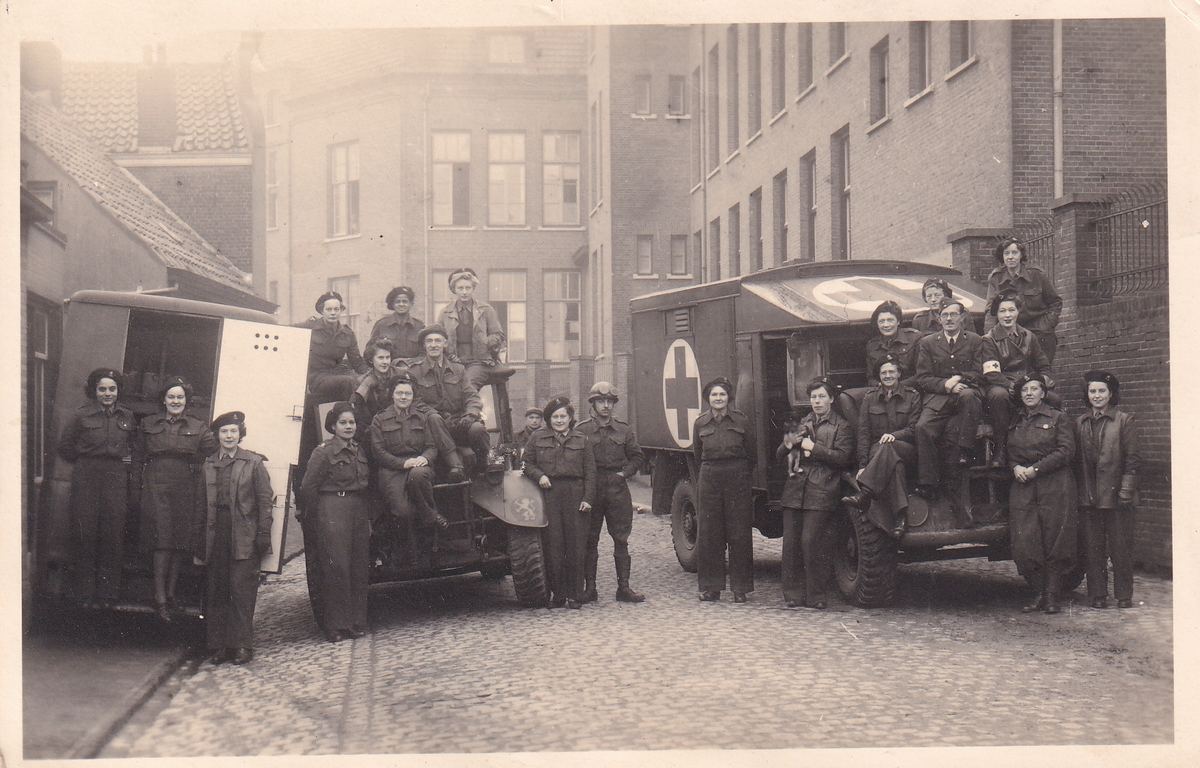
He worked so hard for the VHK that he was called the “father” of the corps. On 20 December 1943 the die was cast, and the Hulpkorpsenbesluit (Auxiliary Corps Decree) established the VVHK, the Vrijwillig Vrouwen Hulpkorps (Voluntary Women’s Auxiliary Corps, later known simply as the VHK). Its aim was to provide humanitarian aid in the Netherlands after the liberation. The VHK was placed under the command of Mrs Smit-Dyserinck.
At some point in 1943 Rie Knapper joined this VHK in the making. (5) When the corps was formally established at the end of 1943, Rie was offered a staff post. Because there was also great enthusiasm for the VHK in Suriname, Curaçao and the US, in the spring of 1944 she was given the task of travelling to these places to recruit VHK members.
Her official orders stated that Knapper was to recruit 10 girls in both Suriname and Curaçao, and that she alone would decide which girls were accepted. The girls’ travel costs were to be paid by the local Red Cross branch. In the US, Rie was only to sound out whether women there were really willing to provide humanitarian aid in Holland. Those interested were in any case to sign a declaration of willingness. The Minister of War wrote on this subject that women who had volunteered for the VHK in the US and Canada were to be regarded as a ‘reserve’, and that it remained to be seen whether they would ever be called up.(6)
Even before Rie had left, reimbursement of travel costs and the cost of training the prospective members proved a bone of contention. It was far from certain whether the local Red Cross branches were able and willing to bear the new members’ travel costs. Rie’s own travel costs were also in dispute. In the letter from Van Lidth de Jeude to the London branch of the Netherlands Red Cross just mentioned, he writes:
‘You consider it necessary that Mrs Knappert (!) be sent to the United States in order to organise the training of women there with your representative. Although I believe this serves first and foremost a Red Cross interest, I am prepared to charge the cost of the outward and return journey to my Department, on account of the military interests involved. I am likewise prepared to contribute a modest subsistence allowance, which I set at 100 British pounds. Any further costs should in my opinion be borne by the Red Cross.(7)
Van Lidth further stressed that Knapper was not to make any definite promise about paying the travel costs of those interested.
Full of optimism, Rie left for Curaçao in April 1944. She soon found that the authorities there had not been officially informed of her coming and its purpose, and therefore did not want to talk to her. Rie saw her whole mission going up in smoke and wrote an urgent letter to the Minister of War, Van Lidth, and to the chairman of the London branch of the Netherlands Red Cross, Baron Harinxma. She went about it thoroughly and also sent an emergency telegram to Princess Juliana in Canada, who was patron of the London branch of the Netherlands Red Cross. The telegram read:
To Her Royal Highness Princess Juliana
Governor nor Redcross president here received any official information re my mission and therefore are unwilling support me officially STOP Fear same difficulties in Surinam STOP Therefore impossible continue my mission STOP Have cabled London STOP Sollicitate your highness support
Marie Knapper
Thanks to the intervention of HRH Princess Juliana, and no doubt also to the efforts of Van Lidth de Jeude and Harinxma, everything turned out well.
Knapper gave well-attended talks and received wide press coverage. Everywhere there was great willingness and enthusiasm to help the victims in the Netherlands, which everyone hoped would soon be liberated. Knapper soon recruited 10 new members in both Curaçao and Suriname (20 in all). While they waited to leave for England, their medical and military training began straight away.
Knapper had also prised a couple of mobile canteen vans out of the Vrouwen Organisatie (women’s organisation) on Curaçao, and was offered two ambulances that had been intended for the Dutch East Indies but had never been shipped there because of the Japanese invasion. The local Red Cross branches did their best too, especially the one in Suriname, which donated 10,000 guilders. Many companies also made donations towards buying equipment.
Meanwhile Knapper had travelled on to the United States, where the situation was quite different again. In New York, as early as the autumn of 1942, two ladies living there (Mrs Guepin and Mrs J.A. van Heurn) had begun organising a women’s auxiliary corps for Dutch women in America. When it became known that the London branch of the Netherlands Red Cross had taken a similar initiative, they had written to Queen Wilhelmina expressing the hope that they might join it.
Rie Knapper was warmly received, and an article about her visit appeared in the Knickerbocker Weekly, a weekly magazine for Dutch people in the US. The cover featured a large photo of Rie together with Mrs Van Heurn and a few Dutch women married to Dutchmen serving in the armed forces.(8) According to this article, entitled The Women’s Auxiliary Corps, Knapper, a sturdily built woman, made a crushingly combative impression. The reporter writes, for instance, that she would say little about her escape from the Nazis in Europe:
“But from her appearance, described by a Washington paper as ‘Juno-esque’, anyone can plainly see that a couple of Nazis are no match for her. Quick-witted and extremely persevering she steamrollers all obstacles.”
Her way of speaking also added to this picture: Mrs. Knapper believes in doing things at great speed. Her vocabulary reflects the speed of a one-woman commando force. Her sentences are frequently punctuated with phrases like ‘at once’, ‘it must be done’, ‘we will do it’ , ‘of course it’s possible’.
The fact that the Dutch women in the US, and for that matter those in Canada, were regarded as a ‘reserve’ by the VHK and the Minister of War in London did not go down well and led to many protests. “London” then told Knapper that she could, after all, recruit some twenty women in America and Canada.
While Knapper was busy arranging training, transport, uniforms and accommodation for the recruits, at the end of June 1944 she received a telegram from Baron Harinxma that was a great disappointment to her: he informed her that her mission was over and that she was to return to London as soon as possible. She did not do the latter (‘…otherwise the whole trip would have been for nothing’), but in the end she did have to comply with Harinxma’s order. Back in London in July 1944, she asked Harinxma why he had sent the telegram.
Mr Harinxma replied: “I thought it had gone on long enough. We don’t want so many people from over there, and we were afraid you would bring back more than twenty.(9)
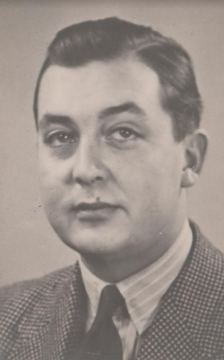
Knapper will have had her own thoughts about this move by one of her superiors. Nevertheless, in London too she threw herself back into her work for the VHK’s new members. In August 1944 she took a short break to marry her fellow “Engelandvaarder” Frits Stokvis, a 36-year-old timber merchant from Amsterdam whom she had met on the way to England. He had also sailed on the Cabo de Hornos, the ship on which Rie had sailed to Curaçao. He had left the Netherlands in February 1942 and arrived in England on 17 March 1943. From then on Rie called herself Stokvis-Knapper.
When it looked in September 1944 as though the liberation of the Netherlands was imminent, plans to deploy the VHK took concrete shape. To this end the corps was rapidly militarised, so that it could follow the Allied troops into newly liberated territory. How Rie Stokvis-Knapper contributed there, you can read in the third and final instalment of this series.
(1) See the letter from Mrs M. Knapper, then in Switzerland, to the London Committee of the Netherlands Red Cross dated 25-4-1942. Scan no. 0105, archief Rie Knapper, Museum Engelandvaarders.
(2) Scan no. 0133, archief Rie Knapper, Museum Engelandvaarders (probably February 1943).
(3) A. BIERMANS, Vrouwen onder de wapenen: de oprichting van het Vrijwillig Vrouwen Hulpkorps en zijn eerste optreden in bevrijd Nederland (1943-1945). Master’s thesis, Nijmegen (1983), pp. 16-19.
(4) Jhr.ir. O.C.A. van LIDT DE JEUDE, Londense dagboeken 1940-1945. Vol. 2, January 1943 - May 1945, p.907 (9 February 1943). The Hague, 2001.
(5) Before joining the VHK in 1943, Knapper appears to have run a hotel in London. The hotel was called OZO (Oranje Zal Overwinnen, ‘Orange Will Prevail’). In 1944, while Knapper was in America for the VHK, the hotel was damaged in a bombing raid. Knapper touches on OZO in her letters, but I have not been able to find anything further about it.
(6) Scan 0094, archief Rie Knapper, letter from the Minister of War, Van Lidth de Jeude, to the VHK dated 17-3-1944.
(7) Ibid.
(8) Knickerbocker Weekly: The Netherlands Magazine, Number 14, 29 May 1944.
(9) Scan 0285, archief Rie Knapper. Letter from Rie Knapper to Mr G.C.W. van Tets van Goudriaan, director of the Kabinet der Koningin (Queen’s Cabinet), dated 30-8-1944.