Marie Crietee’s home at Populierstraat 19 in The Hague was the starting point for dozens of “Engelandvaarders” on their journey to England. There they got their final instructions and a ‘last supper’. Crietee received a certificate from US President Eisenhower. But she paid a high price for her perilous resistance work.
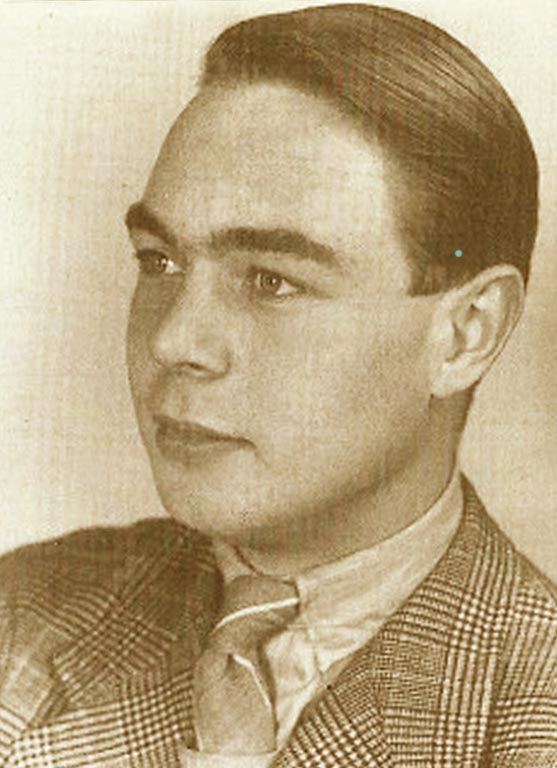
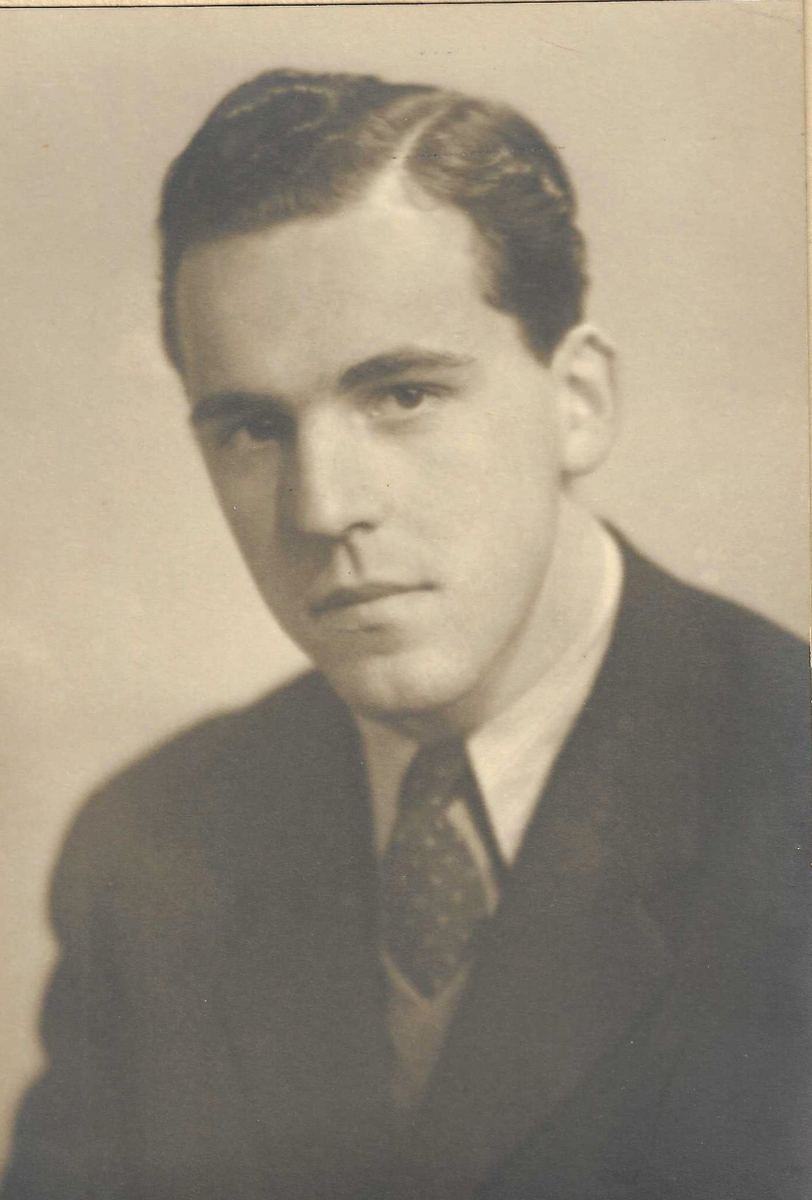
The Populierstraat in The Hague’s Bomenbuurt still breathes the calm and elegance with which the architect Berlage designed the neighbourhood in 1911. In 1937 Pierre Joseph Burgwal (56), his wife Maria Rudolphina Crietee (45) and their sons Henri (23) and Rudy (19) moved into number 19. They had moved to The Hague in 1929 from the Dutch East Indies, where Pierre had owned a tea plantation. The Burgwal boys studied at the Academie van Beeldende Kunsten (Henri, advertising design) and Leiden University (Rudi, law). When the Second World War broke out, Rudy was serving as an ensign in the Dutch army’s motor transport service and Henri in the Koninklijk Nederlandsch-Indisch Leger (KNIL, Royal Netherlands East Indies Army).
In 1942 the 24-year-old Anton Schrader comes to live with the Burgwals. ‘Tonnie’ is assistant to the head of the Bureau Grondstoffen (raw materials office), a department of the food supply office at Lange Voorhout 10 in The Hague. Under that cover, Schrader and the skipper Kees Koole set up a network to help Dutch people escape to England. After a failed attempt in early 1941, Rudy Burgwal managed to leave the occupied Netherlands with seven other Dutchmen on 3 September ’41, with the help of Schrader and Koole.
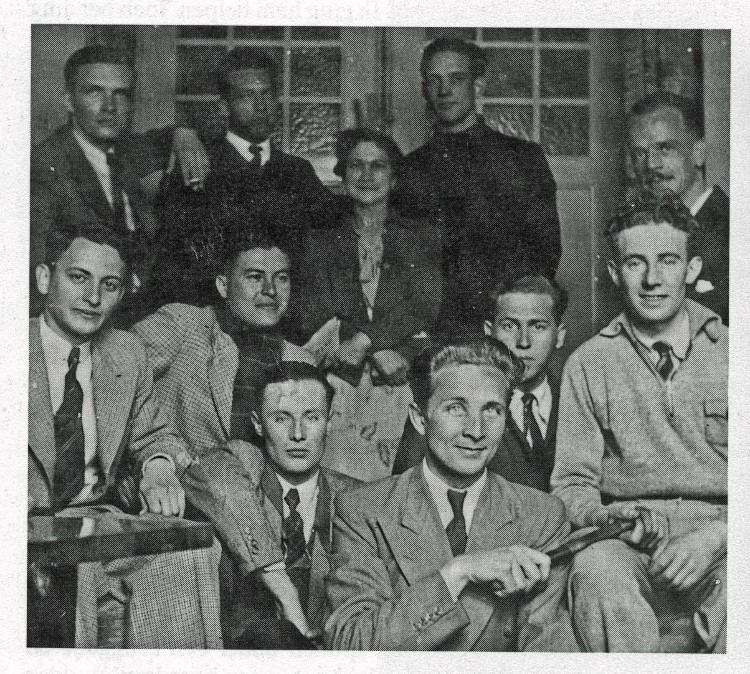
In the spring of 1943 three more groups of “Engelandvaarders” set off from Populierstraat 19. On 5 May 1943 eleven “Engelandvaarders” are sitting in the front room. Among them is the New Zealand wireless operator Mike Mora, whose Stirling bomber has recently been shot down near Breukelen by a German fighter, and who is the only member of the crew to have escaped the Germans.
At Crietee’s home he gets his plate of nasi goreng, a dish she cooks for every “Engelandvaarder” on the evening before they leave. After this ‘last supper’, as Schrader calls it, the men pose for a photo with Marie and then say their goodbyes.
The trip to the Haringvliet – aboard skipper Kees Koole’s Nooit Volmaakt – goes smoothly, and after a few days Radio Oranje broadcasts the message ‘The eagle has lost seven feathers’ from London, signalling that the eleven men have arrived. Within ten days of crashing in occupied territory, Mora reports back to his unit in England.
At the end of July ’43 another group of nine young men gathered by Schrader at the Populierstraat leaves for England, among them the RAF pilots Alfred Hagen and Bob Haye, who had been shot down over the Netherlands, and Eddy Jonker, who would later co-found Museum Engelandvaarders. On 23 August an even larger group tries to cross the North Sea after leaving the Populierstraat, but this time the attempt fails utterly: all 15 “Engelandvaarders” are arrested at sea, and some are sentenced to death by the German courts. It is the greatest failure of the Schrader/Koole network.
The group of 12 men that leaves the Populierstraat on 8 October, Schrader himself among them, has better luck.
In the lion’s den
On 10 January 2025 we visit Richard and Dorien Leidelmeyer in The Hague. They live on the Thomsonplein, close to the Populierstraat, in a house that was a brothel for German soldiers during the occupation (‘Huize Suzanna’). Across the square, the newer buildings still clearly show where the anti-tank ditch ran, built by the Germans to defend the Hague coast against a possible invasion at the cost of many hundreds of homes in the northern part of the Bomenbuurt. Dorien: ‘The Populierstraat lay just behind the anti-tank ditch. There were always lots of Germans on the streets in the area, and anyone who came near was checked. So at the Populierstraat the “Engelandvaarders” were really in the lion’s den.’ Fortunately, the German police never had the house in their sights.
After the war Richard’s parents were friends with the Burgwals. After Marie’s death in 1962, his father took charge of an old blanket chest containing ‘bits and pieces’ belonging to the Burgwal family. There was no one else to take it, as Marie’s husband Pierre and son Henri had died in 1950 and 1957 respectively, and Rudy had not survived the war (see the box with this article).
Dorien: ‘A number of years after my father-in-law died, we opened the blanket chest. The contents took us completely by surprise, because my father-in-law never said much about the war, and certainly nothing about the diary Rudy kept after arriving in England. As well as the diary, we found other things that had belonged to him. We donated most of the contents of the chest to the Nederlands Instituut voor Oorlogs-, Holocaust- en Genocidestudies (NIOD).’ A copy of Rudy’s diary was given to Museum Engelandvaarders.
Richard says that as a boy he heard his parents talk about the tragedy of Marie Crietee’s post-war life. ‘During the occupation she also took part in other resistance activities. To find people safe houses or to feed those in hiding, Marie and Pierre sold off a large part of their capital and valuables. After Pierre died, this left Marie in a difficult financial position. I remember that as a child I often had to take a pan of food round to her.’
When the Leidelmeyers recently opened the chest again, they found (a copy of) the certificate Marie Crietee received from the American president in 1947. There was also a copy of a 1946 letter in which Queen Wilhelmina expressed her sympathy on Rudy’s death. We are delighted to accept both items, but on condition that the handover takes place at the most obvious spot: so off to Populierstraat 19!
‘Perhaps Rudy’s room…’
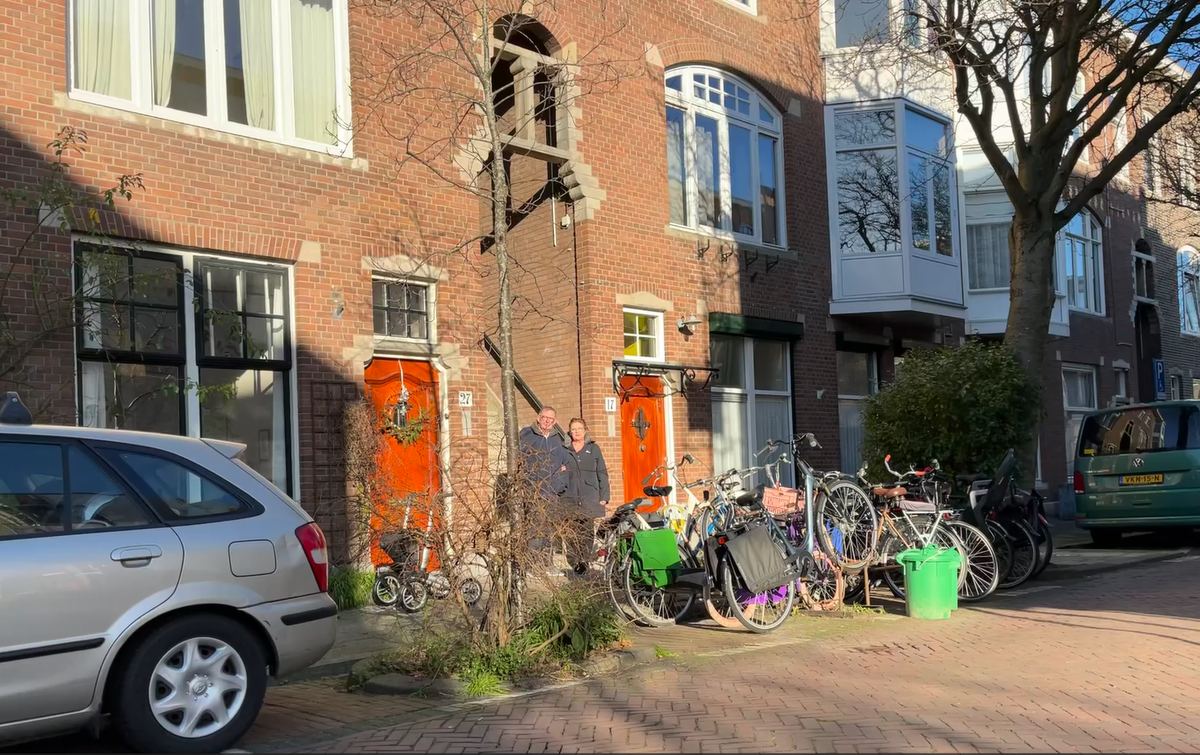
Arriving at the doorway, we feel the urge to take a look inside. Without hesitation Dorien rings the bell and, lo and behold, we are warmly welcomed by the current occupant, Robin Lous. He and his partner Michelle have lived here since 1996 and, to our surprise, turn out to know a good deal about what went on in their home. Lous: ‘A few years after I moved in, a man came to the door and asked me whether I knew about the meetings of “Engelandvaarders” in our house. When he started telling me, I was amazed at every turn.’ Unfortunately Lous cannot remember the man’s name. Could it have been Tonnie Schrader, wanting to see the house once more before his death in 2000? Was the man small in build and of Indo-Dutch appearance? No, the man was tall and did not look Indo-Dutch. Who he was will probably always remain a mystery.
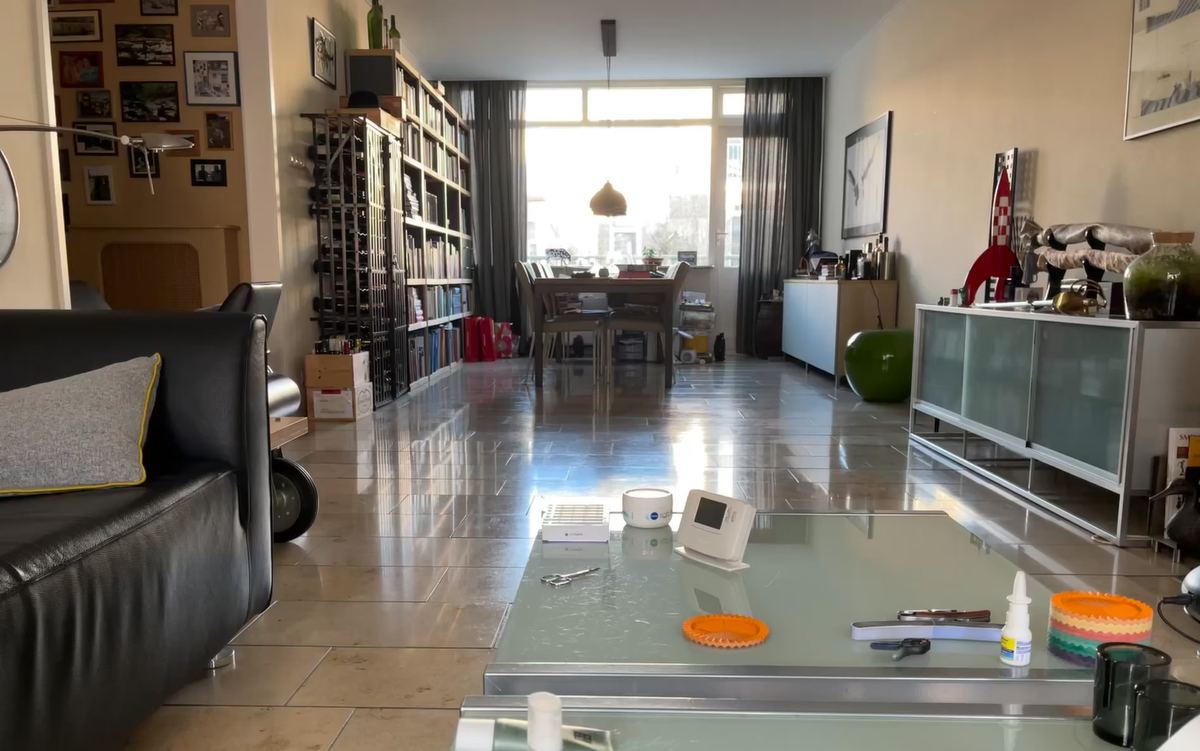
The living room where the “Engelandvaarders” were photographed has been extensively remodelled over the past decades, and the sliding doors have gone. The layout of the house, however, has largely stayed the same. Lous: ‘It feels a bit strange that the spot where I now sit at my desk may well have been Rudy Burgwal’s room (Ton Schrader very probably slept in Rudy’s room after Rudy left in ’41 – ed.) As we leave, Robin tells us that the story of the “Engelandvaarders” moves him and that he would like to record the historical facts about his house on a memorial plaque in the doorway. He also plans to visit the museum in Noordwijk soon.
The gift from Richard and Dorien Leidelmeyer and the cooperation of Robin Lous will no doubt support efforts in The Hague to name a street, square or park after Marie Crietee and Rudy Burgwal.
Rudy Burgwal, top scorer
Rudolph Frans (Rudy) Burgwal is without doubt one of The Hague’s greatest resistance heroes of the German occupation. In early September 1941 he crossed to England with Dick ter Beek, Bébé Daniëls, Jan Linzel, Freek Stumpff and Herman Witkamp, helped by Kees Koole and Anton Schrader. After pilot training in Canada, he was posted in England to the Dutch 322 Squadron of the RAF, and later to 11 Group Fighter Command near Dover.
He specialised in bringing down V1 flying bombs by wing tipping. With 19 V1 kills he is among the top ten highest-scoring fighter pilots. He was awarded the Bronze Cross. On 13 August 1944 Rudy’s aircraft was shot down by German flak as he engaged retreating German units in France while protecting British Lancaster bombers on their way to attack a munitions factory at Orléans. His Spitfire crashed in the Loire region. So Rudy not only neutralised V1s but also helped liberate France. For that reason he is buried in a Dutch war cemetery near the French village of Orry-la-Ville.