Stories by and about “Engelandvaarders” often leave you lost for words. Many memoirs and biographies are more gripping than a novel – non-fiction of the very highest order! Anyone setting out to turn those stories into an equally gripping book, film or musical has a lot to live up to. In the case of Pahud de Mortanges, there is already his life story, published in 1983, put together by Juuf van Ballegooijen de Jong under the title ‘Man en paard - het ruiterlijke leven van Charles Pahud de Mortanges.’ What could another book about Pahud possibly add to this excellent biography?
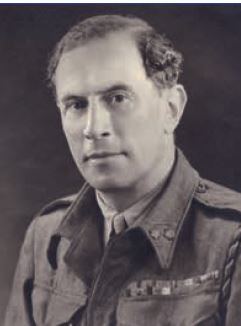
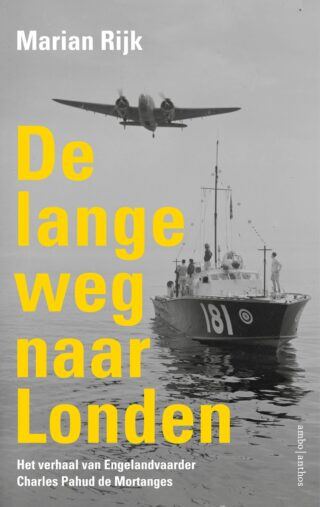
The recently published book ‘De lange weg naar Londen – Het verhaal van “Engelandvaarder” Charles Pahud de Mortanges’ by the journalist, editor and writer Marian Rijk sits somewhere between fiction and non-fiction; it is really faction, with true facts forming the basis for a reconstruction of his journey to England.
His story lends itself well to dramatisation. In Rijk’s book we see him toiling to get out of the hermetically sealed Netherlands. After countless failed attempts he finally manages it on 8 October 1943, only to face an equally arduous journey through Belgium, France, the Pyrenees, Spain and southern Portugal to Gibraltar. More than four months after setting out, he reaches England on 17 February 1944.
There, on Prince Bernhard’s recommendation, he becomes deputy commander of the Princess Irene Brigade. In August he takes part in the brigade’s landing on the Normandy coast.
The drama of Pahud’s “Engelandvaart” is heightened by the fatal attempt made earlier, in March 1942, by his only son, Buuk. On reaching the Swiss border, Buuk made the mistake of telling the Swiss gendarmes that he was on his way to England. They sent him back into France; had he said he wanted to study in Switzerland, they would probably have let him in. On 19 March 1942 he was executed by firing squad in the courtyard of the prison in Besançon, together with the “Engelandvaarders” Herman Van Aarem, Jan van Enter, Jean Stemfoort and Anthony van de Wetering.
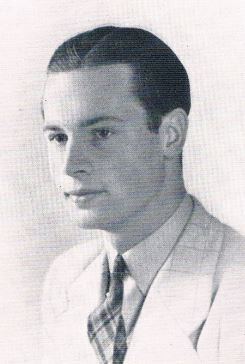
In describing such facts, Rijk has given free rein not only to her creativity but also to her imagination. She writes vividly, with a sharp eye for the smallest details. As Buuk is led to his execution, for instance, he notices ‘that the corners of his mouth were turning up. The skin of his cheeks felt stiff. (…) The Protestant army chaplain and the army doctor introduced themselves, but Buuk did not think it necessary to remember their names.’
Sentences like these, steeped in empathy – and the book is full of them – could only have been written by getting deep inside the heads of Pahud, Buuk, their travelling companions and their helpers. In doing so, Rijk has skilfully made the “Engelandvaart” of Pahud de Mortanges and his son something the reader can feel.
At times, though, Rijk’s reconstruction of the characters’ thoughts and conversations goes on for rather too long: for paragraphs on end she has the men thinking, saying and doing things that leave you, as a reader, wondering whether it really all happened like that. For me, the book therefore leans a little too far towards fiction.
In an afterword Rijk writes that her book was written ‘with great care’. She has tapped an enormous range of sources; her list covers more or less the entire bibliography on the “Engelandvaart” of 1940-1945, plus numerous archives, websites and museums. She has also, ‘where details were missing, made assumptions or drawn on the experiences of other “Engelandvaarders”, in order to do justice to the historical context’. That may be why her picture of the importance of the “Engelandvaarders” to the course of the Allied struggle is somewhat inflated. To claim, as she does, that the “Engelandvaarders” played ‘a crucial role in the liberation’ is an exaggeration. Their role was not without significance, but it was certainly not decisive.
All in all, I find this book a little too pretentious, but that should not spoil the pleasure of reading it.
Marian Rijk: De lange weg naar Londen – Het verhaal van “Engelandvaarder” Charles Pahud de Mortanges. Published by Ambo/Anthos. Price €23.99. The book is available from the museum.