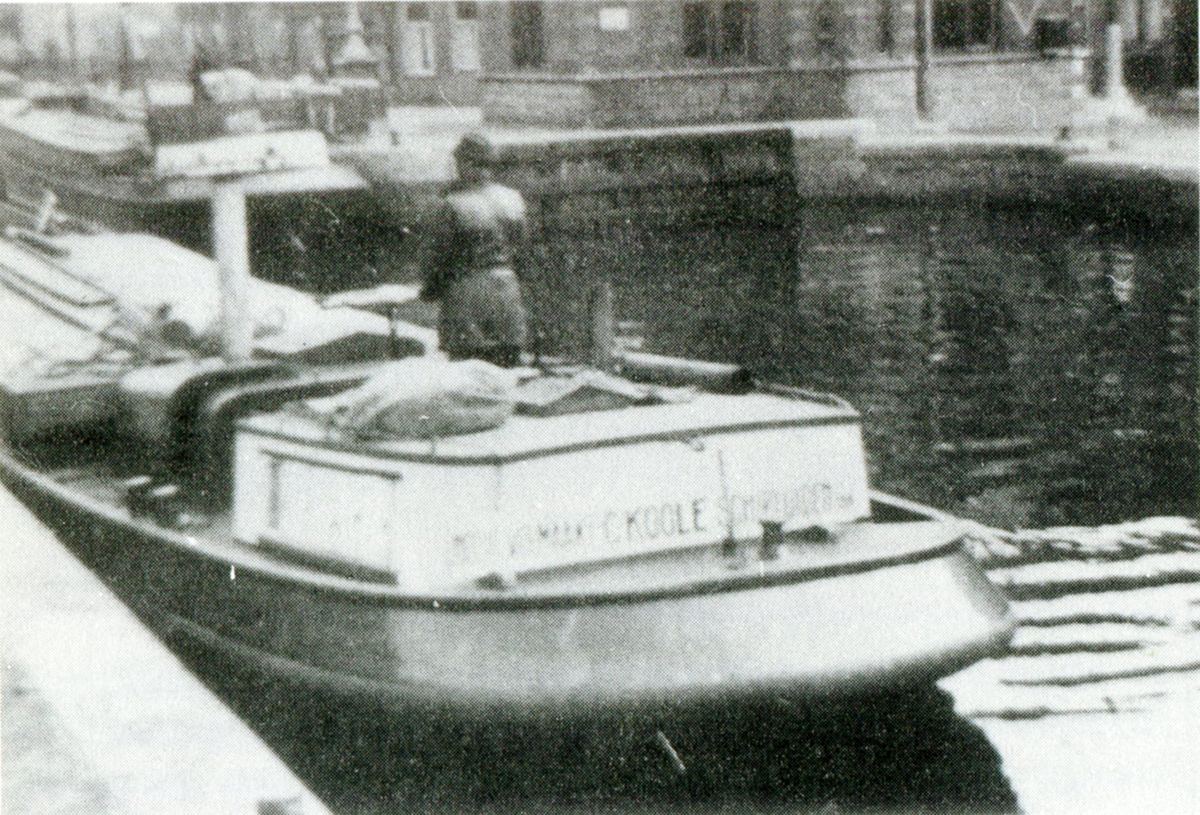
For a while the future of the Nooit Volmaakt hung in the balance – the boat in which skipper Kees Koole helped dozens of “Engelandvaarders” on their way to England. The vessel was due for another overhaul, but its owner, Daan de Bruijn, balked at the high cost and the huge effort the restoration would demand of him. He briefly considered selling the boat, but at once realised that a sale would risk the Nooit Volmaakt disappearing from view and eventually ending up, unsung, on the scrap heap.
A solution has now been found: the Nooit Volmaakt will be placed in a foundation that will fund and carry out the restoration itself. Its board is made up of skippers from Schipluiden, where the Nooit Volmaakt is moored and where Koole was born on 21 April 1912. That looks set to keep the boat going for years to come.
The Nooit Volmaakt was built during the First World War for Gerrit de Bruijn of Schipluiden and christened the ‘Arie’, after his son, on 30 July 1917. In the 1920s Jan van Leeuwen, a grocer in the Dorpsstraat, took her over and used her to carry manure, pulp and potatoes. In 1935 the Rienksma family bought the vessel and renamed her ‘Nooit Volmaakt’ (Never Perfect), after Granny Rienksma’s favourite saying that life is ‘simply never perfect’.
Early in the Second World War, Koole took over the barge from Sietse Rienksma and began using her to carry potatoes from Zeeland to the Hague area. Anton Schrader, who worked at the Bureau voor de Voedselvoorziening (Food Supply Office) in The Hague, obtained a permit for him from the German occupier allowing him on the Haringvliet until midnight.
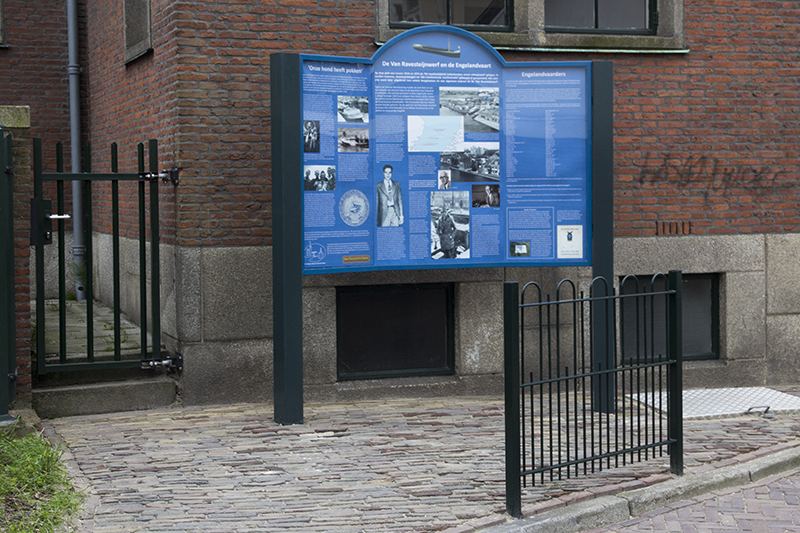
At the Van Ravesteijn yard in Leidschendam, Koole collected small boats that the brothers Jo and Pier Meijer had secretly made as seaworthy as possible. The boats were sealed so that they looked like Food Supply ‘inspection vessels’, and were towed behind the Nooit Volmaakt to the Haringvliet.
Thanks to the permit and the seal, Koole could pass through German checkpoints almost unhindered. On the way he picked up the “Engelandvaarders” at an agreed spot. They hid in the hold of the Nooit Volmaakt behind sacks of potatoes. In the middle of the Haringvliet they climbed into the small boat and set course for England.
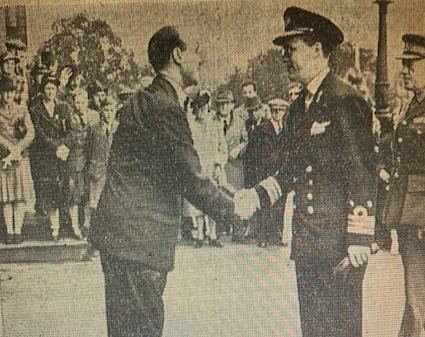
In this way Koole brought at least 72 “Engelandvaarders” out to the open sea, among them several Allied pilots. Of these, 47 actually reached England. The RAF decorated him for his exceptionally courageous resistance work, and he received an official letter of thanks from US President Truman. Only after his death in 1977 was he honoured in the Netherlands, with the Verzetsherdenkingskruis (Resistance Commemoration Cross).
In the 1970s the vessel served in the Zeeland mussel fishery under the name ‘Lenko’, and was shortened by 4 metres for the purpose. In 2010 Daan de Bruijn, a descendant of Gerrit de Bruijn, became her new owner and gave her back the name ‘Nooit Volmaakt’.
No other object is as closely tied to the “Engelandvaart” of 1940–45 as the Nooit Volmaakt. It is good to know that the vessel’s survival is secured for a new chapter.