Did you know that Museum Engelandvaarders is helping the Nationaal Archief (National Archives) open up the “Engelandvaarders” interrogation records? This “Engelandvaarders” project aims to make those interrogations accessible online. Work is currently under way on a database of all the journeys made by the “Engelandvaarders”.
Three National Archives project staff are cataloguing and digitising the interrogation records. In the course of their work they keep coming across remarkable events, which they write about in De Schakel. This time it is the turn of the so-called Russian War on Texel in April 1945.
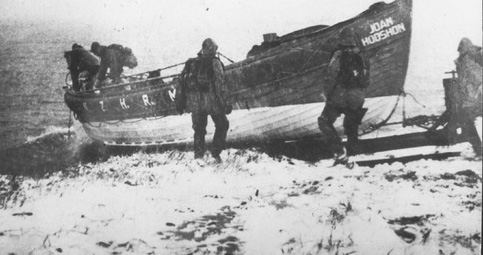
Early on the morning of 10 April 1945, a Dutch lifeboat sailed into the harbour at Mundesley in England. After 27 hours at sea, the last stretch escorted by a British aircraft, 10 Dutchmen and 4 Georgians came ashore. They would prove to be the last group of “Engelandvaarders” to escape to England by boat across the North Sea.
The journey had an important purpose: they had come to ask for reinforcements for the Georgian Uprising that had broken out on Texel a few days earlier. Some 800 Georgian soldiers in German service had been stationed on Texel since February 1945. These former Soviet Army soldiers had been taken prisoner and given the choice of serving in the German army. The Georgians feared persecution in the Soviet Union when they returned home after the war, because they had volunteered for the German army. They hoped to redeem themselves by rising up against the Germans on Texel and so helping the Allies.
The uprising began at 1 a.m. on 6 April 1945. Although the Georgians managed to take much of the island that first night, the Germans soon sent reinforcements from the mainland. Fierce and bloody fighting followed, sparing neither the island’s villages nor its civilians. Strategic points on Texel were shelled by artillery from Den Helder and elsewhere. Civilians who sheltered Georgian insurgents were summarily executed.
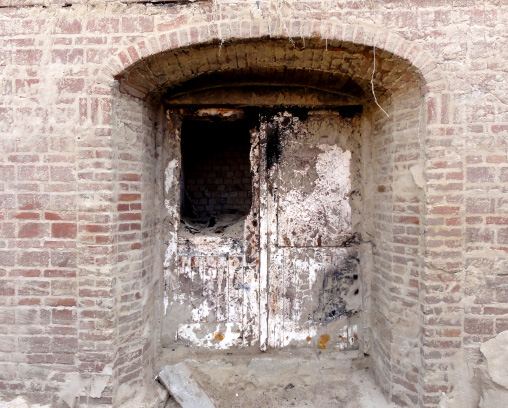
Amid this chaos the Texel resistance, which was in close contact with the Georgians, also went into action. An attempt was made
to contact England by radio from a bunker to ask for reinforcements. When this failed, it was decided to reach England by lifeboat. A crew was quickly assembled: 10 Dutchmen (islanders as well as people in hiding) and 4 Georgians. On the night of 9 April the ‘Joan Hodshon’ was launched and the journey to England began.
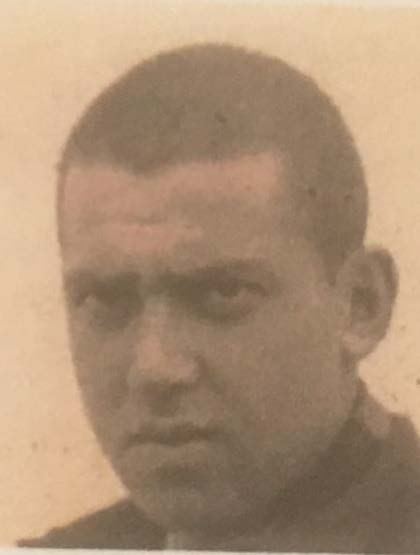
The Georgian crew included their commander, Mazijdze; sadly, the names of the other three Georgians are not known. The start of the journey in particular was dangerous, as the interrogation of Klaas van der Kooij, who acted as pilot, shows. To give the boat a good chance of slipping past a German coastal battery unseen, the Georgians opened fire on the battery at the moment the boat was due to pass. After that, the crew followed the planned route. Just off the British coast they were spotted by a British patrol aircraft. After they signalled to it in Morse code with a torch, the aircraft helped them reach the coast by dropping flares to show the way.
Sadly, the journey did not achieve its aim. The Dutch government in London refused to send help, as it did not want to put the food drops taking place in other parts of the Netherlands needlessly at risk. According to Tass, the Soviet news agency, the four Georgians were taken prisoner on arrival in London and eventually handed over to the Soviet authorities. Little is known about Madzijdze’s fate after the war; it seems he may have fallen victim to post-war reprisals and persecution in the Soviet Union. The Dutch “Engelandvaarders” were reunited in 1979 during the filming of a documentary about the uprising. This photograph (if possible) shows the 10 men and the boat in which they made their crossing.
For more information and detailed eyewitness accounts of the uprising on Texel, visit the website www.derussenoorlog.nl.
A dedicated group of volunteers is helping to unlock the travel details in the interrogation records.
Would you like to help? Please contact milo.vandepol@nationaalarchief.nl
Website: www.derussenoorlog.nl.