‘The answer to Eichmann’
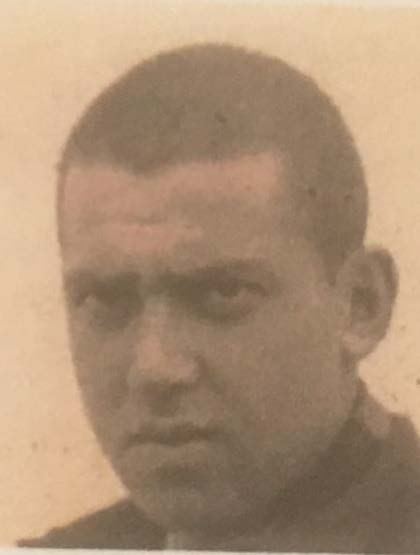
In the late 1950s Israel resolved to track down Adolf Eichmann and put him on trial. The pilot of the plane that flew him from Argentina to Israel on 20 May 1960 was the “Engelandvaarder” Louis van Coevorden, who had by then been living in Israel for years under the name Yehuda Shimoni.
On 19 May 1960 Yehuda took off from Tel Aviv in an El Al aircraft, arriving in Buenos Aires at five in the afternoon on 20 May. The crew, which he had picked himself, consisted entirely of Holocaust survivors, and in the cockpit of the Bristol Britannia sat Captain Zvi Tohar and Yehuda Shimoni. Yehuda was the only person on board who knew they would be flying back with Eichmann. On arrival in Buenos Aires he told the crew that Eichmann would be on board for the return flight. The news hit them like a bombshell, and from that moment every one of them was thinking of the loved ones they had lost in the Holocaust.
Yehuda’s announcement proved correct. That evening several members of the snatch team came on board, supporting between them a supposed ‘colleague’ in El Al uniform who had fallen ill. In his inside pocket was the passport of an El Al employee. The Argentine customs officers paid no attention to the ‘sick man’, and the passengers did not even notice that Eichmann was on the plane. The aircraft made one stop, in Dakar, to refuel; not a single passenger got off, and the plane took off again as quickly as possible. On 22 May the Bristol Britannia landed in Tel Aviv, and on 23 May Prime Minister Ben-Gurion announced in the Knesset, the Israeli parliament, that Adolf Eichmann had arrived. Yehuda said he had not spoken to Eichmann, but it certainly affected him deeply. This was the man responsible not only for the deaths of his parents, his brother, his sister-in-law and his brother-in-law, but also for the deaths of millions of other European Jews. He would not go into any further detail about the successful abduction. When he was in the Netherlands in 1961, a journalist from Het Parool asked him what he thought of the Eichmann trial. He replied: ‘As I walked out of the courtroom, I passed the troops getting ready for the big parade held in Jerusalem on Independence Day. The weather was gorgeous, there were hundreds of children, they were playing with the soldiers, with those strapping young men and those pretty girls, climbing onto their jeeps, romping with them, happy and joyful. Then I thought: this is the answer – the State of Israel, óur State of Israel, this is the answer to this trial, to Eichmann, to the past. I walked on, happy.’ His answer makes clear that Yehuda had become an Israeli through and through: he was proud of his homeland, Israel, and had long since stopped feeling Dutch. This article is an extract from “Engelandvaarder en Eichmann-ontvoerder – Louis van Coevorden, een gewone jongen in een ongewone tijd”.