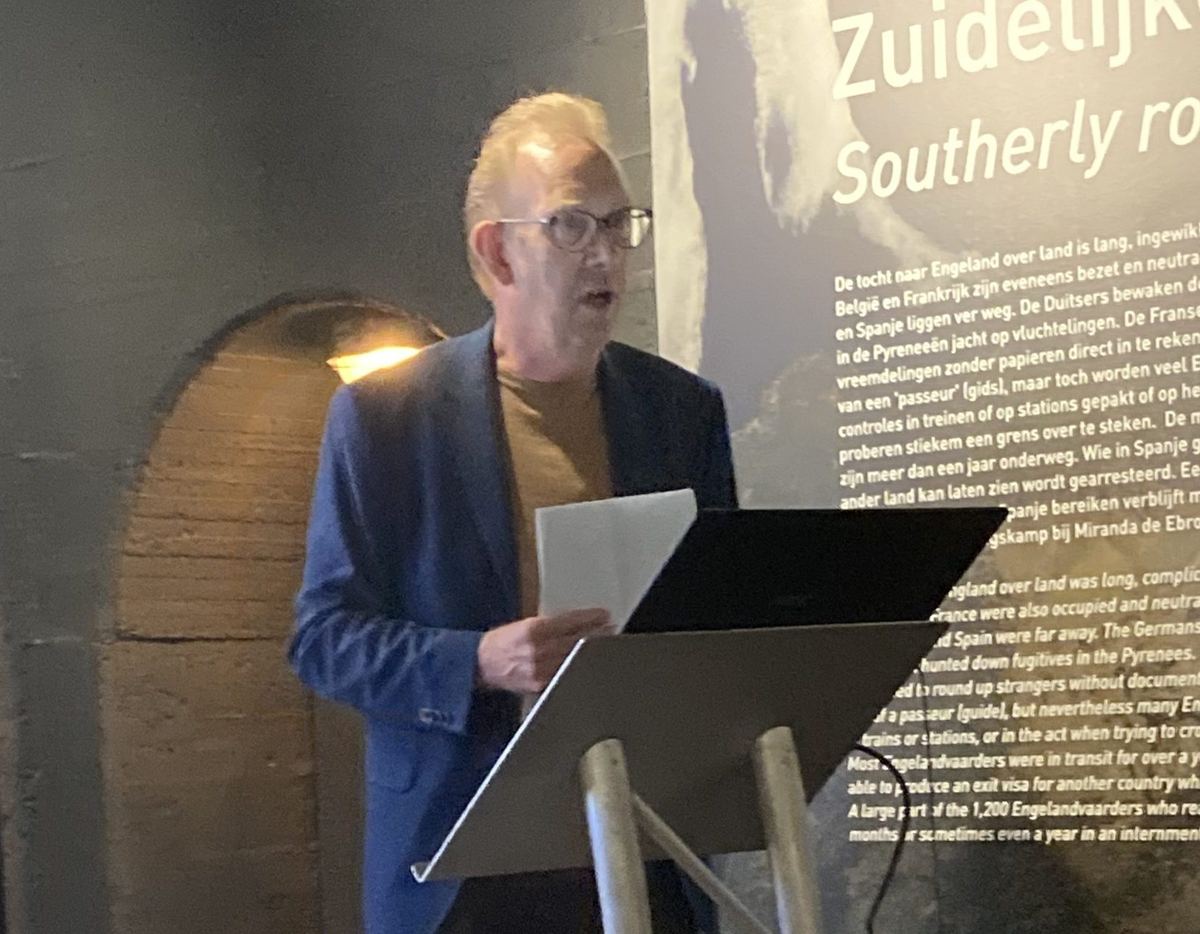
On 6 June Martin Hendriksma gave a talk at the museum about his recently published book “Het geheim van Bols” (The Bols Secret).
Hendriksma opened with a quiz. “How many glasses of jenever do you think the average Dutchman drank per week before the war?” was one of the questions. The astonishing answer: more than 12.
Business was therefore good in those days for Bols, the maker of jenever and liqueurs – not least because part of the family running the firm was happy to trade with the Germans and, as Hendriksma put it, “found little goat tracks to get round the permitted quotas”.
All this was a thorn in the side of Ernst Moltzer, deputy director and also a member of the family. “Not another drop for the Germans,” he declared – reason enough for the rest of the family to force him out of the firm.
Ernst Moltzer then decided to escape from the occupied Netherlands, and chose to sail to England with Dick van der Flier and Kees Kolff. Having competed in the Olympic sailing events in Berlin in 1936, he surely ought to be able to manage it. Sadly, they never arrived.
Hendriksma went on to describe how he managed to find out what had happened to the three men. With the help of the police’s North Sea missing persons unit, DNA from a human lower jaw, fished up off the coast at Petten by a Texel fishing boat twenty years ago, was matched with DNA from Moltzer’s relatives. What had long been suspected was now confirmed: they had been shipwrecked and drowned.
What prompted Hendriksma to write the book is just as remarkable: a tip that led him to a house in Heemstede where a hiding place had been found in the attic. There he came across a mattress and a torn-up newspaper dated 28 November 1941. On that date the house was rented by Ernst Moltzer, who, it turned out, had left his home a few weeks earlier and never returned. The hiding place was most probably used by Hans Moltzer, Ernst’s younger brother, who was active in the resistance. That day he must have realised that something terrible had happened to Ernst at sea, and torn up the newspaper in sheer despair.
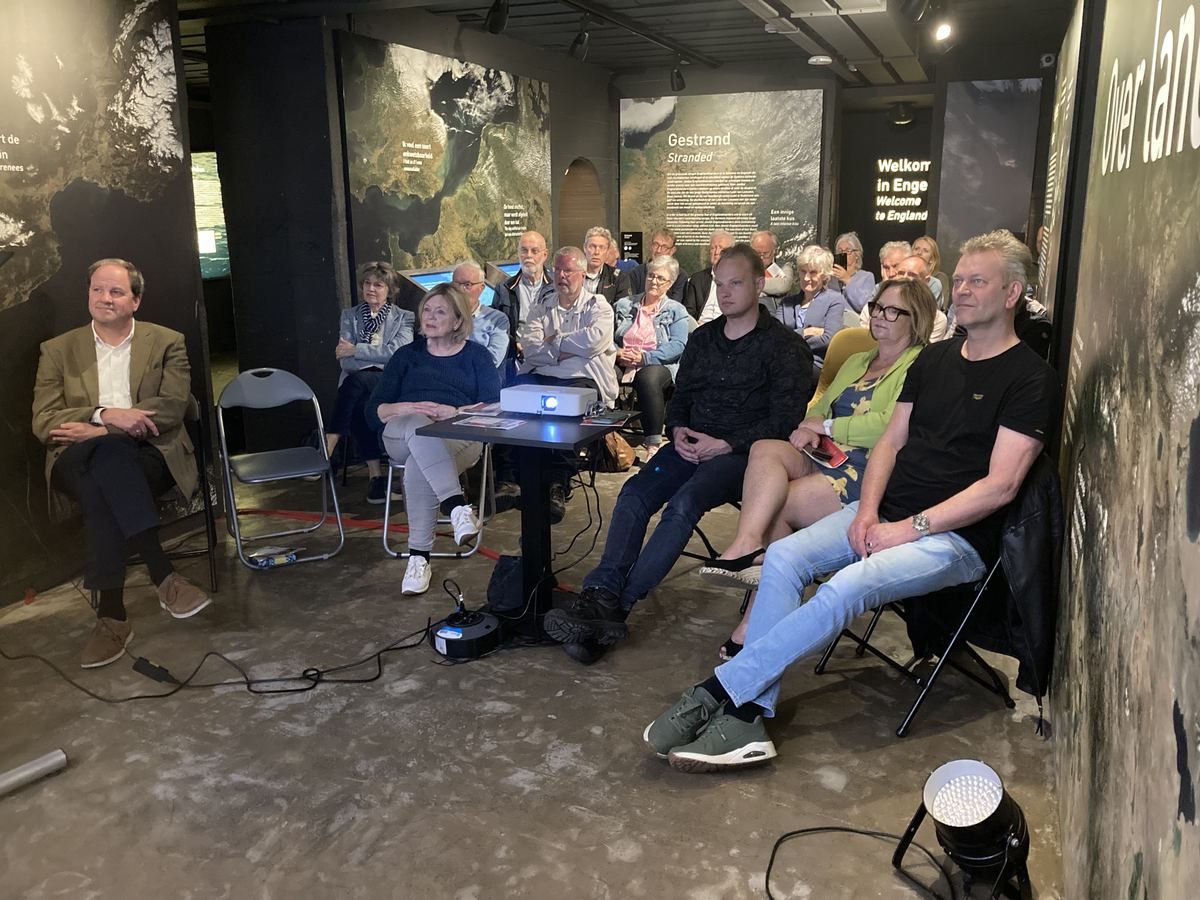
More than 25 people came to this fascinating talk and were welcomed with coffee and a petit four. Afterwards there were plenty of questions, and the audience made it clear how much they had enjoyed the talk. Paul Bartelings then thanked Francine Timmers Verhoeven, Yvonne Poppink and Udo Padding for organising the event.
You can read more about this remarkable story in the review of the book from 8 April 2024, which you will find elsewhere on this website.
Would you like to hear about future events at the museum? Sign up for the newsletter!