‘My father was a whistle-blower before the term existed’
As the son of an “Engelandvaarder”, Jacques Noach always took it for granted that his father Sally Noach was a hero. Until he delved into Sally’s history. Why are his acts of resistance denied? With the book Het ongeloof (The disbelief), Jacques settles accounts with every accusation.
Sally Noach was one of the “Engelandvaarders” who did resistance work from Lyon. He got people out of prison, fed them and arranged false papers for them – deeds for which many a resistance fighter was praised after the liberation. Not Sally. At least, not by everyone. Unlike most war heroes, to this day he has received no recognition from the Dutch government. A few years ago his son Jacques set out to discover, in detail, why.
Wonderful war stories
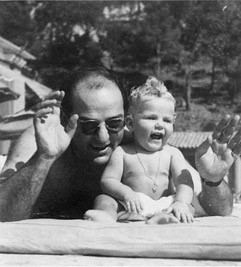
Jacques was born in 1946 in London, where his parents had met. Ten years later, in 1956, the family settled in Amsterdam. His father Sally traded in Persian carpets. ‘He travelled a lot for work, but on Fridays he was always home for Shabbat. The house was always lively then, with friends constantly dropping in – lots of former resistance fighters having a drink around our coffee table. My father would tell wonderful stories about the war years. ‘People talked about it openly’, says Jacques. ‘Very different from families who had been in the camps. Of course there were gaps in our family too: people who had never come back. But nobody kept silent.’
Bit by bit, Jacques learned about the journey his father had made: from Brussels, where he was living in May 1940, to Lyon and from there to Spain and Portugal. After the war, back in the Netherlands, Sally kept in touch with other “Engelandvaarders”. ‘When I was about ten, my mother had me read Herman de Man’s 1948 book Wonderlijke ontmoetingen (Strange encounters). A long chapter was devoted to my father. From then on I knew the whole story.’
‘My father told wonderful stories about the war years’
Why don’t you write a book about it?
Only later was Jacques confronted with the question marks hanging over Sally’s story. Up to his father’s death in 1980, several books, articles and television programmes about Sally appeared. The “Engelandvaarder” himself also wrote a book about his experiences. Yet something held Jacques back from asking questions. ‘You just didn’t’, he explains. ‘Even though we talked openly about the past at home, as a son you didn’t ask questions in those days.’ Jacques only started asking after the release of the documentary ‘Forgotten Soldier’, made in 2018 at his sister’s initiative. ‘There’s a scene in the film where the characters cast doubt on history as my father had described it. In the audience were people who had survived the war thanks to my father. They asked me why I didn’t write a book about it. My father’s book was no longer available.’
Not long afterwards the Netherlands went into lockdown because of the coronavirus. With little else to do, Jacques decided to retype his father’s book so that it would be available again. ‘I read once more how he had been branded a charlatan and how, time and again, a high decoration had been withheld from him. Loved by the Royal House, but vilified by the officials of Foreign Affairs. How could that be? Why wasn’t he believed, and what information could I find to verify his story?’ Jacques got to work. He dug into the files, went through old interdepartmental correspondence and reconstructed the work Sally had done in and around Lyon between September 1940 and September 1942. The result of this research is the book Het ongeloof.
‘I now know more about my father than he knew himself’
A creative approach
‘During my archival research I came across disillusioning facts’, says Jacques. My father helped hundreds of Dutch Jews and non-Jews. It’s all there in the files. From Lyon he helped them escape to Switzerland, or to Spain, Portugal and eventually England. To do that, he broke the rules. He forged papers and even ran a passport workshop in his cellar. This creative approach rubbed the senior officials up the wrong way. But he had no choice: refugees could expect nothing from the Dutch consulate. If it had been up to the officials, everyone would simply have been sent back to the Netherlands’, says Jacques, summing up his father’s indictment. ‘When he reached England, he didn’t mince his words. At Queen Wilhelmina’s request, he put down on paper all the abuses he had seen and experienced. Naturally the senior officials were not pleased. They accused him of lying and of illegal practices. The latter is true. Thanks to those practices, many lives were saved.’
With his book, Jacques makes short work of all the unjust accusations levelled at Sally. ‘I have examined all the documents and found proof of his story. I now know more about my father than he knew himself.’ Yet recognition from the government is still lacking. In 1969, on his sixtieth birthday, he was admitted to the House Order of Orange, but to this day the government considers the high decoration Wilhelmina promised him inopportune. That rankles. ‘My father was a whistle-blower before the term existed, and he is still not thanked for it.’
Documentation and publication
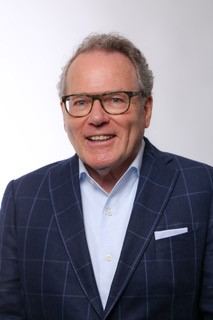
Meanwhile Sally Noach is honoured in many places. His eventful history can be found on the website Jacques set up to accompany his book. It holds a large number of letters, books and newspapers that write about his father, as well as photographs from an album he kept in London in 1943–1945. Museum Engelandvaarders also holds a great deal of documentation and visual material. Jacques visits the museum regularly. ‘Since my book came out, many descendants have approached me with questions about the past. I know the archives well and can help them find more information about family members. Many stories can be found in the museum. It’s wonderful that there is such a place where history is preserved.’
Interview: Marijn Ruhaak
Photos: Sally Noach