My doctoral thesis on “Engelandvaarders”, published in 2004, is titled ‘Tulpen voor Wilhelmina: de geschiedenis van de “Engelandvaarders”’ (Tulips for Wilhelmina: the history of the “Engelandvaarders”). The subtitle is crystal clear, but the main title ‘Tulpen voor Wilhelmina’ needs some explanation. So during my guided tours of the museum, which I always begin by showing my book, I explain that this main title is based on a true story.
It is the story of a small group of “Engelandvaarders” from Zuid-Holland who crossed the North Sea in a small boat in April 1941, taking two bunches of tulips with them: one for Queen Wilhelmina, living in exile, and the other for the English Queen Elizabeth. The crossing was successful and the tulips did indeed reach both queens in London.
I thought it was a lovely story and told it at home to my husband and children too, whereupon one of my daughters, then 14 years old, decided that my book should be called Tulpen voor Wilhelmina. And that is how it turned out!
Who were these “Engelandvaarders”, and how did this successful attempt across the North Sea unfold? And what became of the tulips? The Nationaal Archief (Dutch National Archives) holds a fair amount of information about this voyage. In addition, relatives of these “Engelandvaarders” have donated archive material to Museum Engelandvaarders. Finally, there is a very enjoyable interview with five of the six “Engelandvaarders”, published in the Leeuwarder Courant on 6 December 1974.
The initiator was 39-year-old Johan de Niet, a mechanical engineer from The Hague. He bought a seaworthy lifeboat from the Bothof shipyard in Slikkerveer and began looking for people who would want to take part in the voyage. The first to agree straight away was Hans Woltjer, a 33-year-old naval architect whom De Niet knew from his student days in Delft. Woltjer held a technical post with the Holland Amerika Lijn (HAL, Holland America Line).
The third participant was Henk Keesom, also 33, who sailed as a mate with the Koninklijke Pakketvaart Maatschappij (KPM), a Dutch shipping company that maintained the sea link with the Dutch East Indies. In May 1940 Keesom happened to be on leave in the Netherlands and could not return to the East. Keesom brought in his 31-year-old friend and KPM colleague Jim Giel, bringing the number of participants to 4. The KPM men drew the naval officer Lourens van der Veen from Den Helder into the plot. Van der Veen was 33 years old and had a desk job with the navy because he suffered from seasickness. Even so, he was keen to come along in the lifeboat. The sixth and youngest participant (30 years old), recruited by Woltjer, was Eddie Klein, the owner of an electrical goods shop in The Hague.
“Keesje”
In March 1941 a first escape attempt was made, but it failed because the outboard motor would not work. A 7th participant was involved at that stage: the engine importer Harry Joosten from Amsterdam. Harry was Jewish and so had urgent reason to leave the country. After the fiasco with the outboard motor he arranged a good inboard engine, but then – at his wife’s request – withdrew from further participation.(1) He was the only one who was married.
What is striking about this attempt at an “Engelandvaart” across the North Sea is that a great many helpers were involved, so a great many people knew about the plans, and yet no one let anything slip. Besides the shipbuilder Bothof and several naval officers whom De Niet had consulted, the market gardener C. Hogewoning in Katwijk was also a helper. The lifeboat was taken from Bothof’s yard to his house , where the final work on the boat was done.
The “Engelandvaarders” named the boat ‘Keesje’, after the 16-year-old son of the market gardener Hogewoning. This Kees was also the one who came up with a solution to the problem of how to get the boat out to sea unseen. Kees suggested that his uncle, a barge skipper whom the Germans left more or less alone, should hide the lifeboat in his hold. The skipper would then take the lifeboat to Simonshaven on Voorne-Putten, close to the De Biersum pumping station. Here too a former navy man was in on the plot. Simonshaven would then be the assembly point where all the participants would board.
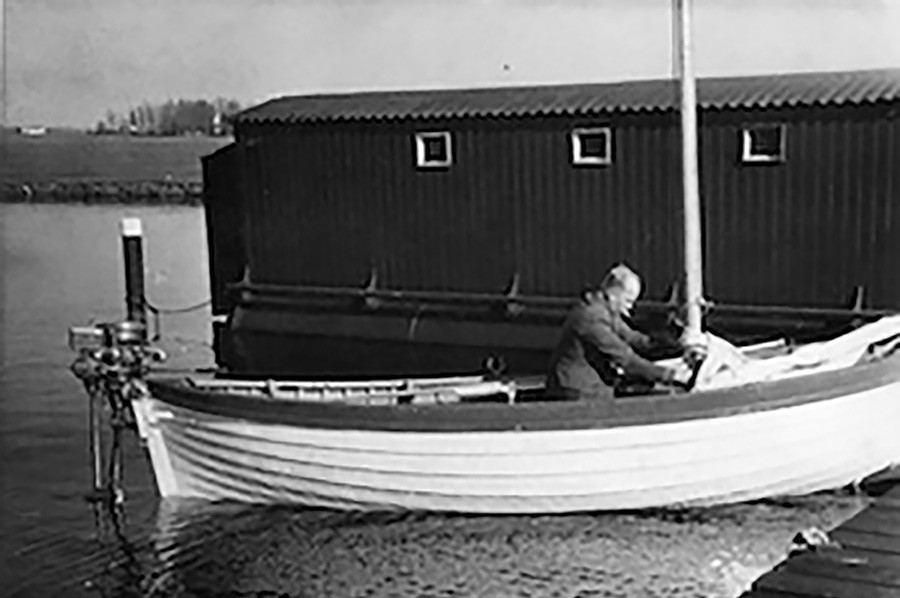
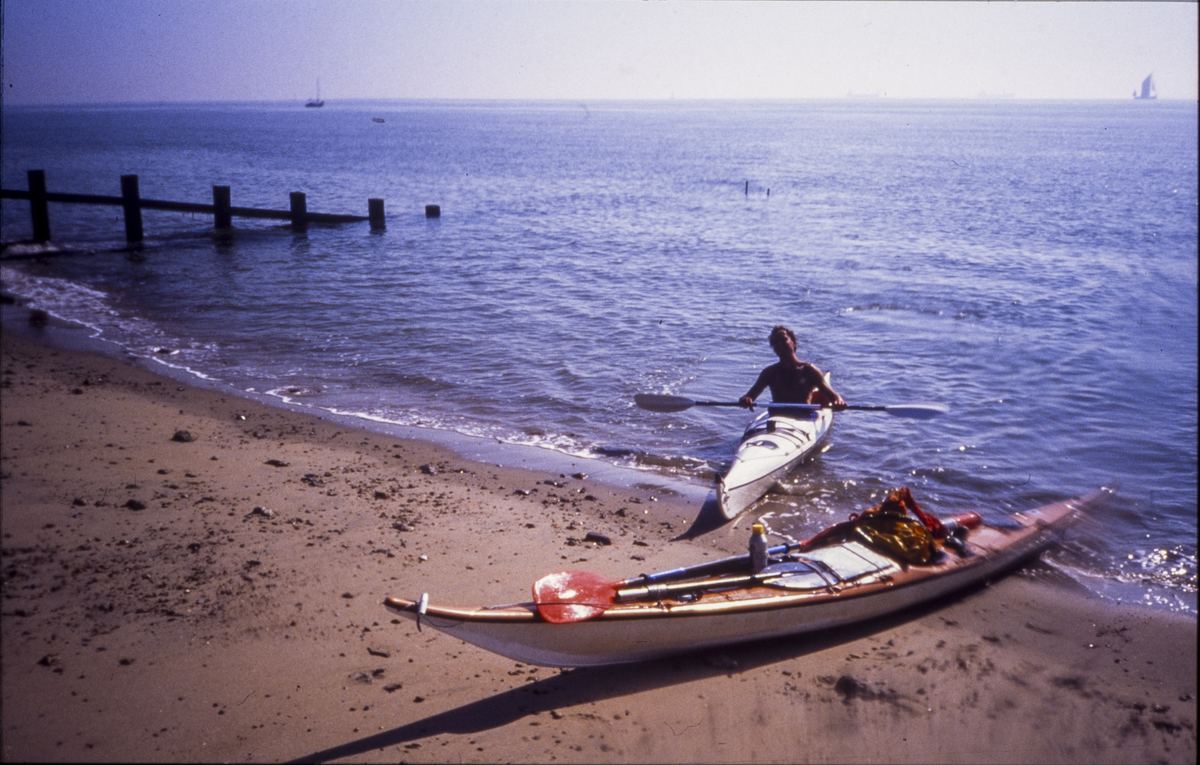
On 4 April 1941 the six men boarded the lifeboat as planned. The trip to the open sea and the subsequent crossing of the North Sea went without problems, thanks in part to the nautical knowledge of Keesom and Giel and the good weather. On the afternoon of 5 April , they sighted the English coast off Lowestoft. In the evening they arrived on a British beach, where the English coastguard was waiting for them. Keesom remembers that the reception was not all that friendly (‘Hands up’, the “Engelandvaarders” were told), but that soon passed. They were taken to the police station, given dry clothes and received hospitably.
Tulips for Wilhelmina and Elisabeth
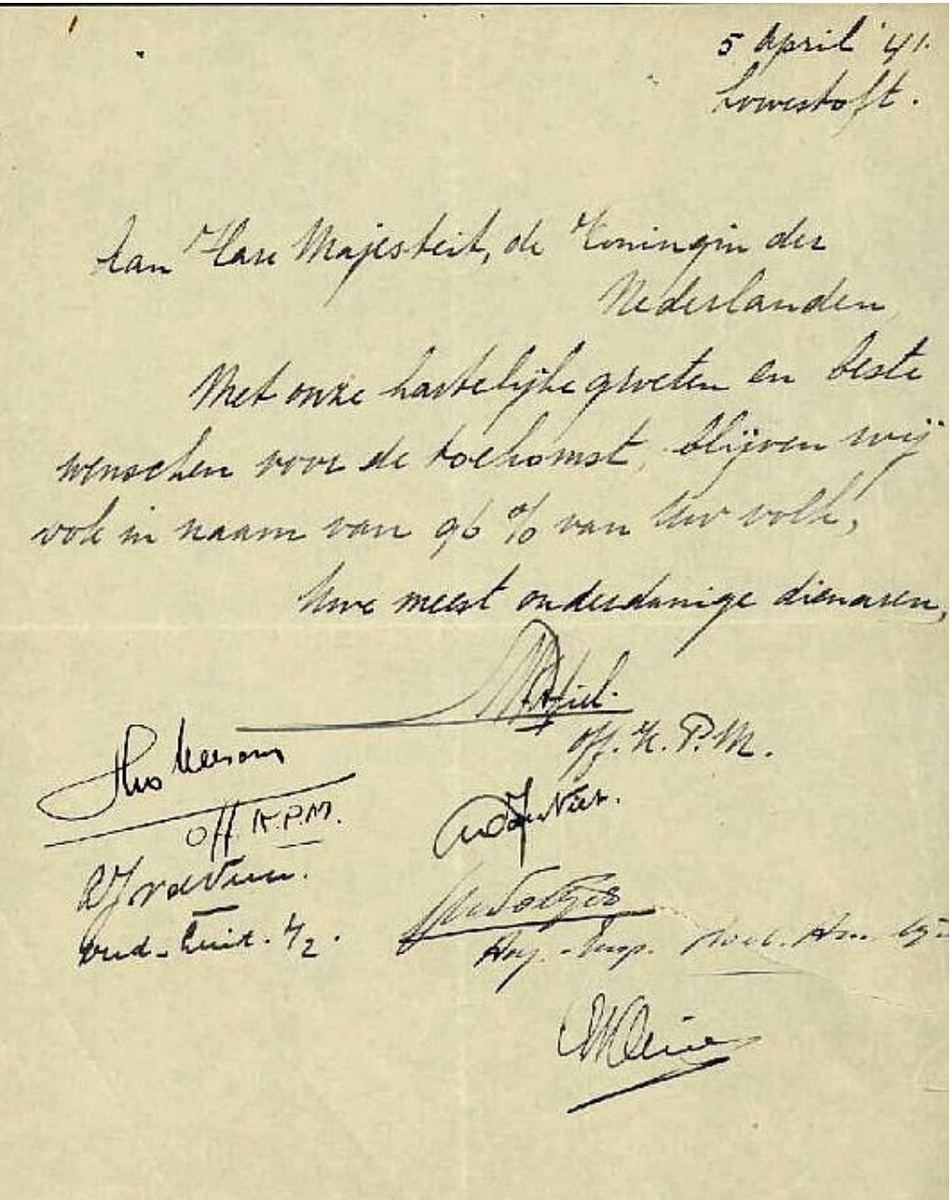
The next day they were taken to London and, as usual, interrogated to establish their political reliability. They had handed over the two bunches of tulips together with a note addressed to Queen Wilhelmina. It read:
5 April 1941, Lowestoft.
To Her Majesty the Queen of the Netherlands,
With our warmest greetings and best wishes for the future, we remain, also in the name of 96% of Your people,
Your most humble servants (2)
Below were the signatures of the six men: De Niet, Keesom, Giel, Van der Veen, Woltjer and Klein. Shortly afterwards the tulips were presented to both queens by the Dutch envoy in London, E. baron Michels van Verduynen.
The first to respond was Queen Wilhelmina. On 8 April 1941 H.W. Keesom, c/o the Royal Patriotic School in Wandsworth, received a letter from François van ‘t Sant, private secretary to the Dutch sovereign:
‘Her Majesty the Queen of the Netherlands has instructed me to convey to you and to Messrs Van der Veen Lourens, A. Giel, D. de Niet, J.H. Woltjer and E. Klein Her thanks for the magnificent tulips you brought for Her Majesty from the fatherland.
You are all warmly congratulated on your safe arrival in England. (3)
The English Queen Elisabeth was not to be outdone by her Dutch counterpart. Her thanks arrived a day later, on 9 April. It was written by the Dutch envoy already mentioned and addressed to Captain E. Derksema, head of the Dutch Politie Buitendienst (PBD, overseas police service), which questioned “Engelandvaarders” after they had been released by the British security service. Queen Elisabeth too was delighted with the tulips and asked the Dutch envoy
‘[….]….to express Her most sincere thanks to the gentlemen for the gift and the kind thought. Her Majesty had greatly appreciated both. (4)
These “Engelandvaarders” came over fairly early in the war. Woltjer at least remembers that every “Engelandvaarder” was given a number by the PBD. The six of them were numbers 17 to 23.
After all of them had been declared reliable and had taken tea with Her Majesty, the group broke up and each went his own way. Giel, Keesom, Van der Veen and Woltjer served in the navy: Van der Veen in a shore post, the others on active service. Giel sailed on various ships in Europe and the Far East. After his demobilisation in 1947 Giel joined the merchant navy and sailed as captain on ships of the Java-China-Japan Line. Keesom served on, among others, the destroyer Tjerk Hiddes and commanded HMS Evertsen. Back in the Netherlands he worked at the Ministry of Defence and taught at the Marine Instituut (Naval Institute) in Den Helder.
Woltjer was posted to Surabaya , but had to leave again as early as February 1942 after the Japanese invasion. He served in the merchant navy in the US and England. After the war he returned to the HAL and in 1947 became chief engineer at Wilton Feijenoord and later its President-Director.
Besides being an engineer, De Niet was also a bookkeeper, and he was given a post with the Nederlandse Scheepvaart en Handelscommissie (Netherlands Shipping and Trading Committee), known as ‘shipping’ for short. After the war he and Klein went into English business life. Both owned a factory in England.
Five of the six men married an English woman. Woltjer was the only one who married a Dutch woman. She was the widow of Rear Admiral Karel Doorman, who was killed in 1942 in the Battle of the Java Sea.
Keesje, the son of the market gardener Hogewoning, began studying medicine during the war and trained as a gynaecologist. He told the journalist from the Leeuwarder Courant how on Whit Monday 1941 he was listening to Radio Oranje and, to his great joy, heard the announcer say: ‘And here is a message for Kees: The tulips have arrived safely and are doing very well.’ Then he knew that the little group of “Engelandvaarders” had arrived safely!
To publish or not?
That is not the end of the story. The account of this voyage clearly had propaganda value: brave Dutchmen who had braved the North Sea at the risk of their lives and brought tulips – orange tulips, no less – for their poor queen. The Nederlandse Regeringspersdienst (Dutch Government Press Service, forerunner of the Rijks Voorlichtingsdienst) was only too eager to publish that story. It sent numerous requests to the authorities for permission to publish, but was turned down every time.
On 13 June 1941, for example, the acting head of the Regeringspersdienst, Dirk de Man, wrote in a letter to F. van ’t Sant (who, besides being Queen Wilhelmina’s private secretary, was also an adviser at the Department of Justice) that the English censors had recently cleared a report about what we will call the ‘Tulip story’ for South America, adding:
I would appreciate hearing soon whether the Regeeringspersdienst may now use this article for circulation in the English press.(5)
Van ’t Sant replied on 24 June 1941:
“[……] that after serious consultation with the competent English authorities and also on their behalf, it is urgently requested that any publication about the said fact (the Tulip story, AD) be avoided, even if such publication has taken place in foreign countries.
We likewise urgently request you not to draw any attention whatsoever to the fact that Dutchmen occasionally come over.
This not only makes our work extremely difficult, but there is evidence that it has the most disastrous consequences for the relatives and friends in Holland of those who have come over.(6)
If the Germans found out who had escaped to England , the families, friends and helpers of these “Engelandvaarders” ran a great risk of being arrested. Talking too much about the route taken was also strictly forbidden. That became clear, for example, in March 1942, when two young “Engelandvaarders” (Schiff and Van Wijngaarden) were interviewed for Radio Oranje and explained in minute detail how they had escaped from Switzerland to England via an organised route. As a result the route became known, and volunteers still waiting in Switzerland could no longer use it.(7)
Yet it was not the case that no report at all about “Engelandvaarders” got past the censors in England in the years 1940-1945. The escape stories were too valuable to Allied propaganda for that. But the reports had to be stripped entirely of any information that might lead the Germans to the identity of the “Engelandvaarders” involved.
Such a report eventually appeared in the Daily Mail on 25 August 1941. The headline read: ‘Smuggled tulips to 2 Queens’. Beneath it was ‘Daring Dutchmen”:
‘A bunch of withered red and white streaked tulips were recently presented to Queen Wilhelmina. They meant more to her than the finest bouquet that ever came out of a London or Paris florist’s shop. They were grown on her native soil.
To get them here a small bunch of loyal Dutchmen dared the vigilance and vengefulness of the Gestapo and the German army of occupation in Holland.
The smuggled flowers had no easy journey, but the red streaks in the petals – nearest to orange to be found in war-stricken Holland – still showed signs of life. The Queen wept when she received them.
There was a bunch too for Queen Elisabeth. When England’s Queen heard of the gift, she asked the Netherlands Minister Jonkheer Michels van Verduynen to bring them to her personally.
Queen Wilhelmina sent for the smugglers, all of whom are now serving in the Free Dutch Forces. (8)
The reunion of the “Engelandvaarders” of this voyage, which resulted in the interview in the Leeuwarder Courant, took place some time in 1974 at De Niet’s home in Vledderveen. It is accompanied by a fine photograph of the whole company, with Keesom holding the ship’s horn used at the time. De Niet poses with the Dutch flag that flew on the ‘Keesje’ in 1941.
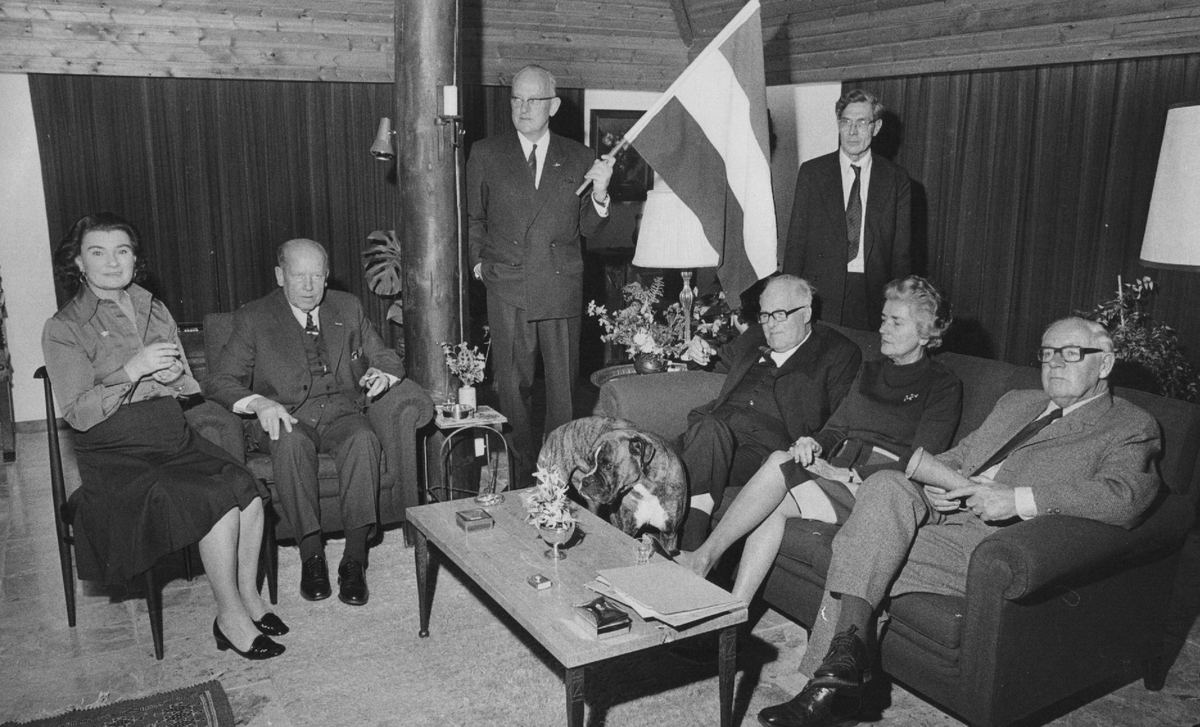
In 1987 the entire Leeuwarder Courant interview was reprinted in full in De Schakel, the magazine of the Genootschap Engelandvaarders. The Genootschap had known nothing about this successful attempt and the role tulips had played in it. The piece in De Schakel noted that Giel, Keesom and Klein had since died (in 1976, 1980 and 1982 respectively). Woltjer died in 1996. The dates of death of De Niet and Van der Veen are unknown.
(1) Fortunately, Joosten survived the war.
(2) Digitaal Monument Engelandvaarders: Johannes (Hans) Emanuel Woltjer – Searching for “Engelandvaarders”.
(3) Digitaal Monument Engelandvaarders: Johannes (Hans) Emanuel Woltjer – Searching for “Engelandvaarders”.
(4) Digitaal Monument Engelandvaarders: Johannes (Hans) Emanuel Woltjer – Searching for “Engelandvaarders”.
(5) Digitaal Monument Engelandvaarders: Johannes (Hans) Emanuel Woltjer – Searching for “Engelandvaarders”.
(6) Digitaal Monument Engelandvaarders: Johannes (Hans) Emanuel Woltjer – Searching for “Engelandvaarders”.
(7) A. DESSING, Tulpen voor Wilhelmina: de geschiedenis van de “Engelandvaarders”. Amsterdam, 2004, p. 322.
(8) Digitaal Monument Engelandvaarders: Johannes (Hans) Emanuel Woltjer – Searching for “Engelandvaarders”.