Researching the activities of intelligence and security services in the Netherlands during and after the Second World War, historian Frans Kluiters came across some juicy details about a number of “Engelandvaarders” in 1999.
The extensive file Kluiters left behind at his death in 2009 contains a statement by the resistance man and “Engelandvaarder” Charles van Houten, who after a successful crossing in 1943 joined the Dutch Bureau Inlichtingen (Intelligence Bureau) in London. After the liberation of the southern Netherlands in September ’44 he became deputy commander of the Binnenlandse Strijdkrachten (Netherlands Forces of the Interior).
In the early years of the occupation Van Houten was active in a small resistance group that also included Wim van Nievelt, the Polish vice-consul in the Netherlands Witold (‘Tolo’) Makowski, the Hague city councillor Els van den Bosch-de Jongh and the Hague resistance man Andor Kaszó. In the statement he drew up after the war, he describes how Kaszó saved him from the clutches of the Gestapo in the nick of time.
On 15 August 1942, at around eight in the evening, he is sitting in Van Nievelt’s garden at Surinamestraat 24. The men are discussing matters concerning the Commercieele Bank NV at Anna Paulownastraat 89, of which they are both directors. The bell rings and Kaszó, out of breath and ‘in a state of agitation’, tells them that the Gestapo is on his heels and that Van Houten and Van Nievelt must get away as fast as possible to avoid arrest.
Van Houten: ‘This all happened in great haste, the story came out in fits and starts and out of the hearing of Mrs Van Nievelt, who was upstairs in one of the front rooms of the house at that moment. After a few moments the bell rang again.’ That is the moment for Kaszó to ‘disappear at once through the garden to the fire lane between the houses of the Surinamestraat and the Nassauplein.’ He calls back to Van Houten and Van Nievelt to come with him immediately. Van Houten does, but Van Nievelt does not want to abandon his family and stays in the house. ‘ Van Houten runs down the fire lane and jumps onto a tram in the Javastraat.
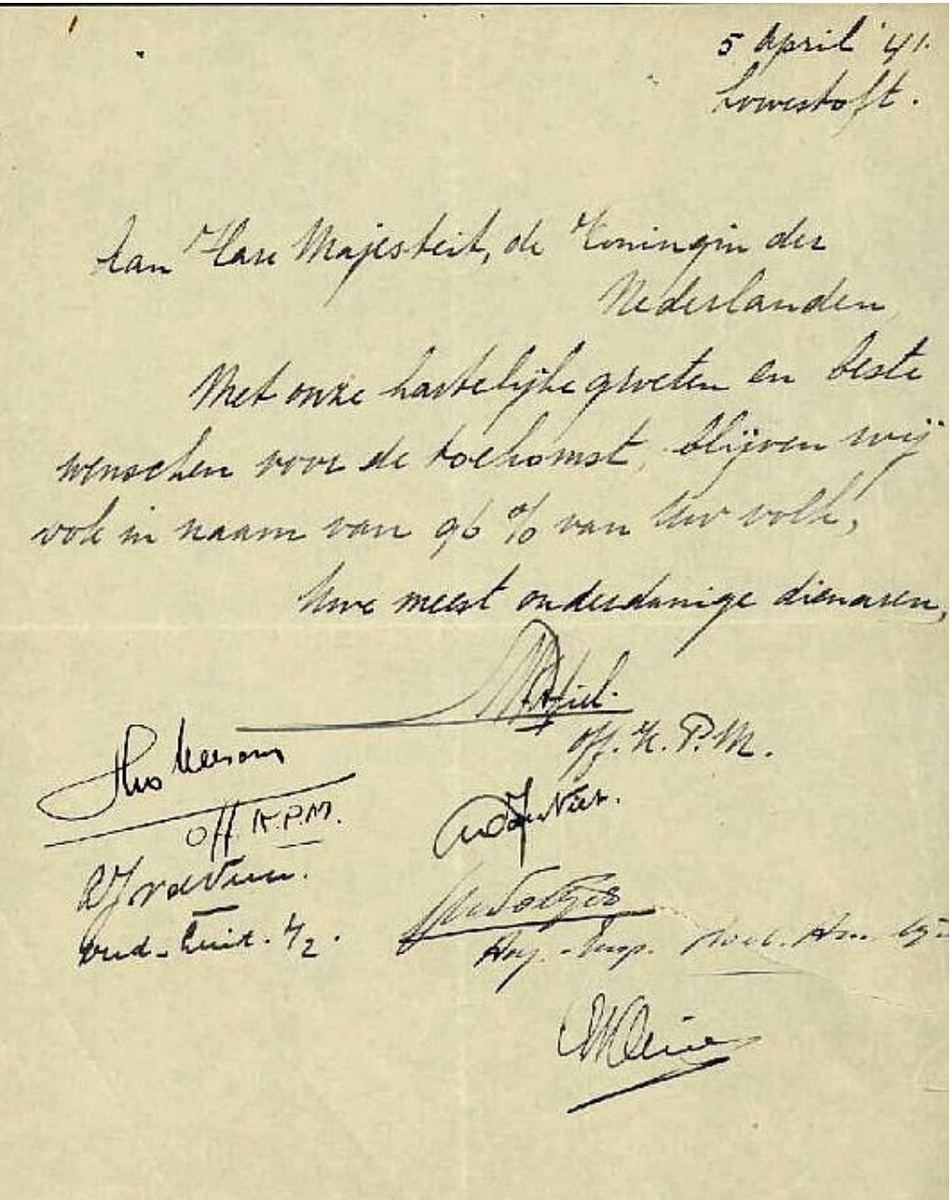
With the help of Allard Oosterhuis’s resistance group Zwaantje in Delfzijl, he manages to escape from the Netherlands together with Willem Lindenburg, Leen Pot, Pieter Six and Hendrik Lodewijk van der Wijck, hiding – with the knowledge of captain Harrie Roossien – in a small, poorly ventilated space in the water tank of the ship ‘Hollandia’. On 9 September 1943 Van Houten is assigned in England to the Bureau Inlichtingen (BI) and promoted to major. He is the liaison between the BI and the Queen, and in that role has great influence on her.
Hendrik van den Bergh and Rudolf Paehlig
After his escape Kaszó worked on an escape line that took Allied pilots via Spain to Portugal. On 12 July 1942 he sets off for Spain with Hendrik van den Bergh and Rudolf (‘Boelie’) Paehlig. In Paris Kaszó picks up two Allied pilots he is to help get back to England. In Spain the group is arrested for crossing the border illegally. They end up in Porlier prison in Madrid. Kaszó, who is of Hungarian descent, is locked up in the camp at Nanclares de Oca, but manages to escape and, clinging to the undersides of trains, reach the Netherlands. Van den Bergh succeeds in reaching England by air on 25 November 1943. Paehlig does not manage it until 28 March 1945. He trains with the Special Operations Executive (SOE), but returns a few months later to the by then liberated Netherlands. In 1950, at the age of 28, he is committed for ‘insanity’ to the Bloemendaal psychiatric institution in Loosduinen. The British archives on him remain closed until 1 January 2031.
Jan Lowey-Ball
Kluiters’s research also sheds light on the “Engelandvaart” of Jan Lowey-Ball, an engineer and resistance man from Delft. In 1943 Lowey-Ball tries to escape to Spain, intending to contribute to the resistance from London. On the way, in Carcassonne, he is arrested. During questioning the Germans realise he could be of value to the aircraft industry based in Toulouse. Jan pretends to cooperate and is released. With a special Ausweis (pass) he is allowed to travel back to the Netherlands on a Wehrmacht train and to move freely through Belgium and France.
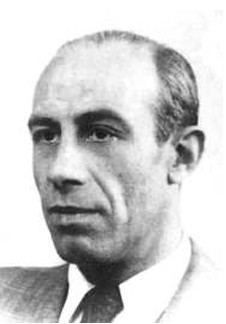
Back in Delft he meets the French journalist and resistance man Henry Scharrer, who has been dismissed from the ANP news agency in The Hague on German orders. Scharrer spies in the Netherlands for the Free French intelligence service in London. A printing works makes copies of Jan’s Ausweis. Lowey-Ball and Scharrer set up an escape route for Allied pilots stranded in the Netherlands, prisoners of war, Jews and “Engelandvaarders”: Roosendaal or Maastricht – Lille – Paris – Toulouse – Pau. They also work with the Alkmaar resistance men Fritz Conijn and Pierre de Bie. On 18 August 1944 Scharrer is arrested on the train from Haarlem to The Hague; shortly afterwards Conijn suffers the same fate. Both are executed by firing squad in Vught on 6 September. It has never become clear why Lowey-Ball was interned after the liberation in Fort Blauwkapel, the detention camp for political offenders. According to Kluiters, the reason was probably the deal he had made with the Germans in France.
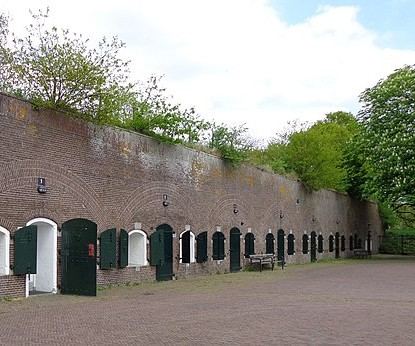
On 15 December 1945 Lowey-Ball escapes from Fort Blauwkapel in spectacular fashion. Also held in the camp are the Dutch Nazi Willem Sassen and Andor Kaszó, who has been arrested on suspicion of embezzling large sums of resistance money. The camp is guarded by soldiers of the Canadian Field Security. Sassen and Ball have organised a special performance of the play ‘Cyrano de Bergerac’, to be preceded by a recital of the one-act play ‘De Ontsnapping’ (The Escape), written by Sassen.
In the front row sits the British general Charles Foulkes, who on 1 May 1945 in Wageningen had ratified with his signature the surrender of the German forces in the Netherlands. Beside him sits the father of the performer, the former NSB mayor of Veghel, who is also detained in the camp. To make the performance feel real, Sassen has had the stage closed off with barbed wire and mattresses. Canadian soldiers keep the audience in check, rifles at the ready. It has to look as real as possible…
‘I’m going to London, Father! The radio is calling me! I can’t stay here any longer!’ cries Sassen junior, standing on stage in a Canadian army coat over his suit. He leaves the stage and, while the audience waits patiently for the next scene, squeezes through a window whose bars have been sawn through beforehand. Along with Sassen, Lowey-Ball and Kaszó also make a run for it. Ball does not know at that moment that it has meanwhile been discovered that he was wrongly charged and detained, and that there were plans to release him five days later.
The information about Andor Kaszó is taken from the book ‘Tussen paprika en kaas – Het verhaal van een verzetskind’ (Between paprika and cheese – The story of a resistance child), to be published on 15 April 2026, by Minka Kaszó, the only daughter of Andor Kaszó and the Hague resistance woman Jo Hendrichs.