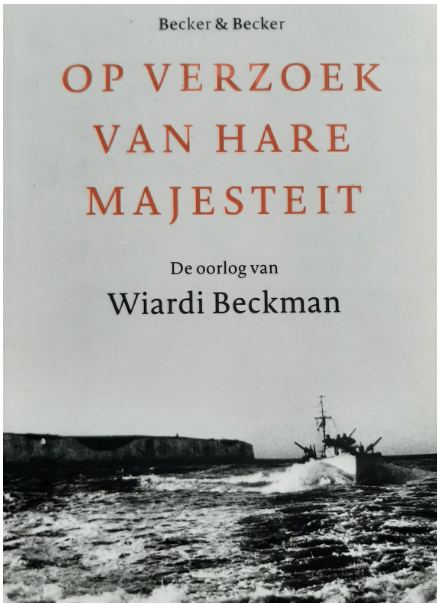
Why did Queen Wilhelmina want the social democrat Herman Bernard ‘Stuuf’ Wiardi Beckman to come to England? That important question is at the heart of Op verzoek van Hare Majesteit (At Her Majesty’s Request).
Becker & Becker, Boom 2020 (ISBN 9789024431410)
This superbly written and well-documented book describes the short (1904-1945) but remarkable life of a man who had everything it took to become Prime Minister of the Netherlands. Before the war, this royalist social democrat was one of the driving forces behind the renewal of the SDAP (Social Democratic Workers’ Party), and from 1937 he sat in the Senate. Unlike many in his party, he recognised the danger of Nazi Germany early on, and from 1938 he openly argued for investment in national defence. His contact with the royal family dates from that same year, when he met Prince Bernhard, who was then getting to know Dutch society. During the May days of 1940 Beckman served on the General Staff, and moving into resistance work was for him a logical continuation of the struggle. Not armed resistance, but fostering a spirit of resistance: he wrote for the underground newspaper Het Parool, founded in 1940, and gave talks all over the country. Events gathered pace when, on 25 November 1941, a secret agent from England turned up on his doorstep with a personal request from Queen Wilhelmina. From that moment on, the story of Wiardi Beckman is bound up with that of the Soldier of Orange. Together with Peter Tazelaar he went down to the beach at Scheveningen time and again, hoping to be picked up by a British Motor Gun Boat – in the end with fatal consequences. I admire the fresh perspective the authors bring to these events. Particularly interesting, for example, is the chapter on the post-war parliamentary inquiry, and especially on the missed opportunities in the questions it asked. This book is a fine tribute to one of the greatest figures of the resistance, a giant who would undoubtedly have played a major role after the liberation.