On 24 April this year, Marijke Wertheim, daughter of “Engelandvaarder” Harrie (Henricus Antonius Maria) Wertheim, visited Museum Engelandvaarders with her husband – and not for the first time.
She had already visited the museum in September 2023, during a tour of Europe – she lives in Canada – taking in all the places where her father had stayed on his journey to England. Now she was back in the Netherlands and returned to the museum with her husband; evidently the first visit had made a good impression.
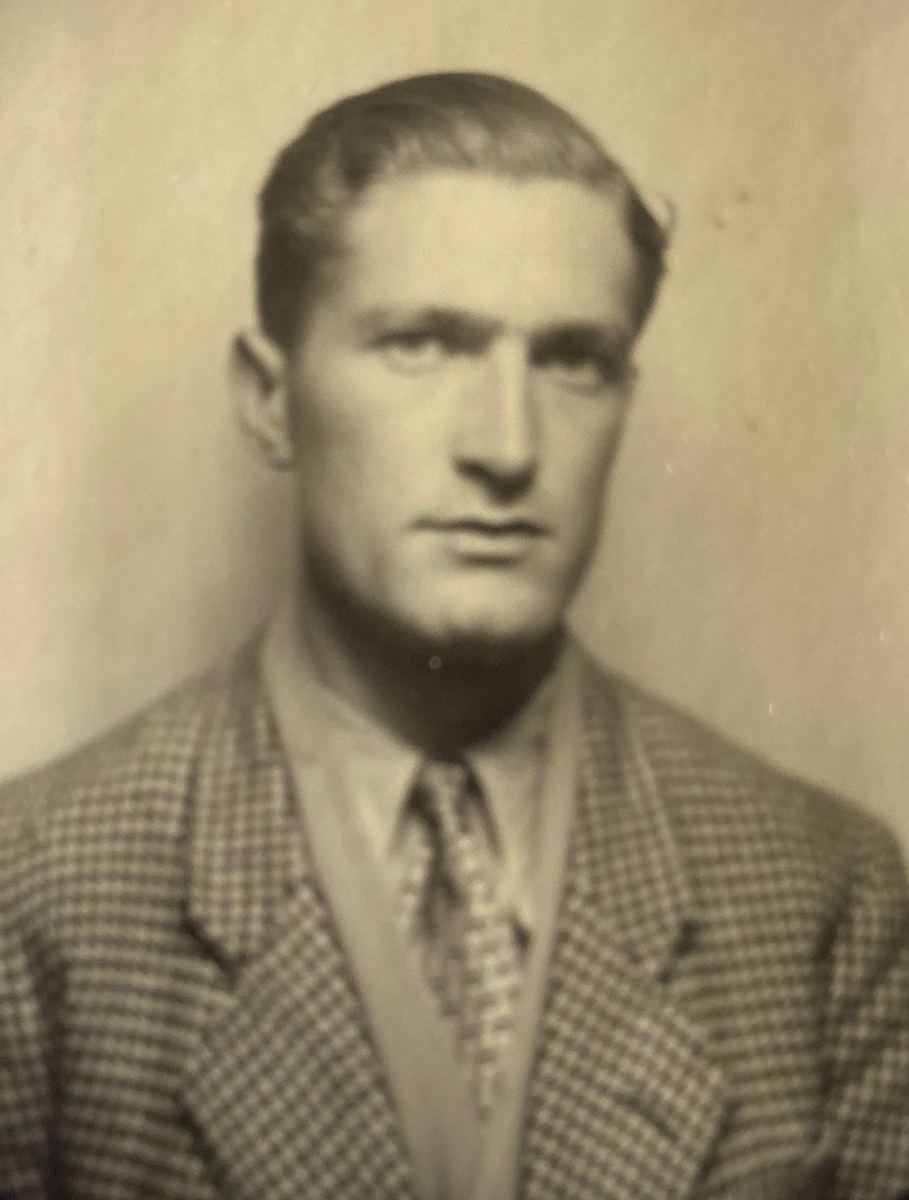
Her father, Harrie Wertheim, was born in Tilburg on 24 April 1919. After the German invasion he had completed his military service as a sergeant in the 6th Infantry Regiment.
Together with his brother Piet (P.H.J.M.), W.A.C. Melissen, Van Rooyen and A.C.M. Nuyten, he left Tilburg on 18 February 1941. They travelled by bus to Zundert, crossed the Dutch–Belgian border on foot and then took the tram to Antwerp, where they changed their money. After a short stay in Antwerp they went on via Kortrijk and Lille to a small village near Paris, where the local priest put them up.
He then took them to the demarcation line, where a guide led them into unoccupied France. From there they took the train to Marseille (30 February 1941).
A visit to the Office Néerlandais in Marseille was a great disappointment. According to the London interrogation of his brother Piet, Jonkheer D.W.F. van Lennep, appointed in Marseille specifically to deal with the refugees, advised them to go back to the Netherlands: there was nothing he could do for them. “All you lot do here is cause me trouble.” Other “Engelandvaarders” had similar experiences.
Instead, the French authorities in Marseille placed them under ‘résidence forcée’ (assigned residence). After almost a month there, they went to the Office in Perpignan to see Mr Kolkman, who placed them in his refugee house at Le Soler.
After several failed attempts to get across to Spain, Harrie eventually ended up in Toulouse; the others managed to get away, some of them via Switzerland. Harrie was held back by an old injury he had sustained in 1940, but in the end he too succeeded, travelling via Spain and Portugal on the Bueno Esperanza to the Antilles and from there to Canada.
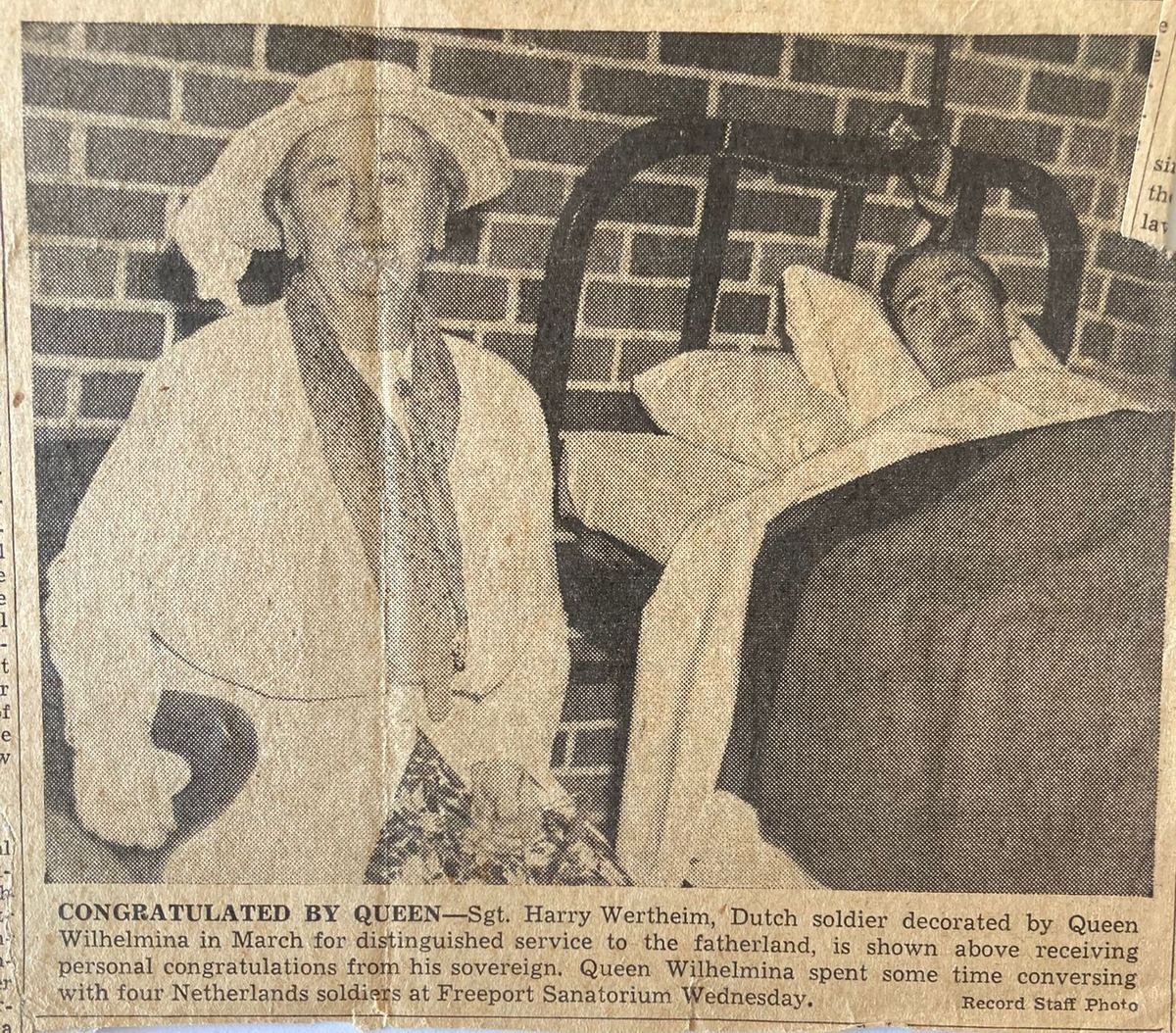
In Canada he reported to the Princess Irene Brigade, where he fell seriously ill with tuberculosis – so ill that his friends feared for his life. He was admitted to hospital. “…became desperately ill, 5 years in hospital, 4 operations, but I’m still here,” he wrote. A high point for him was a visit from Queen Wilhelmina in hospital on 30 June 1943. Before that, he had already been awarded the Cross of Merit.
Queen Wilhelmina and he corresponded several times afterwards as well. In 1944 he was also authorised to wear the War Commemorative Cross with the clasp “Nederland Mei 1940” (Netherlands May 1940). And when he had returned to the Netherlands, she invited him to tea at Het Loo Palace: “..collected in the Royal car, lovely memories,” he wrote later.
Eventually, after the war had ended, he emigrated to Canada.
Marijke Wertheim’s visit in April 2026 had a purpose: she donated to the museum a thick binder containing all the original records of her father’s journey, which he had kept at the time, including his many train tickets and the like. The donation also includes his diaries, kept in part, and photographs he took.
In Canada she knew of no one interested in this wealth of documentation, so she entrusted the collection to the museum. His “Engelandvaart” is thus among the best-documented journeys to freedom. I can imagine this unique documentation being very useful to anyone wanting to write an essay or dissertation on the “Engelandvaarders”.