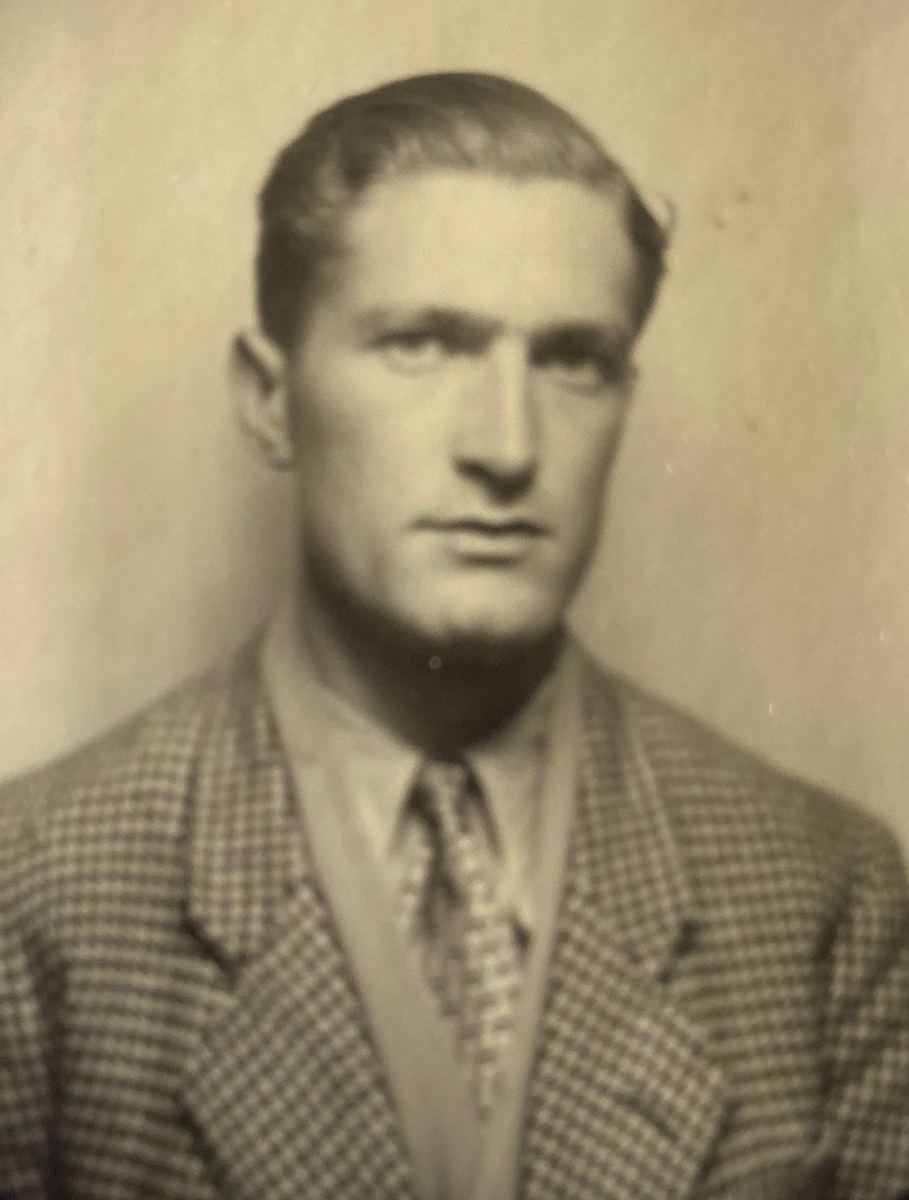
The name Bob van der Stok may ring a bell for some. No wonder: in 1944 this “Engelandvaarder” took part in the famous mass breakout from the prisoner-of-war camp Stalag Luft III (later known as The Great Escape) and went on to reach England for a second time. In the early 1980s Van der Stok wrote his autobiography, Oorlogsvlieger van Oranje (published in English as War Pilot of Orange).
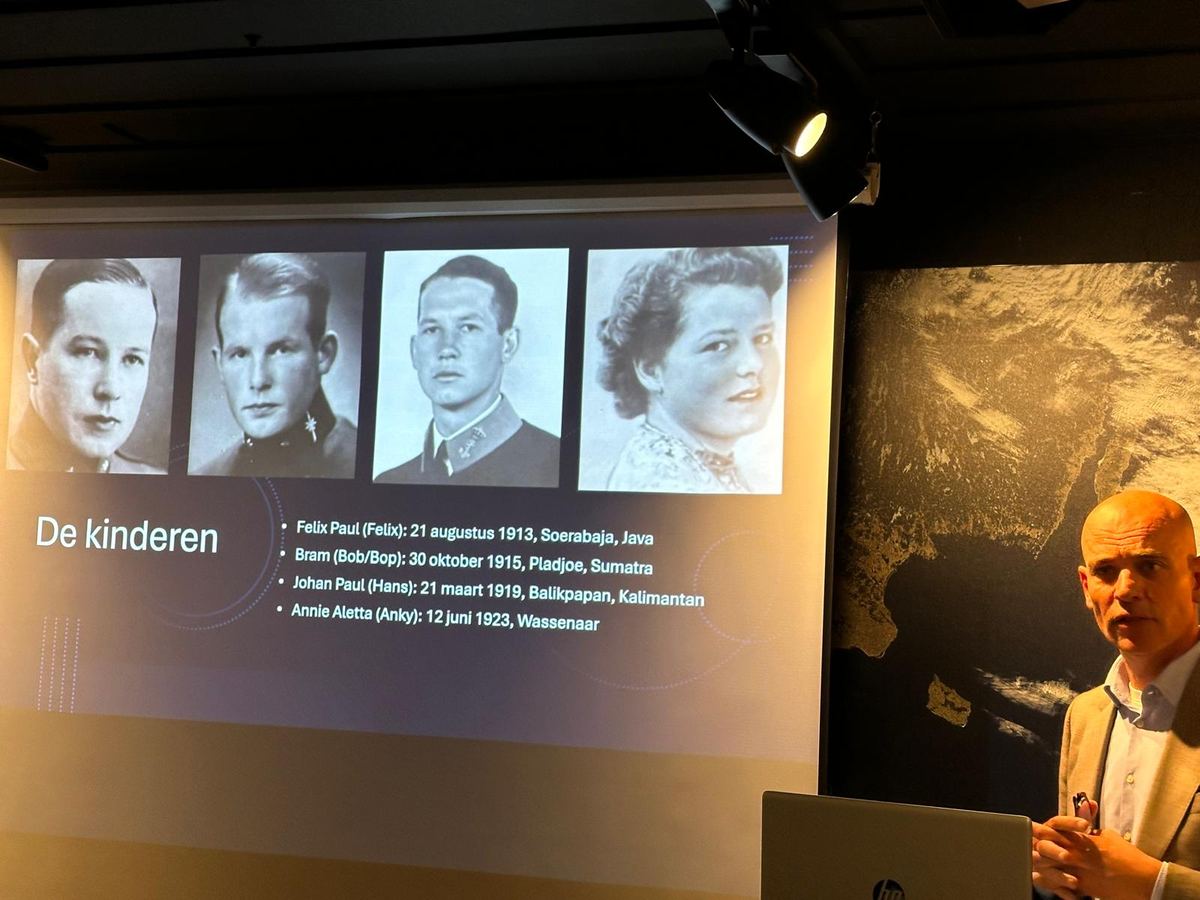
On 11 June Erwin van Loo of the Netherlands Institute of Military History talked at length about Bob van der Stok’s double “Engelandvaart”. But he did not dwell only on the adventurous life of this former fighter pilot. He also went into detail about what the war meant for the rest of the Van der Stok family.
Besides the father and mother, the family consisted of four children born between 1913 and 1923: Felix, Bob, Hans and Anky.
Anky spent the war years in Switzerland, but the rest of the family was living in the Netherlands when war broke out. Bob was a fighter pilot with the army air service, Felix served in the artillery and Hans was a naval cadet at the Royal Naval Institute (KIM). Bob in particular saw a lot of action during the five days of fighting, flying several combat sorties.
After the Dutch capitulation the three brothers went home. Bob resumed his medical studies, Felix went back to his job as an insurance agent and Hans enrolled at nautical college. But what really occupied them was the German occupation. The whole family was staunchly loyal to the House of Orange and deeply patriotic, and they were not at all prepared to accept that the Netherlands was now occupied. While much of the Dutch population was still trying to adapt and wait and see, Felix and Bob drifted into the resistance very early on.
In the end Bob and Hans decided to try to get away to England. After at least three failed attempts, Bob managed in July 1941 to stow away aboard the Swiss ship St. Cergue. After more than a week hidden in a tiny space in the engine room, a British warship stopped the St. Cergue in the Atlantic, and Bob, together with several other “Engelandvaarders”, including Erik Hazelhoff Roelfzema and Peter Tazelaar, transferred to the British vessel. He was free again.
Not quite a year later, Hans left for Sweden as a mess steward on a Dutch ship. On arrival he jumped ship and reported to the police. After six months on a bulb farm in the south of the neutral country, a seat came free on a British aircraft that flew him to Scotland. He too had reached free territory safely.
After arriving in Britain, Bob joined the RAF. From late 1941 he flew operational missions as a fighter pilot with 41 Squadron. In April 1942 disaster struck: over western France a German fighter shot down his Spitfire. Bob bailed out by parachute but was taken prisoner. He ended up in Stalag Luft III, where he threw himself straight into escape work. A master forger, he played an important part in producing fake documents and was a dab hand at bribing the guards. In 1943 he tried to escape several times, without success. On the night of 24 to 25 March 1944 he finally succeeded. The eighteenth prisoner to crawl out of a hundred-metre tunnel, he began his long journey back to England. In all, 76 prisoners got out. Only three of them, Van der Stok among them, reached England.
The rest were recaptured by the Germans. Fifty of them were murdered on Hitler’s orders. Back in England, Bob – after much badgering – was allowed to fly operationally again. By the end of the war he was commanding officer of the Dutch 322 Squadron.
After arriving in England, Hans trained as a secret agent for the Bureau Inlichtingen (Intelligence Bureau). In September 1943 he returned to the Netherlands as a microphotographer. He ended up in Amsterdam, where he set to work. He soon made contact with Felix, who over the previous years had become more and more involved in resistance work and from late 1943 had to go into hiding for good. Felix joined his younger brother in Amsterdam. On 2 February 1944 disaster struck. Shortly after another Bureau Inlichtingen man was arrested on the Prinsengracht, Felix and Hans arrived there unsuspecting and so also fell into German hands. Both were sentenced to death. Felix eventually ended up in Neuengamme concentration camp, where he died in early January 1945. Hans was sent to Mauthausen and died in April 1945 in an underground tunnel factory near St. Georgen, only weeks before the end of the war.
After Bob’s escape from Stalag Luft III and the arrest of Hans and Felix, their father was subjected to harsh interrogations in which he was badly beaten. Blind and no longer able to walk unaided, he ‘survived’ the war. But it was all too much. Worn down by the loss of his two sons and the injuries suffered during the interrogations, he died in July 1945. So the war cost three members of the Van der Stok family their lives, directly or indirectly.
The Van der Stoks paid a very heavy price for their patriotism, their loyalty to the House of Orange and their strong sense of justice. For that reason alone, it mattered that Erwin van Loo dwelt on it on 11 June. The family’s story will be told in a book, which is expected to be completed next year.