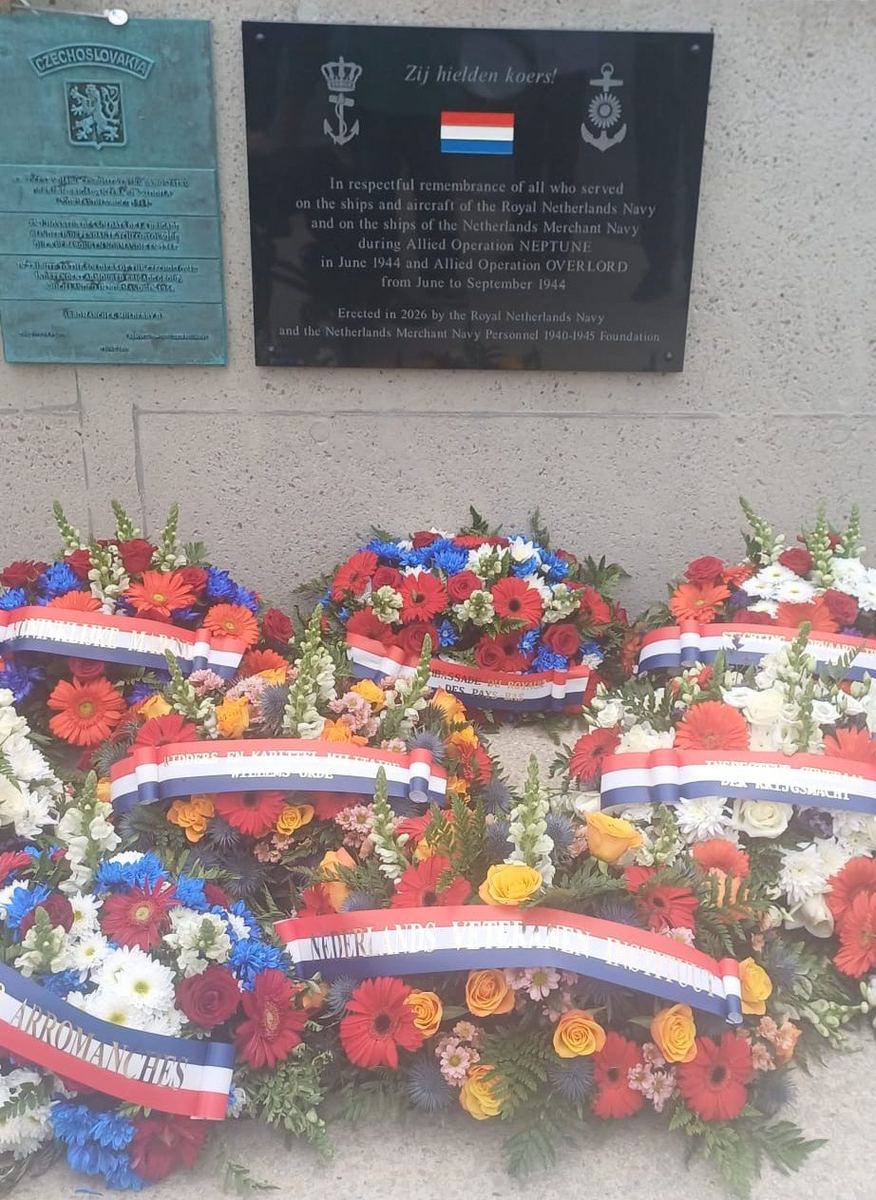
The recent unveiling of a Dutch memorial plaque in Arromanches-les-Bains, Normandy, has once again drawn attention to the Dutch contribution to D-Day. On 6 June 1944 Dutch warships, merchant navy crews, airmen and naval personnel took part in the largest amphibious invasion in history.
Behind that contribution lie thousands of personal stories. Stories of men who had fled the occupied Netherlands years earlier and, after what was often a long and dangerous journey, finally returned to the European theatre of war to help liberate their homeland. The lives of Hugo van Roon, Warner Borgeld, Izak Cohen and Maurits Goudeketting show just how different those roads to Normandy could be.
For Hugo van Roon, a native of Scheveningen, it all began on 16 March 1941. Under cover of darkness he and six friends left Scheveningen’s Second Inner Harbour aboard the motor launch Anna (KW96). Using makeshift paddles, they slipped out of the harbour unnoticed before starting the engine. The next day they were picked up by a British naval vessel and taken to Scotland. In London the young men were received by Queen Wilhelmina and Prince Bernhard. Van Roon then joined the Royal Netherlands Navy. After serving on HNLMS Jacob van Heemskerck, he eventually ended up on the gunboat HNLMS Soemba.
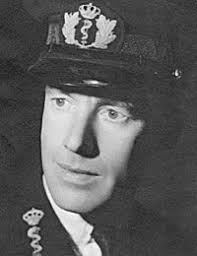
Warner Albert Borgeld took a very different route. An Amsterdam doctor, he had served in the Royal Netherlands Navy since 1932 and already had an impressive career behind him when the Netherlands was attacked in May 1940. By way of Zeeland and Ostend he reached England aboard the Wolf, a shrimp boat pressed into service. Once in Britain he helped build up the medical service of the Royal Netherlands Navy in exile. In 1943 he returned to sea as ship’s surgeon on HNLMS Flores.
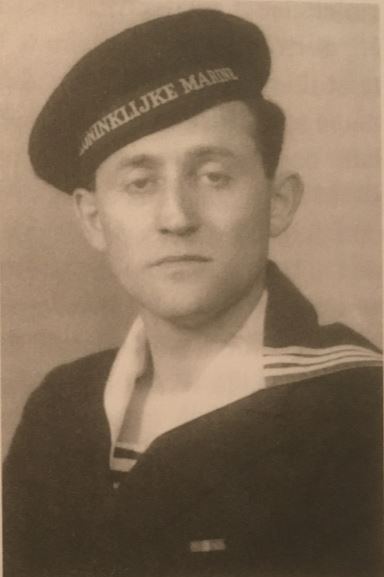
For Izak Cohen from Hengelo, the road to England was a story of persecution, loss and perseverance. In 1942 the Jewish wholesale fruit merchant helped two escaped French pilots reach the south of France. When he tried to escape himself, he was arrested and interned in French camps. After hearing reports of the persecution of Jews in the Netherlands, he even decided to go back to warn his fiancée and her family.
Eventually he risked crossing the Pyrenees again, ended up in the Spanish camp of Miranda de Ebro and did not reach England until June 1943. There he joined the Dutch Motor Torpedo Boat Service in Dover. While he was fighting for the liberation of Europe, news reached him that his brother Simon had been murdered by the Germans in Auschwitz.
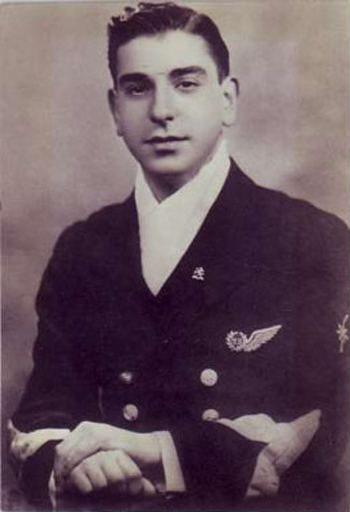
Maurits Goudeketting, too, had a long history of flight. As a Jewish Dutchman, he saw his position grow steadily worse after the German occupation. By way of France and Spain he eventually reached England. There he chose to carry on the fight actively. He became an airman and flew operational missions over occupied Europe.
For Goudeketting the war was not only a struggle against an occupier but also a personal confrontation with a regime that had persecuted and murdered members of his family and friends.
On 6 June 1944 these very different life stories came together in the history of D-Day. Hugo van Roon was aboard HNLMS Soemba, while Warner Borgeld was serving as ship’s surgeon on HNLMS Flores. Both Dutch gunboats provided fire support for the Allied troops landing on the beaches of Normandy. They were so effective that the ships later became known as The Terrible Twins. Meanwhile, Izak Cohen’s motor torpedo boats were active in the Channel, protecting the invasion fleet and helping to disrupt German countermeasures. Above the invasion area, airmen such as Maurits Goudeketting flew their missions in support of the Allied advance.
Their stories illustrate the many sides of the Dutch contribution to the liberation of Europe. They represent different backgrounds, professions and wartime experiences. Van Roon was a young adventurer from Scheveningen who refused to accept the occupation. Borgeld was an experienced naval doctor who put his skills at the service of the war effort. Cohen was a Jewish refugee who fought not only for his own freedom but also to save his family. Goudeketting represents the group of Jewish “Engelandvaarders” who fled persecution and then took an active part in the fight against Nazi Germany.
After the war they returned to a world trying to pick up the threads. Van Roon remained connected to the history of the “Engelandvaarders”. Borgeld rose to the highest ranks of the medical service and ended his career as a rear admiral (medical). Cohen and his English wife built a new life in Hengelo, but he carried the effects of the war with him for the rest of his life. Goudeketting belonged to the generation of veterans who only spoke at length about their experiences much later.
The new memorial plaque in Arromanches commemorates the Dutch contribution to D-Day. The lives of Hugo van Roon, Warner Borgeld, Izak Cohen and Maurits Goudeketting show that behind this collective history lie individual stories of courage, loss, perseverance and conviction. Their roads to Normandy differed, but they converged on a single goal: the liberation of Europe and the return of freedom. More than eighty years on, these stories still deserve to be told.
Museum Engelandvaarders was represented at the unveiling of the plaque by volunteer Maurits Huijbrechtse, who was on holiday in Normandy.