Part 2 – A leap from the train: a journey round the world in wartime
By Maurits Huijbrechtse and Frans Jansen
A chance meeting at Museum Engelandvaarders put us in touch with Marianne Spangenberg-Carlier. She was looking for answers about the wartime past of her father, Gerard Antoine Jan Carlier. This second part focuses on his “Engelandvaart” and his later career.
Ordered to report
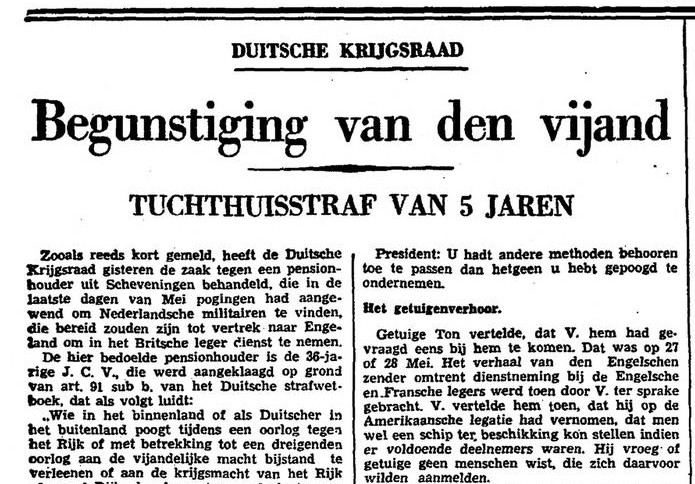
On 15 May 1942 the German occupier ordered Dutch regular officers and cadets to report to barracks around the country. The order applied to those who had given their word of honour: servicemen who had promised after the capitulation not to fight again. Those who reported soon found the barracks surrounded. They were disarmed and taken to the prisoner-of-war camp at Nuremberg-Langwasser.
Not everyone obeyed. Some went into hiding, afraid of being recognised for earlier resistance work. After consulting an older officer, Gerard Carlier chose a different path. He did report, at the Palmkazerne barracks in Bussum.
Escape
That same night he and fellow cadet Willem Brederode jumped from a moving train. Carlier dropped between the rails and lay motionless as wagon after wagon thundered over him. Only when the last one had passed did he get up. The train disappeared into the night; Carlier was free.
Hiding, resistance and the “Engelandvaart”
After his escape Carlier managed to return to the Netherlands. In the months that followed he lived in hiding. He travelled around the country, kept in touch with various resistance circles and helped gather and pass on intelligence. He helped set up a courier line between the Netherlands and Perpignan, and supported the escape of Ed Barten, with whom he had made an earlier escape attempt.
During this period he came into contact with Nel Lind, a central figure in the escape organisation Luctor et Emergo / Fiat Libertas. After a meeting in the Vondelpark, Carlier decided to leave the Netherlands for good with her help. Once again, England was his goal.
On 10 August 1942 Carlier set out on his “Engelandvaart”. With a false travel document that Lind had arranged through the Belgian resistance group Witte Brigade (White Brigade), he travelled south through Belgium and France. His route took him through Brussels, Lyon, Marseille and Perpignan, among other places.
The journey was hard going. Attempts to cross the demarcation line between occupied and unoccupied France failed. In Lyon the contact address he had been given turned out to be wrong, and there was no one to guide him. He had barely enough food to keep himself alive on the way. In Marseille, too, the Dutch consul offered no help.
In Perpignan Carlier finally linked up with the Dutch representative Joop Kolkman, who helped a number of “Engelandvaarders”. There he also met fellow cadets Dirk van Ardenne and Willem Boldingh. On 29 September 1942 Carlier crossed the Pyrenees into Spain.
On 4 October 1942 he sailed from Cádiz on the ship Cabo de Buena Esperanza for the free Antilles. A few weeks later, on 29 October, he arrived in Suriname.
Suriname, America, Australia and Indonesia
In Suriname Carlier wrote a report on Luctor et Emergo for Jan Marginus Somer, head of the Bureau Inlichtingen (Intelligence Bureau). His request to return to the Netherlands as a secret agent was turned down. The men who went in his place, Piet Roelof Gerbrands and Nout Bergmann, were given Nel Lind’s name. The aircraft from which they were to parachute was attacked by a German night fighter and crashed. Bergmann was killed instantly. Gerbrands survived and made it back to England. Lind was arrested by the Germans but survived the war.
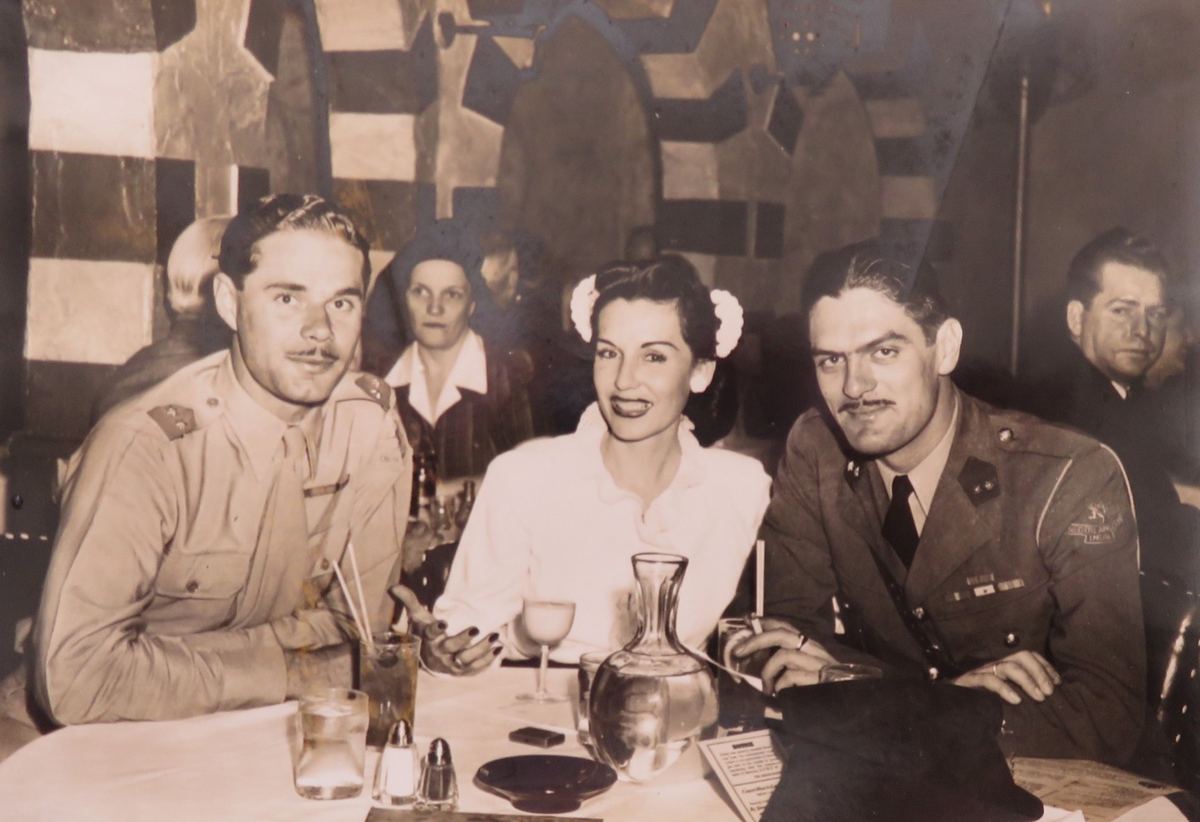
Carlier was instead involved in rebuilding the Royal Netherlands East Indies Army (KNIL), which was to be deployed against Japan from Australia. In Suriname he was reunited with Willem Brederode, Van Ardenne and Boldingh, and led Surinamese volunteers as commander of the Heavy Weapons Company.
In 1944 Carlier took a further officers’ course at the US Army Infantry School and worked briefly for the Netherlands Purchasing Commission in the United States, buying weapons.
During this period he tried to sign up for parachute training; the request was refused. An application for pilot training, which he was later allowed to submit in Australia, was not granted either. While in the United States he heard that his brother was in Switzerland, waiting for a chance to travel to England and join the fight as a KNIL officer.
In July 1945 Carlier left with the Third Overseas Detachment. After the Japanese surrender he served on Timor and Sulawesi, and so became involved in the Indonesian War of Independence.
After his military career Carlier joined Philips in South America and Spain. Under this civilian cover he was also engaged in intelligence work in the context of the Cold War. He died in El Campello (Spain) on 1 February 1995.