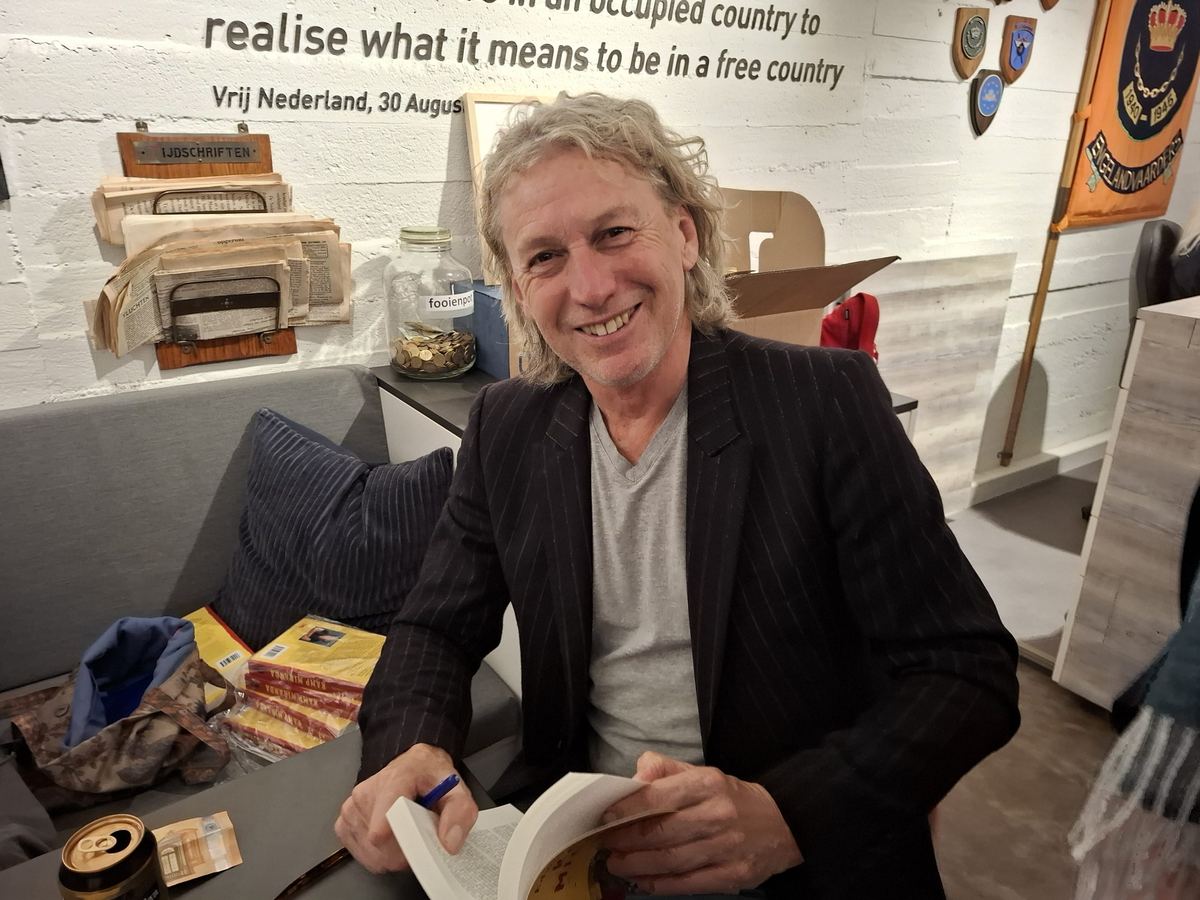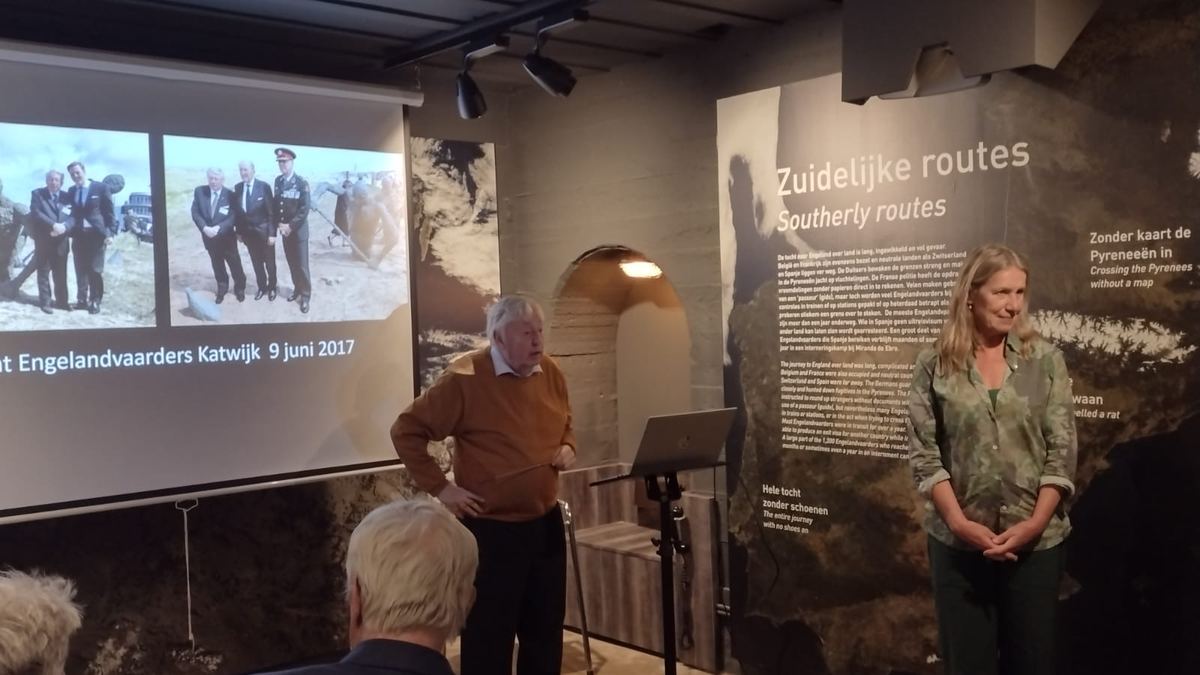
On 25 September the museum was once again packed for a lecture. This time George Makowski, son of the diplomat, soldier and “Engelandvaarder” Witold Makowski, told his father’s remarkable story. Or rather, he told two parallel stories: his father’s, and alongside it that of four Polish generals.
Witold, or Tolo, was born in St Petersburg in 1912. In the 1930s he was a reserve cavalry officer in the 22nd Uhlan Regiment at Brody under General Anders. He became a diplomat, was posted to Amsterdam as vice-consul in 1939, and regularly travelled back and forth to Paris on military and diplomatic business. When war broke out in the Netherlands in 1940, however, Tolo could no longer go anywhere. He made contact with the resistance organisation “Vrij Nederland”, but what he really wanted was to get to England, where many Polish diplomats and soldiers had already gone.
Four generals
While Tolo was stuck in the Netherlands, four Polish generals faced problems of their own after 1939.
Bór-Komorowski commanded the Home Army and eventually led the Warsaw Uprising.
After a number of battles, Maczek left with his entire unit via Hungary and Romania for France, where more Polish refugees joined him. He managed to escape to England with a large part of his unit and there founded the 1st Polish Armoured Division, which among other things liberated Breda.
Sosabowski founded and commanded the 1st Polish Parachute Brigade, which took part in Operation Market Garden in September 1944.
General Anders already had a long record of service as a Polish general when he ended up, badly wounded, in a Russian prison. After Germany invaded Russia, Stalin ordered him to raise a Polish army unit. The two men fell out, and Anders left with his army through the Middle East to Egypt, where he joined the British Army. He fought in North Africa and Italy, and his army decided the Battle of Monte Cassino.
In the end they all ended up in England; returning to Poland after the war was impossible, as they were regarded there as traitors.
Failed “Engelandvaart” attempts
Tolo first tried to reach England by sea. With a friend he set off in a canoe, which they took to the sea at Katwijk through the famous ‘Zeehos tunnel’. They soon ran into bad weather and the canoe capsized. This is where bad luck and good luck came together, for a Katwijk fishing cutter picked them up and managed to put them ashore at IJmuiden unseen.
His second attempt to reach England was by the southern route. Tolo, however, was arrested on the train and imprisoned in Lyon. He escaped and returned to The Hague, where he found shelter with the Van Straaten family (his future in-laws). But his journey had been betrayed, and the Gestapo dragged him from his bed. After a few months in the Oranjehotel prison he was transported to Kamp Amersfoort. There he was recognised by a German officer who, like him, had competed as a show jumper at the Berlin Olympics, and this man secured his release. A second case of ‘bad luck and good luck’ in Tolo’s life.
He went into hiding in Brabant and married Mary Ann van der Straaten there. During the liberation of the southern Netherlands their hiding place was destroyed, and the British made it possible for them to travel to Brussels. There, in October 1944, Jerzy (or George) was born.
Third time lucky: in the autumn of 1944 he was finally able to reach England, where he joined the “First Polish Division” in Scotland. In 1945 he was stationed in Hameln as a liaison officer, and after demobilisation in 1947 he returned to The Hague to work for his father-in-law’s firm. He too could not return to Poland, where he was seen as a traitor. He stayed in the Netherlands, became a Dutch citizen (though he remained true to his Polish self) and died in 1995.
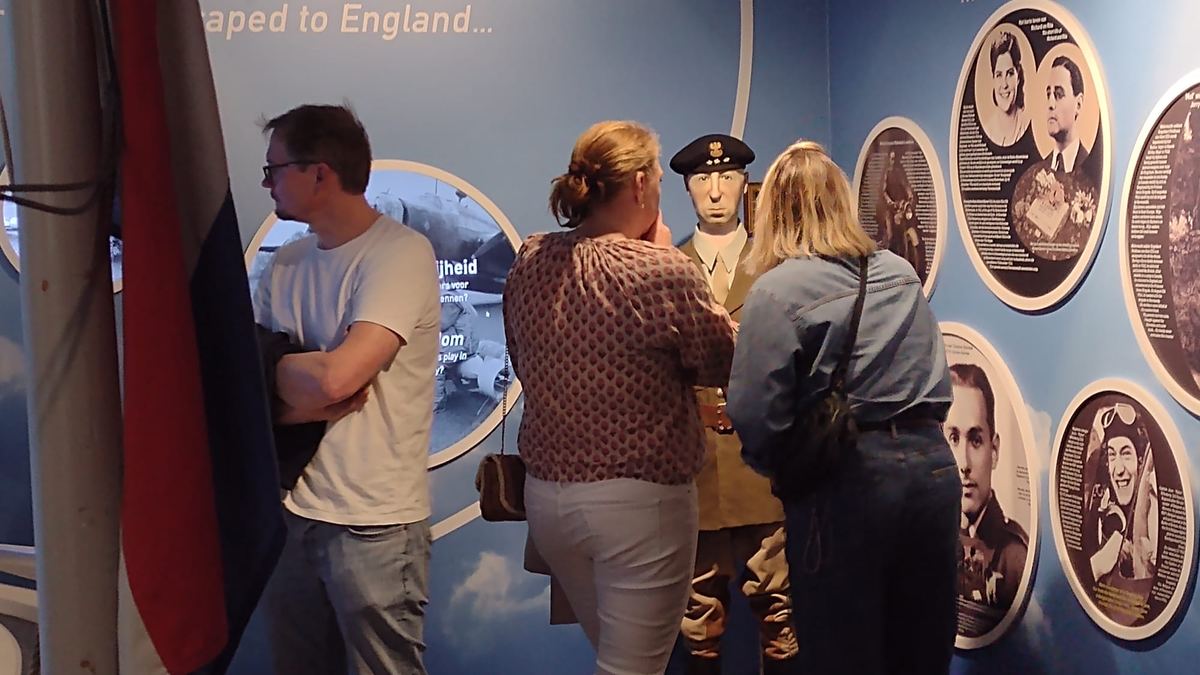
Tolo Makowski’s uniform and decorations have been on display at Museum Engelandvaarders for many years.