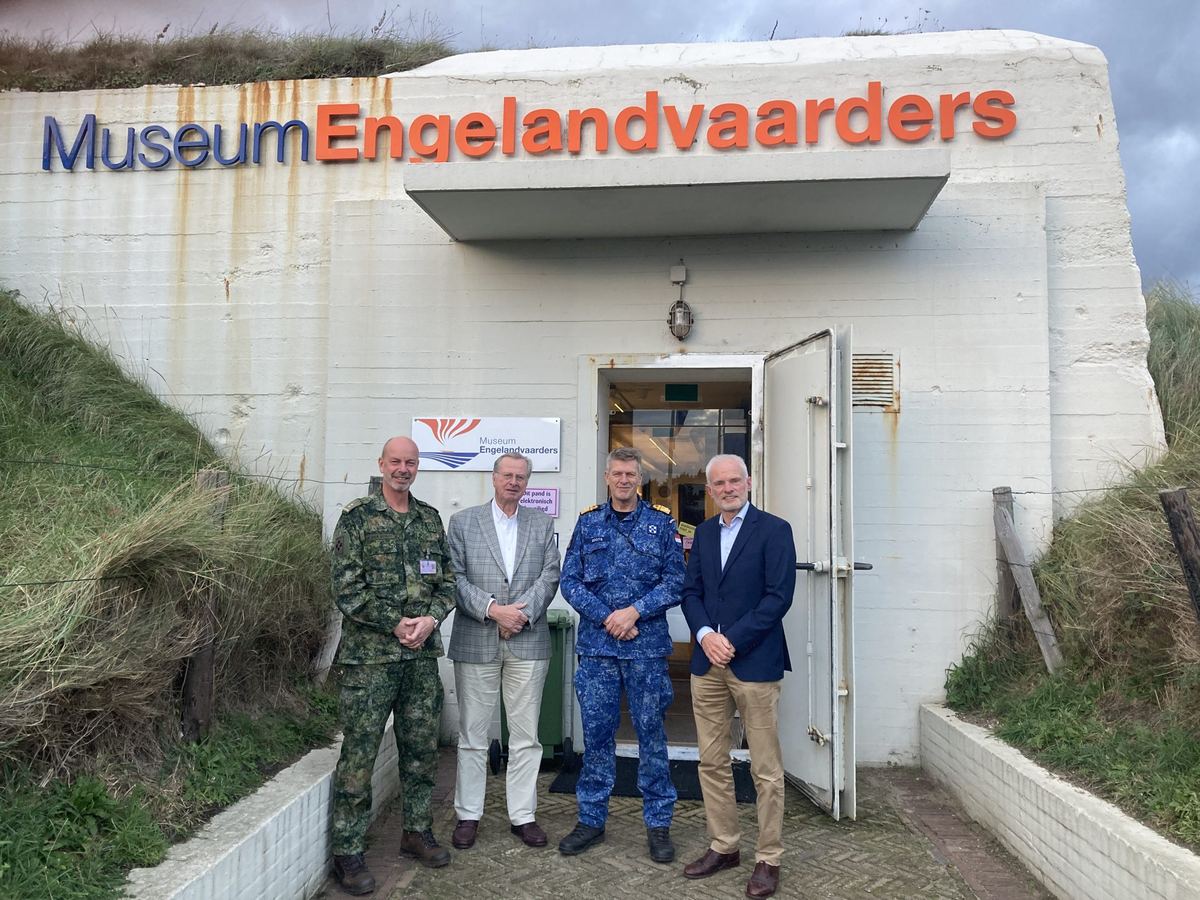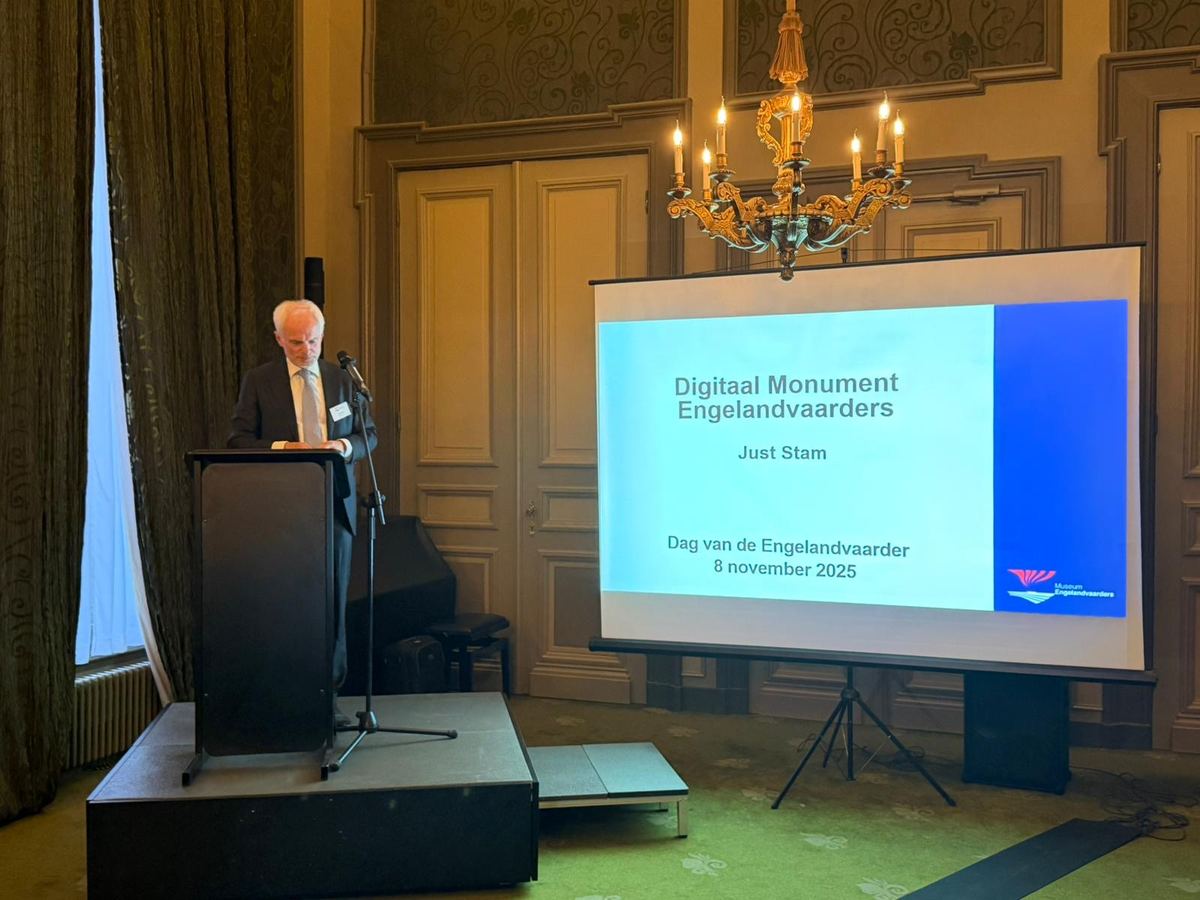
On Saturday 8 November, Museum Engelandvaarders celebrated its tenth anniversary at Sociëteit De Witte in The Hague. At the event, the Digitaal Monument Engelandvaarders was launched and Martijn Eickhoff, director of the NIOD, gave a compelling speech.
The gathering, held on the Day of the “Engelandvaarder”, was attended by some 150 guests: relatives of “Engelandvaarders” and donors, as well as other invited guests. Paul Bartelings, chairman of the Stichting Museum Engelandvaarders, welcomed everyone: “Today we are celebrating not just an anniversary, but also the rich history of the “Engelandvaarders”.” He saw the event as the perfect opportunity to share stories and perhaps uncover new information about relatives who risked the crossing. Those stories, he said, remain “a source of inspiration for the younger generation – about courage, freedom, democracy and responsibility.”
Paul closed by linking this to a mission for the museum: “We want to engage with the new generation: what does freedom mean today, and how do we preserve what the “Engelandvaarders” fought for?”
Next it was the turn of Just Stam (board member for content and collection), who launched the Digitaal Monument Engelandvaarders. In this monument the museum presents the “Engelandvaarders”, their helpers, and the Dutch servicemen who, during the German invasion of the Netherlands, withdrew to England on orders from above or on their own initiative. Just showed how you can search the monument by name, place of birth and year of birth, and by other keywords such as serviceman or helper. For each man or woman you will find – as far as the museum has them – a short biography, photographs, documents, audio and video clips, and objects from our collection.
Just demonstrated how the monument works using the entry for one of the museum’s founders, Eddy Jonker. It includes a fine clip from a TV broadcast about the last meeting of the Genootschap Engelandvaarders. Just also showed one of the themes the monument highlights: some “Engelandvaarders” were still very young when they set out. One of them was Emile Boudeling from Goes, who was not yet 15 when he fled to Belgium by bicycle in April 1941 to get to England. Via Switzerland and France he ended up in North Africa, where he died of tuberculosis as a soldier in the Foreign Legion. He was only 17.
The official programme ended with a compelling speech by Martijn Eickhoff, director of the NIOD Institute for War, Holocaust and Genocide Studies. He said he was fascinated by the question of what kind of people the “Engelandvaarders” were, what drove them and what they achieved (or did not), their relationships with their families and their social position – and also by how they looked back, as a group or as individuals, the image we have of them today and how that has changed over time. Is resistance a choice, or do chance and circumstance prevail? In looking for answers, one thing was clear to him: you should not lump them all together – every “Engelandvaarder” is unique.
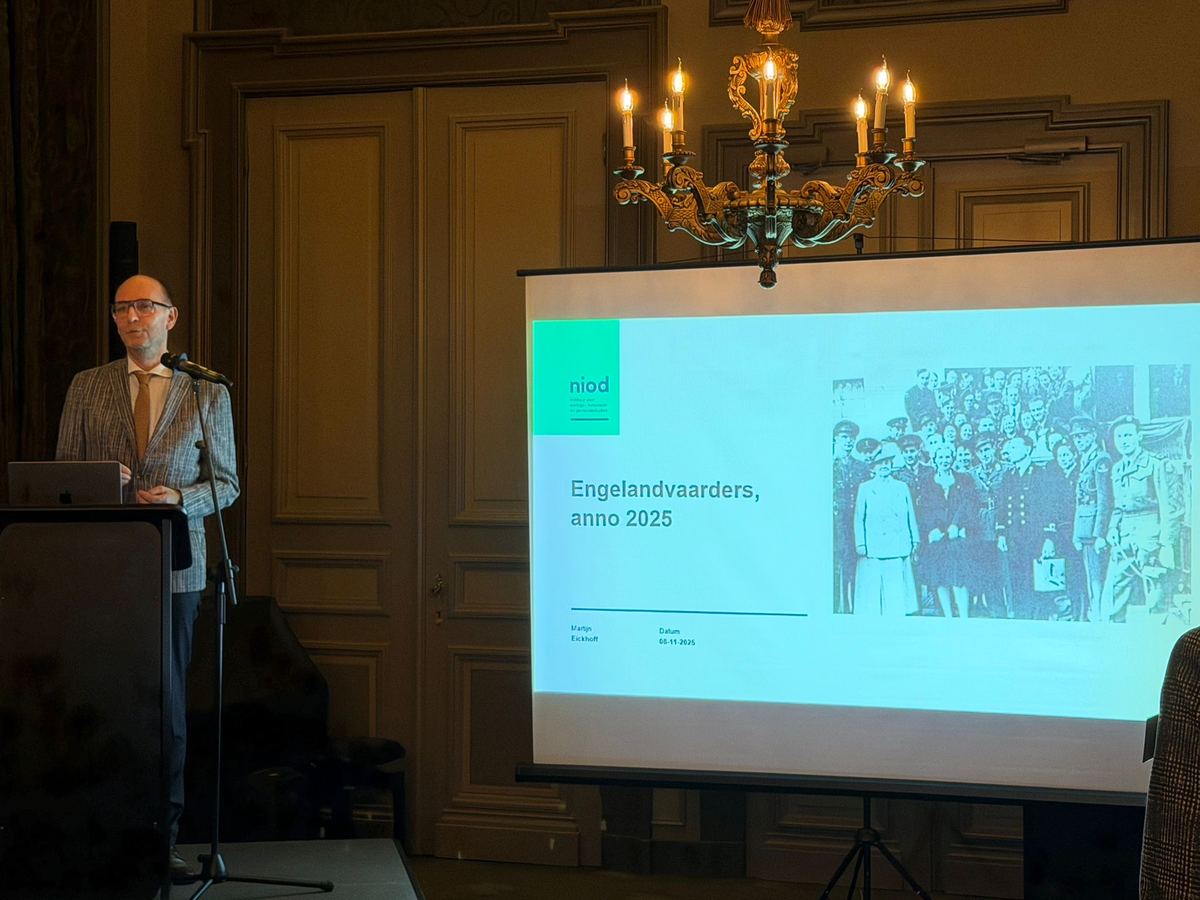
That brought him to the question at the heart of his talk: how can the stories of the “Engelandvaarders” be made a lasting source of inspiration in 2025? His conclusion: by not putting the “Engelandvaarder” on a pedestal, and by making them more human. That makes them more accessible as inspiring role models for the average Dutch person and for generations to come. The fact that, in his view, the museum does not tell a heroic, nationalistic story carved in stone seems to fit well with this.
The celebration ended with a very enjoyable reception – a lovely moment for the guests to meet and catch up over drinks and nibbles.