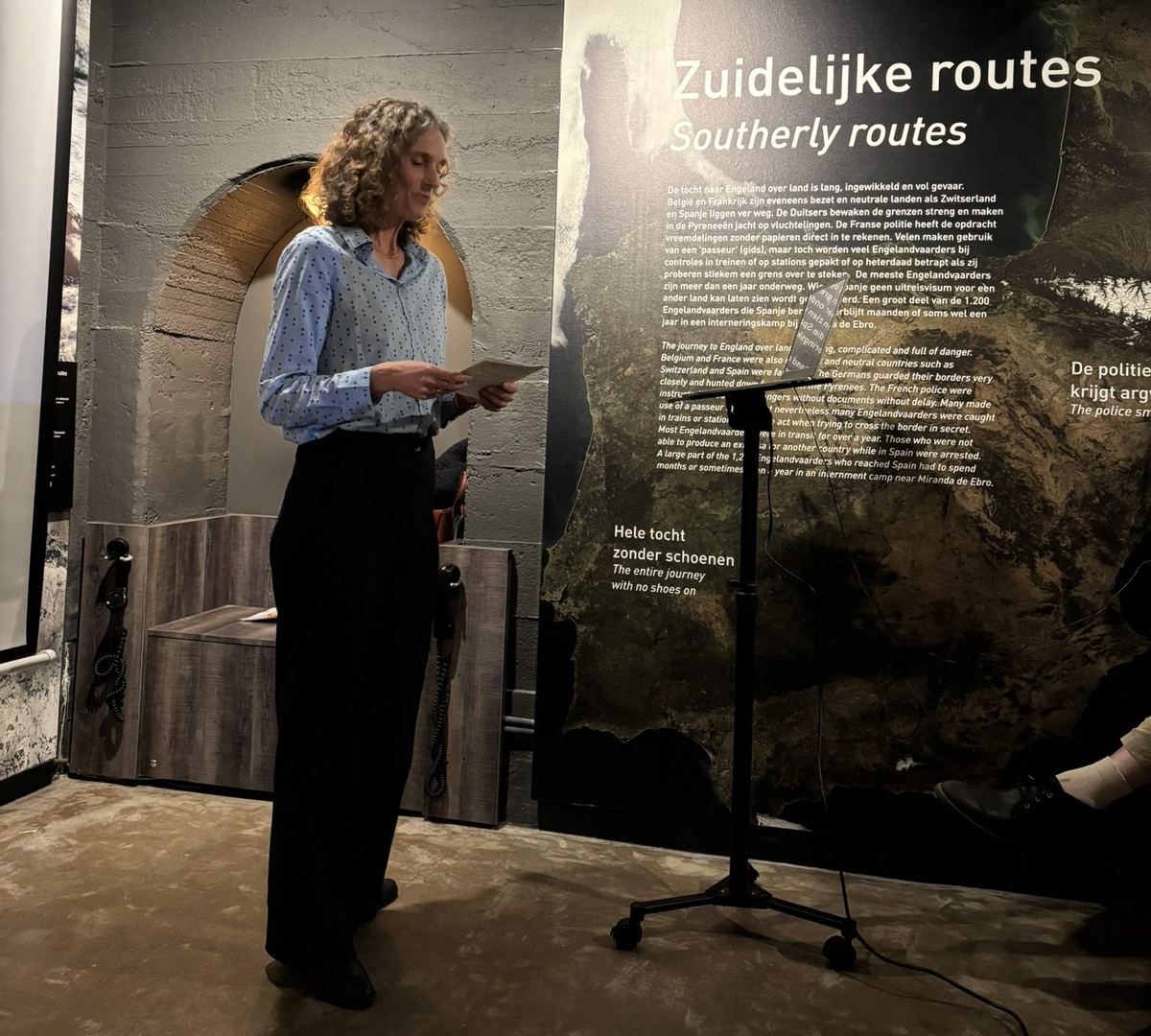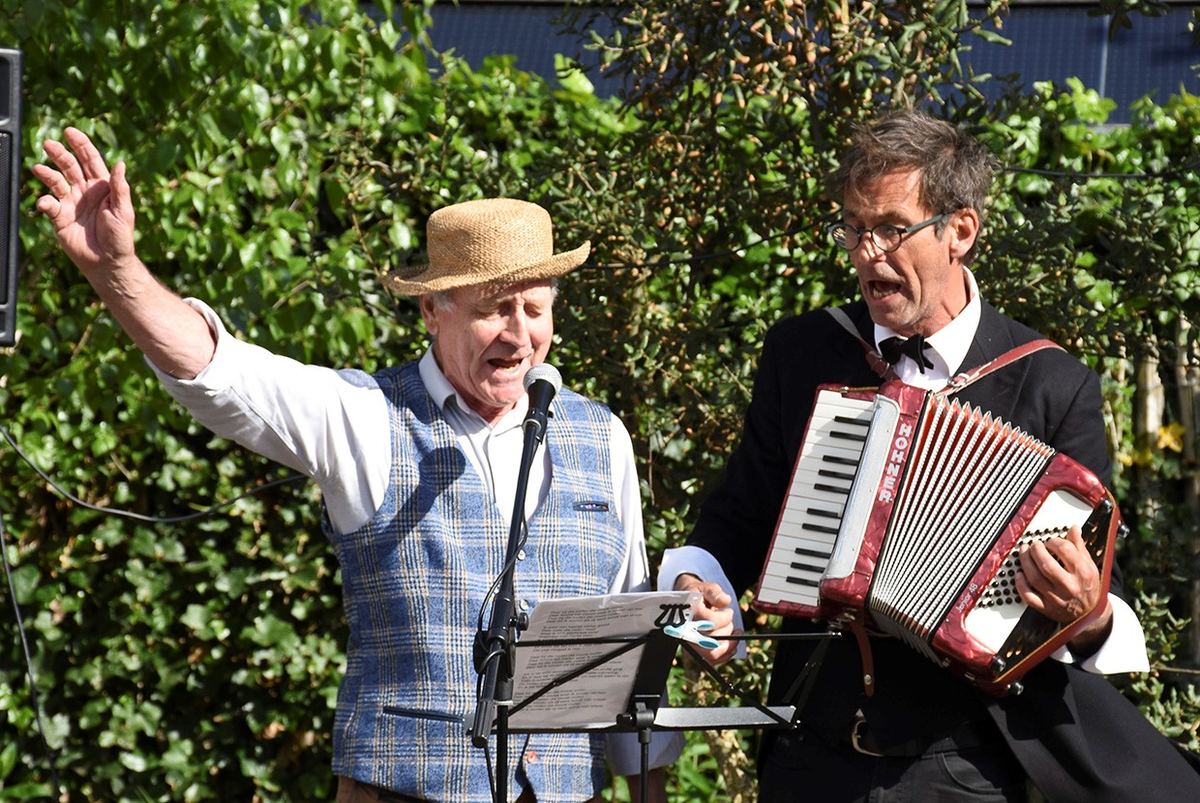
On Thursday 15 May 2025 Frans Becker and Tamara Becker, authors of the book “Het Englandspiel en de geheime diensten in Londen” (The Englandspiel and the secret services in London), gave a fascinating talk at the museum. Following Victor Laurentius’s talk on the book “Spion in Smoking” (about Peter Tazelaar), it was the second in the series that Museum Engelandvaarders is organising this year.
Their research began ten years ago with an exploration of the life of Wiardi Beckman, a resistance man who died in Dachau. It led to the book “Op verzoek van Hare Majesteit”, which revealed the link between Beckman and London’s secret operations. That in turn prompted an in-depth investigation into the role of the British secret services, in particular the Special Operations Executive (SOE), and the publication of “Het Englandspiel en de geheime diensten in Londen” (September 2024).
In the summer of 1940, with Western Europe under German control, Britain was under heavy pressure. It was against this background that the Special Operations Executive (SOE) was set up to support unconventional warfare.
Led by Colin Gubbins, SOE aimed to strengthen resistance in the occupied countries through sabotage and guerrilla warfare. It operated in a politically and militarily complex environment, often facing distrust from other British intelligence services such as MI6.
SOE’s work on the Netherlands centred on setting up N Section, which concentrated on sabotage and supporting Allied forces. There were considerable obstacles, however, such as the lack of contact with the occupied Netherlands and the Dutch government’s reluctance to call for sabotage. Only in 1941 did SOE begin recruiting agents, who were meticulously trained at various training centres in England.
The Englandspiel, which proved to be a crucial failure for SOE, began when the wireless operator Huub Lauwers, after his arrest, resumed transmitting for SOE under German pressure. As a result, London believed it was still in contact with Lauwers, while in fact he was passing information to German intelligence. This meant that many agents sent to the Netherlands under various names were swiftly arrested by the Germans.
In all, 88 agents were sent to the Netherlands between 1940 and the end of 1943. Only 24 of them survived the war; most were executed by the Germans or died of deprivation. SOE’s failure gave rise to a wide range of controversies about the responsibilities and role of the British and Dutch intelligence services. Although some theories suggest there may have been betrayal on the British side, research indicates that the main causes of failure lay in incompetence and amateurism within SOE itself.
The agents were aware of the risks, but the organisation itself ignored warnings about the dangers. These findings hold vital lessons for intelligence services, not only regarding security and communications but also about the importance of good governance and cooperation between agencies. The consequences of the failed operations were devastating, with a lasting impact on the resistance movement in the Netherlands and on the lives of many of those involved.
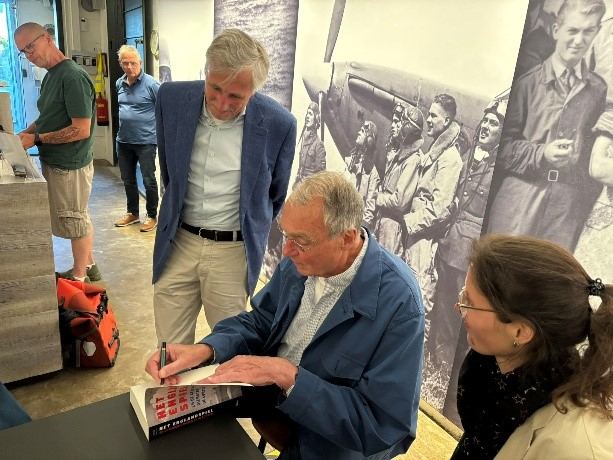
After the talk the audience put many questions to the speakers about the failure of the operation, bringing the event to a lively, interactive close. Frans and Tamara Becker then signed copies of their books.
Both “Op verzoek van Hare Majesteit” and “Het Englandspiel en de geheime diensten in Londen” are on sale in the museum shop.
Among the “Engelandvaarders” and agents discussed during the talk were Trix Terwindt, Pieter Dourlein and Ben Ubbink.