‘You simply did what you had to do’
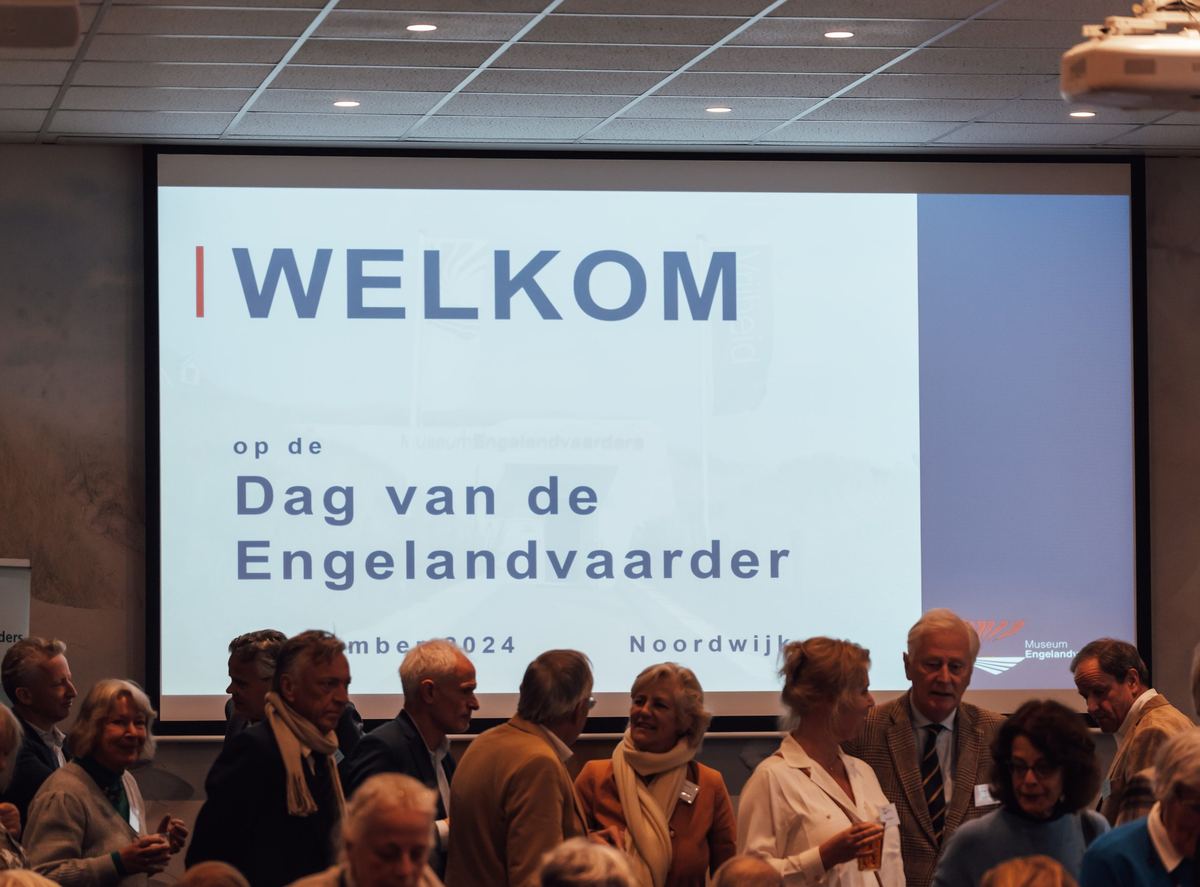
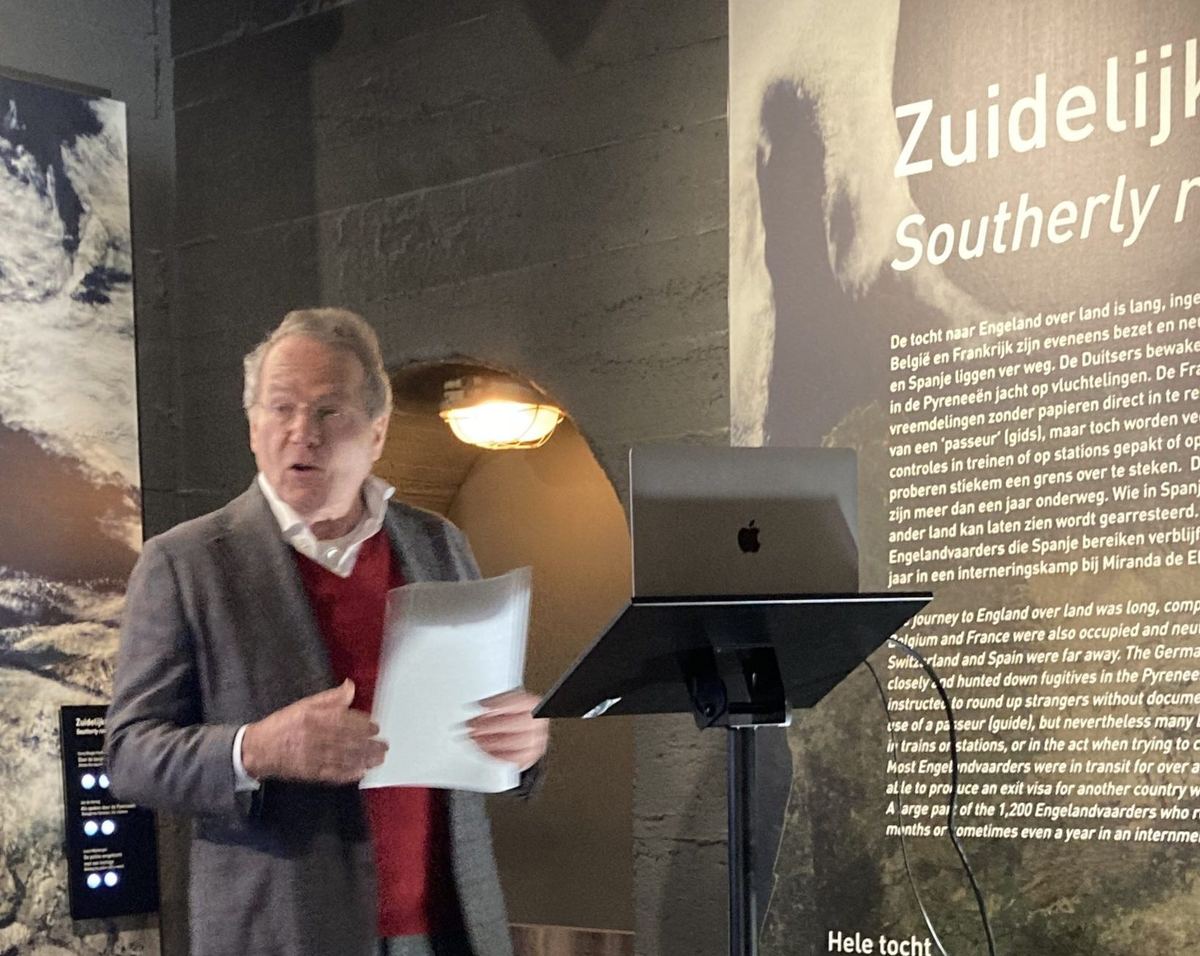
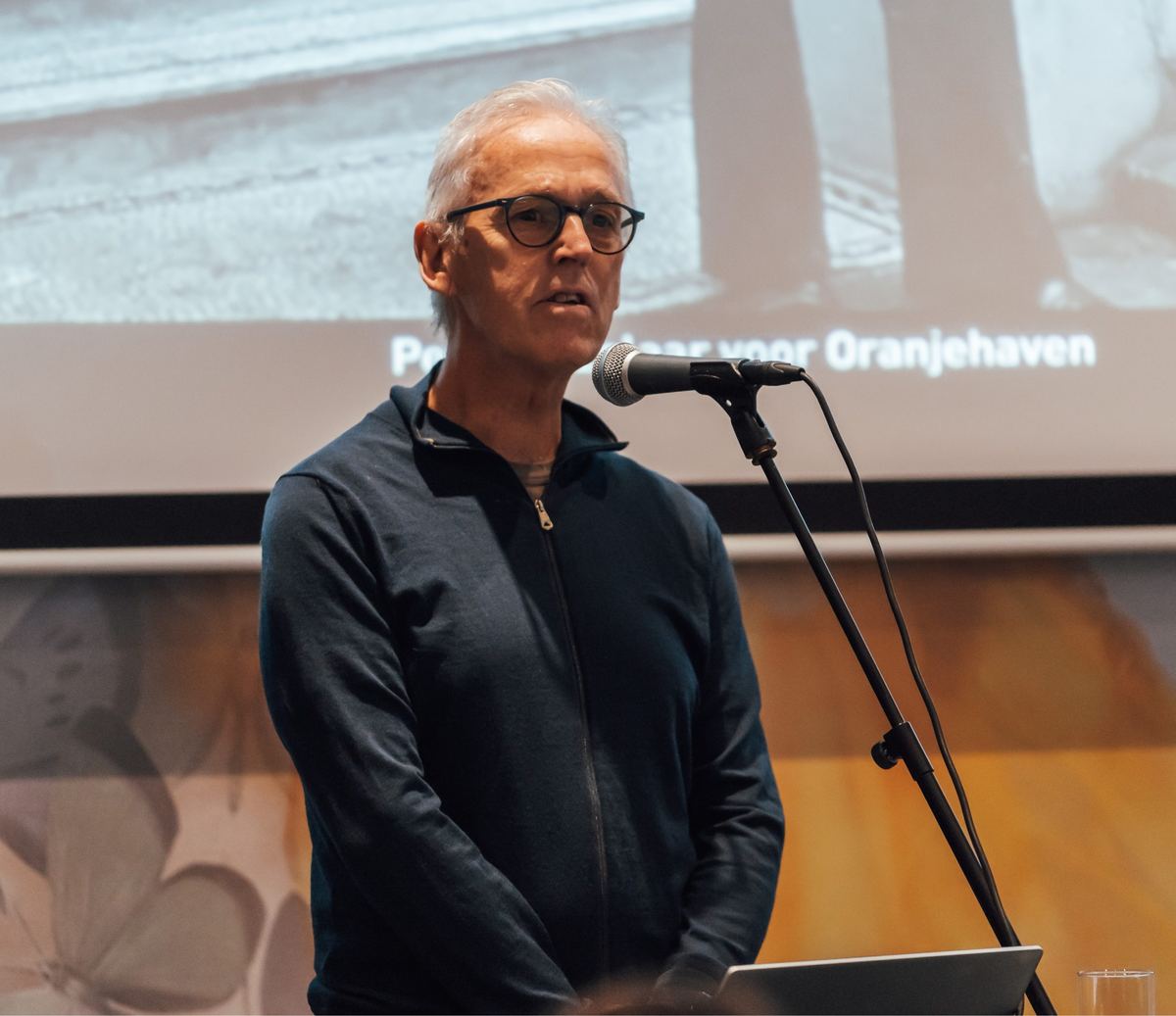
An impression of Derk Sauer’s talk on ‘Courage then and now’ at the first “Engelandvaarder” Day on 9 November 2024. Sauer is the founder of the Moscow Times and a columnist for Het Parool.
“It is October 1941 when the doorbell rings at my parents’ house on the Boterdiep in Groningen and my mother opens the door.” So Derk Sauer begins his story about ‘Courage then and now’. “‘Cousin Piet sends his regards,’ says the man at the door. ‘May I hide here?’”
Cousin Piet is Peter Tazelaar, a cousin of Derk’s mother, who had earlier reached England as an “Engelandvaarder” via the Faroe Islands. The man at the door is an “Engelandvaarder” who has been dropped into the Netherlands as a secret agent and is now looking for a safe house. He is later arrested, as is Derk’s mother, but both are eventually released.
Derk sees Peter Tazelaar as a role model. Although Peter was on the right of the political spectrum and Derk is on the left, they share a dislike of authority and both have a thing about wars. “I wanted to go to a war zone too,” Derk says, “but where?” It became Northern Ireland, simply because that was the nearest civil war. Derk placated his parents by suggesting he wanted to study in Ireland, but became a journalist in Belfast instead. After Northern Ireland, too, he lived in many other countries at war in order to report on them. “War is of course horrific, but it also has another side that people rarely mention: the tension, the adrenaline, life hanging by a thread, the comradeship and living off the beaten track. It is addictive, especially for young people like Peter Tazelaar.”
Here Derk clearly feels a connection with his great-uncle. He also says Tazelaar objected to the word ‘hero’ to describe what he had done in the war. “You simply did what you had to do.” That explains why, at the premiere of the film ‘Soldaat van Oranje’ (Soldier of Orange), he was already standing in the queue outside the cinema when he suddenly stepped out of line and went home. He was uncomfortable with being seen as a hero.
In fact, Peter Tazelaar was a tragic figure. He struggled to build a new life after the war and drank more than was perhaps good for him. “Before one o’clock you could still talk to him; after that it got harder.” Strangely enough, during the so-called police actions in Indonesia he joined Captain Raymond Westerling, who wreaked havoc among Sukarno’s guerrilla fighters. “From freedom fighter to the very opposite side. It is a thin line between resistance hero and war criminal. In the end, an accident prevented him from possibly becoming guilty of war crimes, as Westerling did.”
In Russia, Derk Sauer experienced for himself what a war can bring about. Each day brought a little more repression, for him and the other staff of the Moscow Times too. Sauer was soon declared a ‘foreign agent’, which brought all kinds of restrictions on what he could do.
After war broke out in Ukraine in February 2022, things became deadly serious. Just a week after the invasion, a law was passed banning anyone from calling it a war: it had to be called a special military operation. That runs counter to the principle of independent journalism. “We can’t say something isn’t a war when it is.”
The repression grew so severe that the Moscow Times staff met to decide whether or not to stay in Russia. Leaving would mean leaving their families behind. “That was the moment to be a real journalist; before that, it was just a job.”
Most chose to get on a plane, to wherever they could, so the editorial team ended up scattered across the world. The media company DPG then offered to bring them to Amsterdam, and that is what they did.
“We’ll be home by Christmas,” people thought. Two and a half years later they are still in Amsterdam and have not seen their parents and children in all that time. They miss funerals, graduations and all the other special moments in life. It is mentally tough, but for them the choice they made goes without saying.
There are now 150 of them in Amsterdam. Many people in Russia are also involved with the paper. “They’re not really allowed to have contact with us, because we are ‘undesirables’.” They could get 15 to 20 years in prison for it. “We’re simply back in the Second World War.”
At the end of his talk, Derk calls courage a relative notion. “Is the journalist who decided – perhaps on impulse – to flee to the West brave? Are all those people who stayed in Russia and adapted not brave? And what about the West? A lot of support has been promised, but only a fraction of it has actually arrived. Are we really so much better?” Derk closes with a saying of his mother’s: “You can’t do other than what you do.”