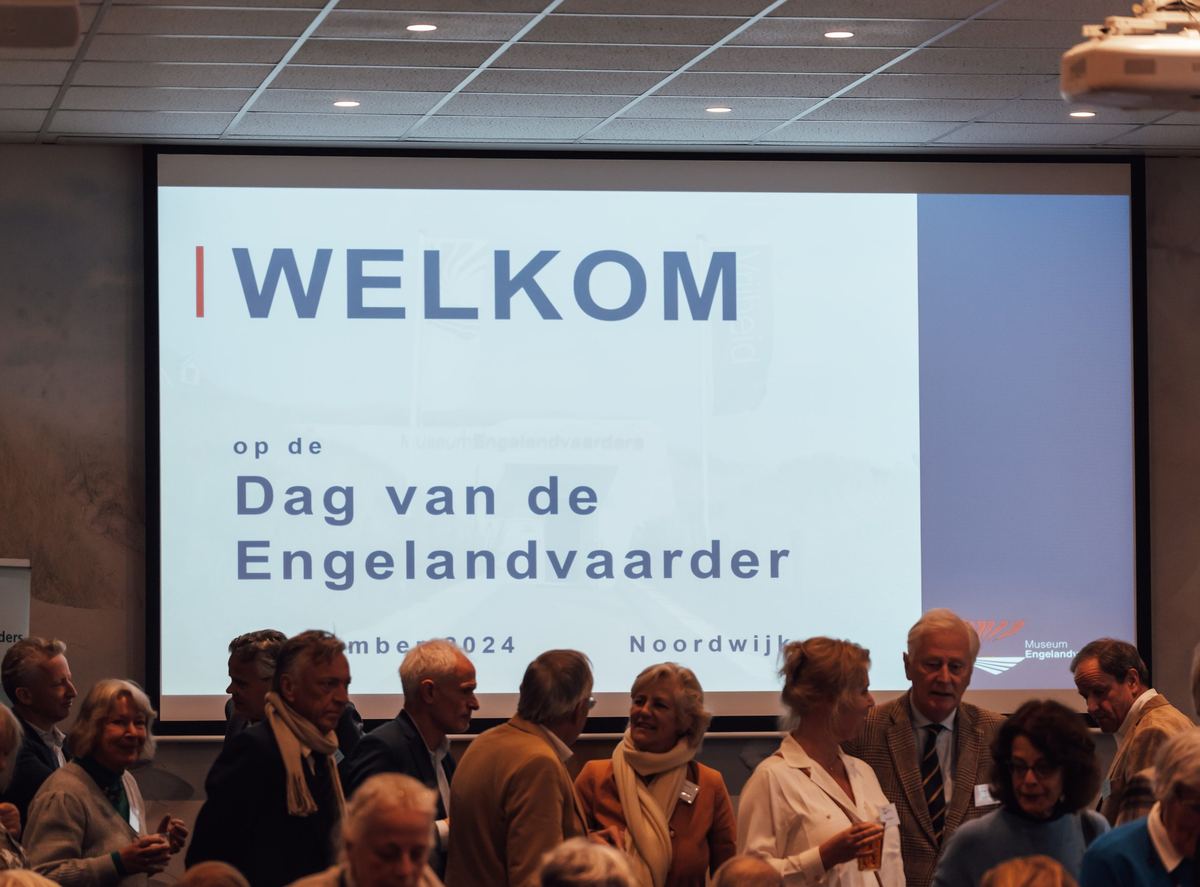
“Freedom cannot be taken for granted. It is something that has to be fought for, again and again.”
Impressions of the first Day of the “Engelandvaarder”, on Saturday 9 November 2024
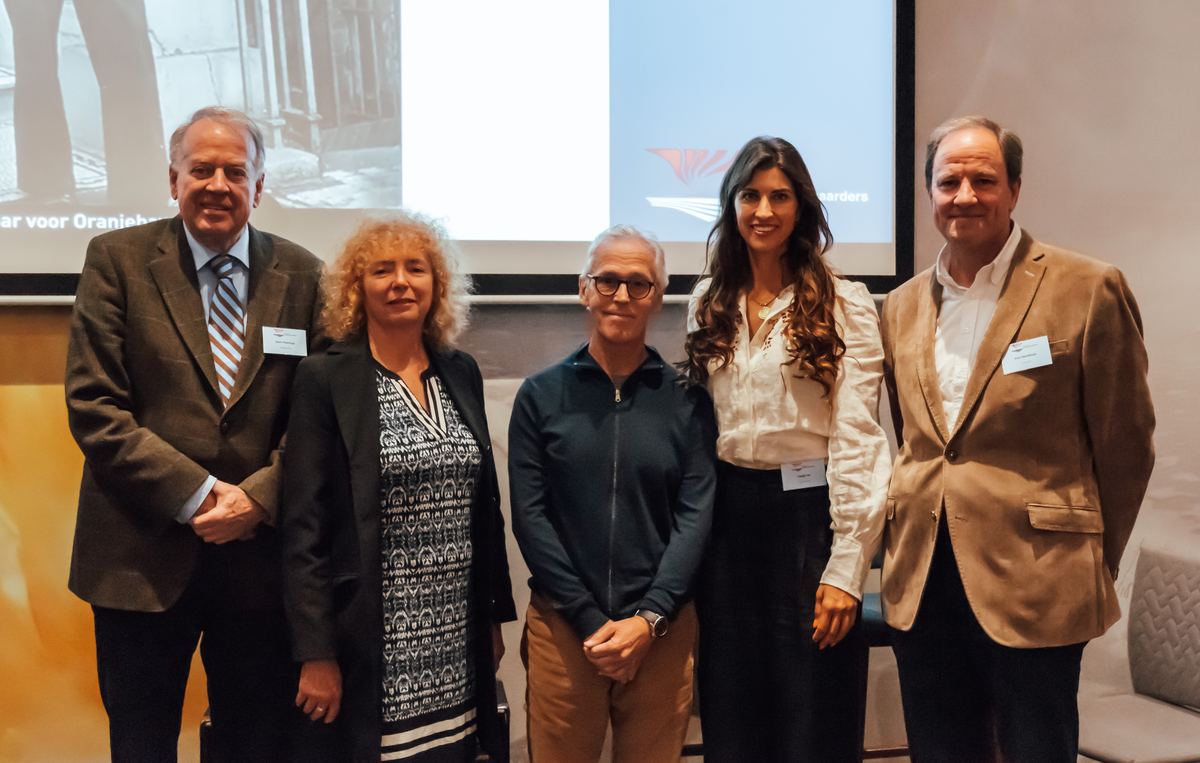
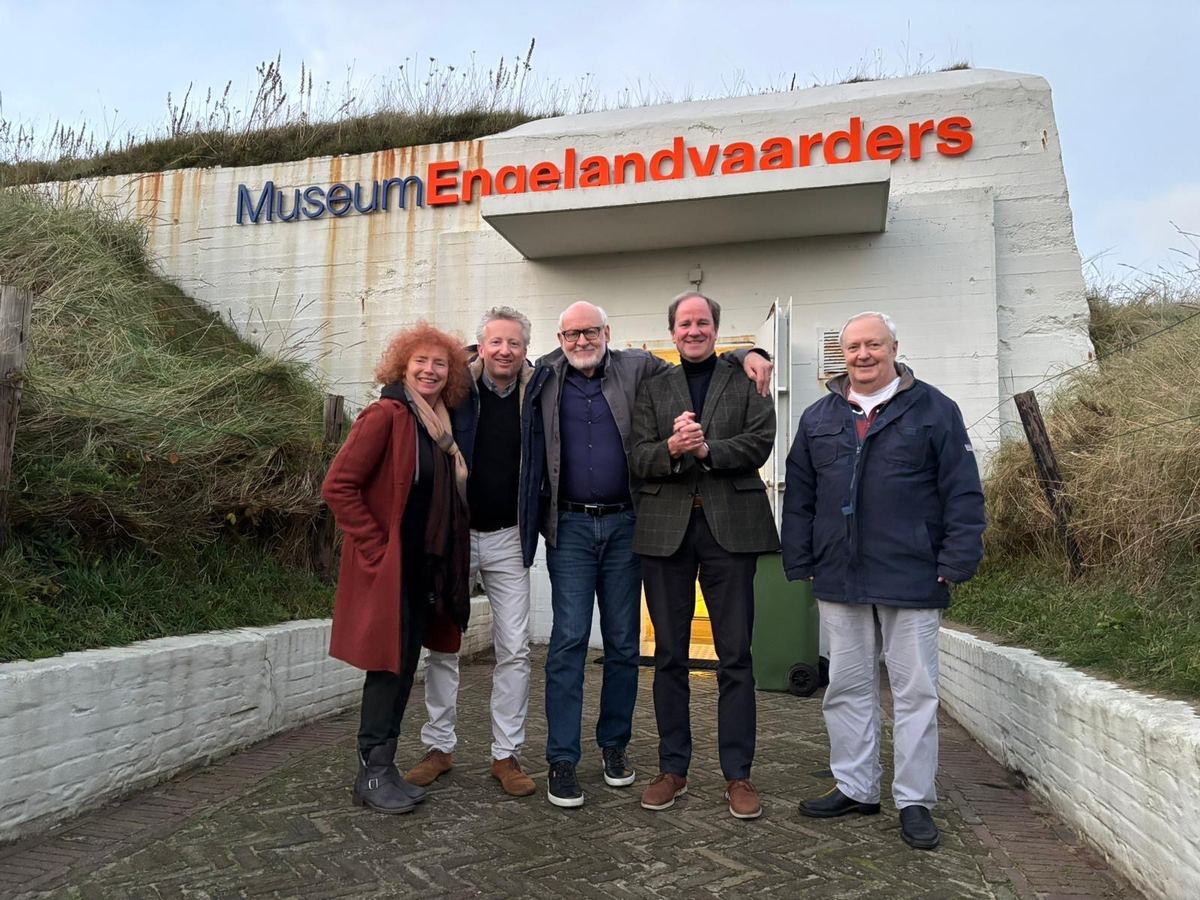
On Saturday 9 November 2024 the first Day of the “Engelandvaarder” took place. For the occasion the museum had invited relatives of “Engelandvaarders”, donors, lenders, supporters and good friends to come to Noordwijk aan Zee: in the morning to visit the museum, and in the afternoon for a programme at theatre De Muze. More than 130 people came.
Many came to the museum first – some even from Belgium and France – with fine stories and sometimes an object to donate to the museum. A son and daughter of the “Engelandvaarders” Lidy Keg and Dé Schlichte Bergen, for example, brought the Cross of Merit their mother had received from Queen Wilhelmina in December 1943. They also showed a gold ring their mother had taken with her on her journey along the southern route, so that she could trade it for food if necessary.
Both ended up in the prison at Miranda de Ebro. A few months later Lidy was allowed to go on to Madrid, where she went to work at the consulate. By posing as a married couple, Lidy managed to get Dé out of prison a few months after that. Via Gibraltar (Dé) and Lisbon (Lidy) they eventually reached London, where in December 1943 they married for real.
The afternoon programme was opened, in the presence of the mayor of Noordwijk, Mrs Verkleij, by the chair for the day, Carlijn Vis. Carlijn is a journalist at NRC and the granddaughter of Ellis Brandon, the last surviving “Engelandvaarder”, who died this spring at the age of 101.
Next to speak was Paul Bartelings, chairman of the Stichting Museum Engelandvaarders. In his welcome he explained why the museum chose to declare a Day of the “Engelandvaarder”. “First, to collect the stories of the “Engelandvaarders” and pass them on. Second, to draw inspiration from their courage and the choices they made in the darkest of times. And finally, to do this now of all times.” He closed with a quotation from Ellis Brandon: “You can learn not to be afraid.” And with two quotations from Peter Tazelaar: “Freedom cannot be taken for granted. It is something that has to be fought for, again and again.” And: “I knew it would be hard, that not all of us would survive. But I thought: if I can make a small contribution to the freedom of our country, then it’s worth it.”
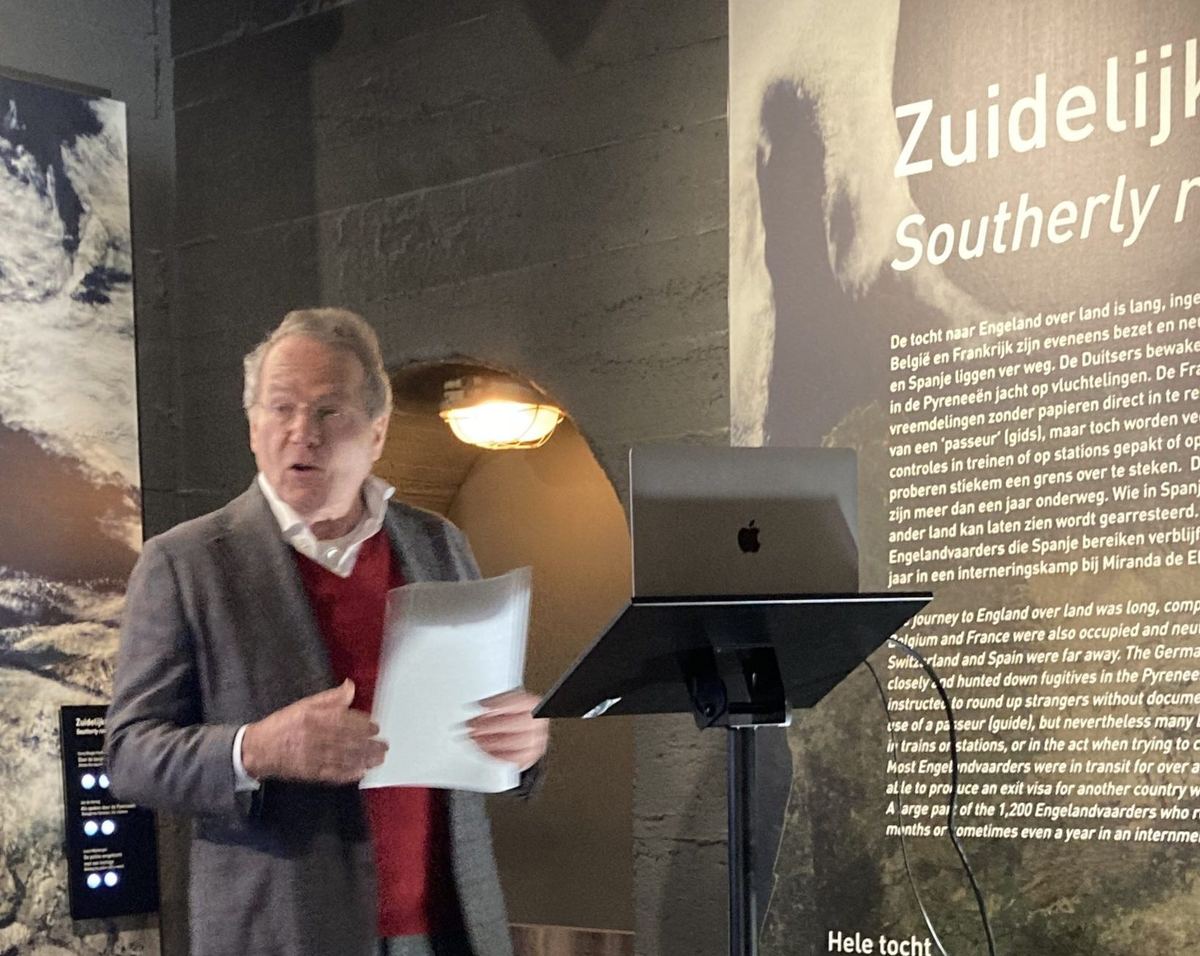
Sierk Plantinga then gave a fascinating talk about Frans Dijckmeester: student in the resistance, “Engelandvaarder” and secret agent. After the capitulation in May 1940, Dijckmeester was demobilised as a cavalry lieutenant and resumed his studies in Utrecht. In 1941 he became involved in the resistance organisation the Ordedienst (OD). When, in June 1943, he had to report as a reserve officer to be taken prisoner of war, he went into hiding. A few months later he left the Netherlands with a few friends to escape to England. Travelling along the southern route, he arrived in England in March 1944. There he was trained as a secret agent and sent to occupied territory while still in the middle of his training. On his drop, the power pack of his radio set was damaged, but that probably saved his life: when a replacement was built, it turned out his transmitter could be traced by direction-finding. This made Dijckmeester more cautious, and time and again he narrowly escaped arrest. The fact that he had survived the war led Donker, chairman of the Parliamentary Inquiry Committee on the Second World War, to conclude: “Then you didn’t do at all badly.”
Sierk’s full story will appear in the museum’s next newsletter.
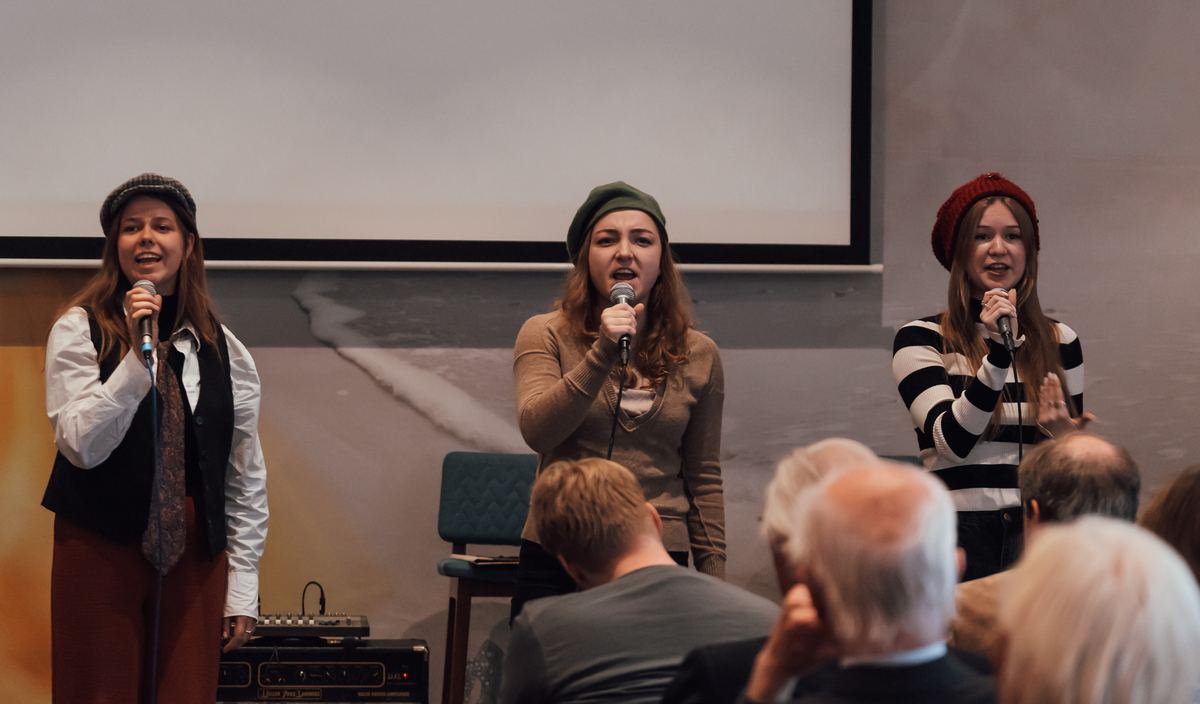
After this talk it was the turn of the young. First, a film by theatre-maker Martine Zeeman was shown, in which children described, after a visit to the museum, the impression the stories of the “Engelandvaarders” had made on them. Then Rositha Rikkers, Liza Kalinina and Dana Zeeman performed spoken word and song about the war. It was a moving performance, in which Liza, who comes from Ukraine, made the audience fall even more silent with: “Peace is a smile on the faces of my family.”
The last to speak before the break were board members Maarten Timmers Verhoeven and Philip Winckel, who reflected on the museum’s plans for the future.
Maarten said that visitor numbers are growing, not only at the museum but also on Facebook, Instagram and TikTok. He also unveiled the museum’s new mission: “To create awareness of the value of freedom and of everyone’s responsibility to protect it. The stories of the “Engelandvaarders”, who fled the occupied Netherlands during the Second World War, are a source of inspiration for this.” With this mission in mind, the museum will soon be more than a physical place: it will also be a knowledge institute for research and other activities using our content and objects as a source, interactive with a digital database accessible online, and with even more focus on education.
Philip then showed the design for the museum’s extension and brought the guests up to date on the process we have already been through. On seeing the design, someone in the audience called out: “Wow!” But Philip also made it clear that some sizeable challenges remain before the extension can actually happen.
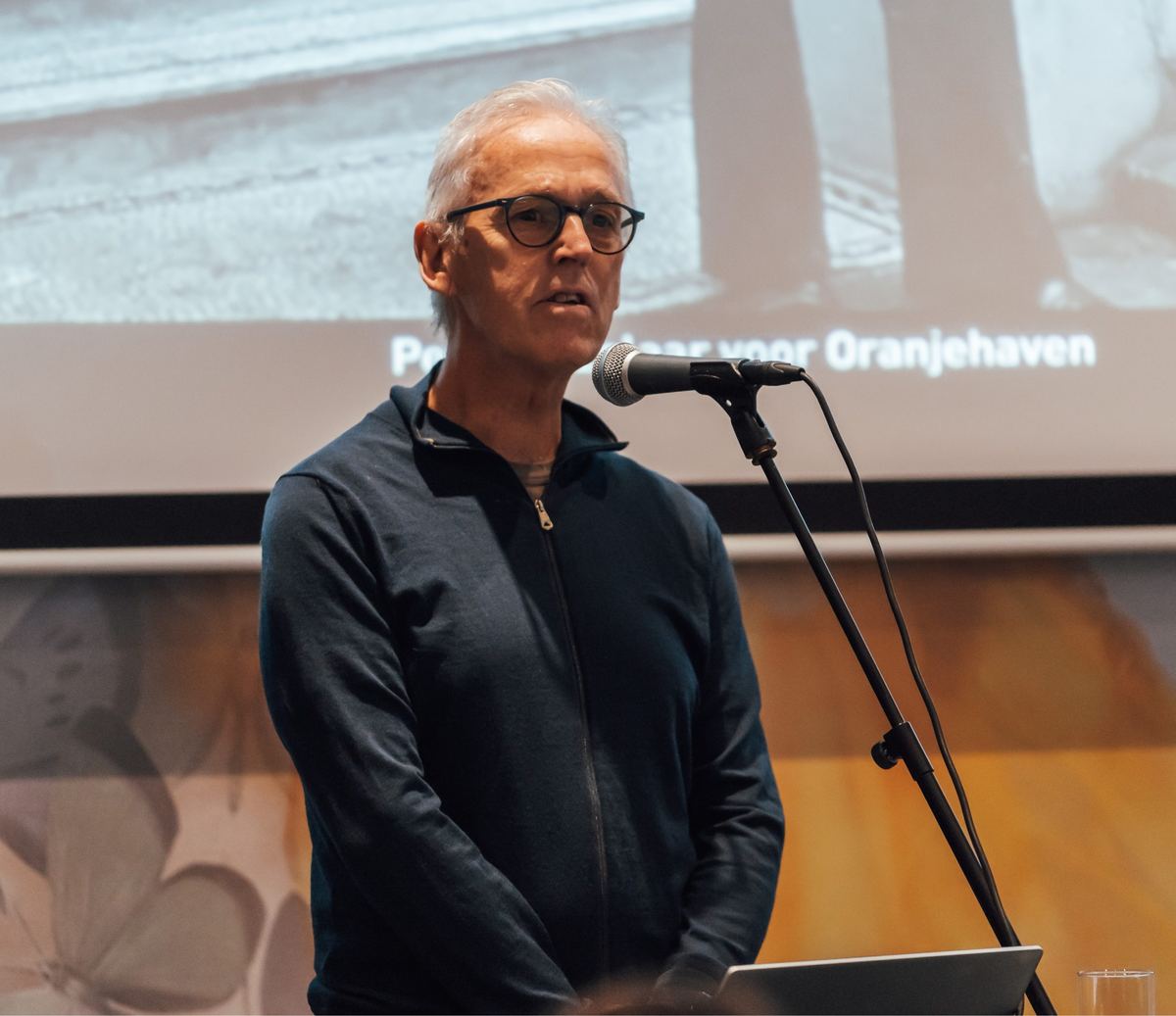
After the break, the microphone goes to Derk Sauer, founder of the Moscow Times and columnist for Het Parool. He speaks on ‘Courage then and now’ and considers how the deeds of resistance fighters in the Second World War compare with resistance today against dictators such as Putin. In a gripping talk he tells of his great-uncle, the “Engelandvaarder” Peter Tazelaar, and how he sees Peter as a role model: someone who loathed war, yet was in a sense also addicted to it. Peter, who objected to the word ‘hero’ to describe what he had done in the war. “You simply did what you had to do.”
In Russia, Sauer has seen for himself what war can bring about: a little more repression every day. In the end the Moscow Times moved to Amsterdam. People thought: “We’ll be home again by Christmas.” Two and a half years later they are still there.
At the end of his talk, Derk calls courage a relative concept. “Is the journalist who decided – perhaps on impulse – to flee to the West brave? Are all those people who stayed in Russia and adapted not brave? And what about the West? A great deal of support has been pledged, but only a fraction of it has actually arrived. Are we really so much better?”
A fuller account of Derk Sauer’s talk can be found elsewhere on this website.
After closing words from Paul Bartelings, it was time for drinks followed by a buffet. During the drinks, the museum received a truly remarkable donation from relatives of the “Engelandvaarder” George van Dam Merrett: two glass contact lenses with a diameter of no less than two centimetres. After George had failed the Royal Air Force medical because of his poor eyesight, he was helped by an eye specialist who had developed contact lenses on an experimental basis. With these lenses George did pass the test, although he went on to fly not as a pilot but as an air gunner. Whether he also wore them on his flights, the story sadly does not say.
The story does, though, illustrate the courage and perseverance of the “Engelandvaarders” – as other stories told on this first Day of the “Engelandvaarder” did so strikingly too. It is a day that will certainly be held again.