On Saturday 19 April 2025 the Dag van de Noordwijkse Geschiedenis (Noordwijk History Day) took place for the fourth time. Museum Engelandvaarders took part once again, drawing a hundred enthusiastic visitors.
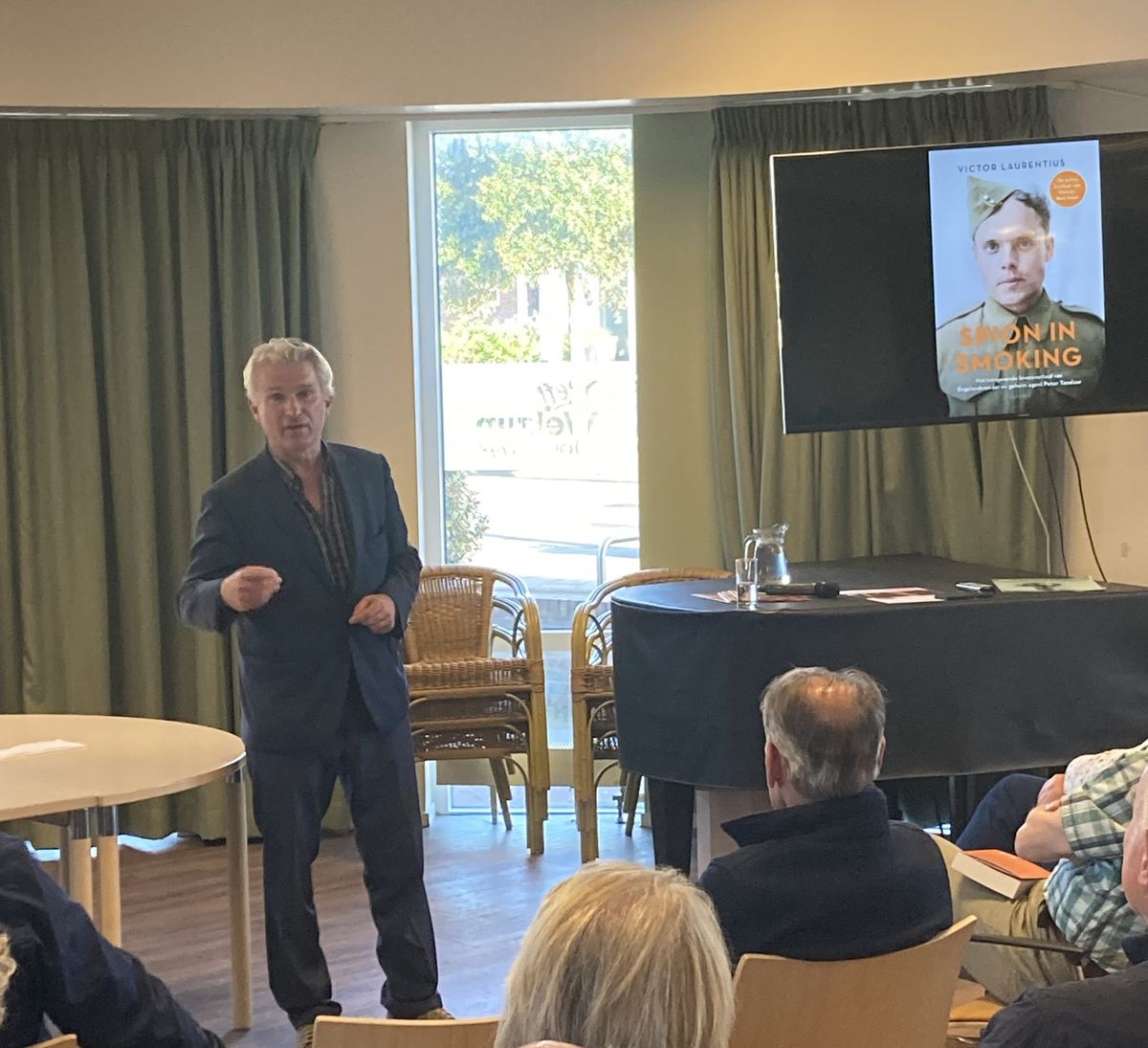
Especially for the day, Just Stam and Maurits Huijbrechtse gave a presentation on the “Engelandvaarders”. Just reflected on the success of the musical Soldaat van Oranje (Soldier of Orange), the film of the same name, and K. Norel’s book “Engelandvaarders”.
According to Just, this says something about the power of the “Engelandvaarders’” stories. Using photographs and film clips, he went on to explain who the “Engelandvaarders” were, what drove them, which routes they took and what they went on to do in England. But not every “Engelandvaarder” made it to England. Resistance fighter George Maduro, for one, was betrayed by his Belgian guide, arrested by the Germans and died in Dachau concentration camp.
His name lives on in Madurodam, the miniature park named after him.
Maurits told the story of Kees van Eendenburg and Freddy Vas Nunes, who as early as July 1940 crossed from the Noordwijk coast to England in their little boat, the “Bebèk”. They fooled German soldiers on the beach into believing they were taking the boat to Scheveningen. By the time the Germans, watching from the terrace of Huis ter Duin, realised the boat was heading for England rather than Scheveningen, it was out of range of their rifles.
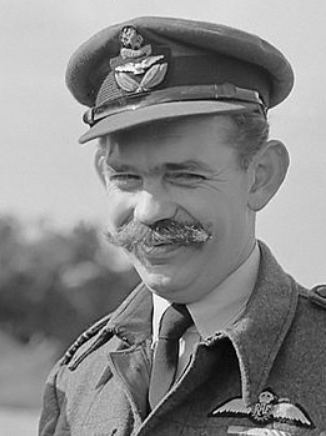
Maurits then told the story of two cousins from Noordwijk, Leendert den Hollander and Leendert Hellenberg, who crossed to England in a small open boat in June 1943.
Den Hollander did not survive the war: his aircraft was shot down over Normandy on 20 June 1944. Hellenberg lost his life two years later while serving with the KNIL (Royal Netherlands East Indies Army) in Indonesia.
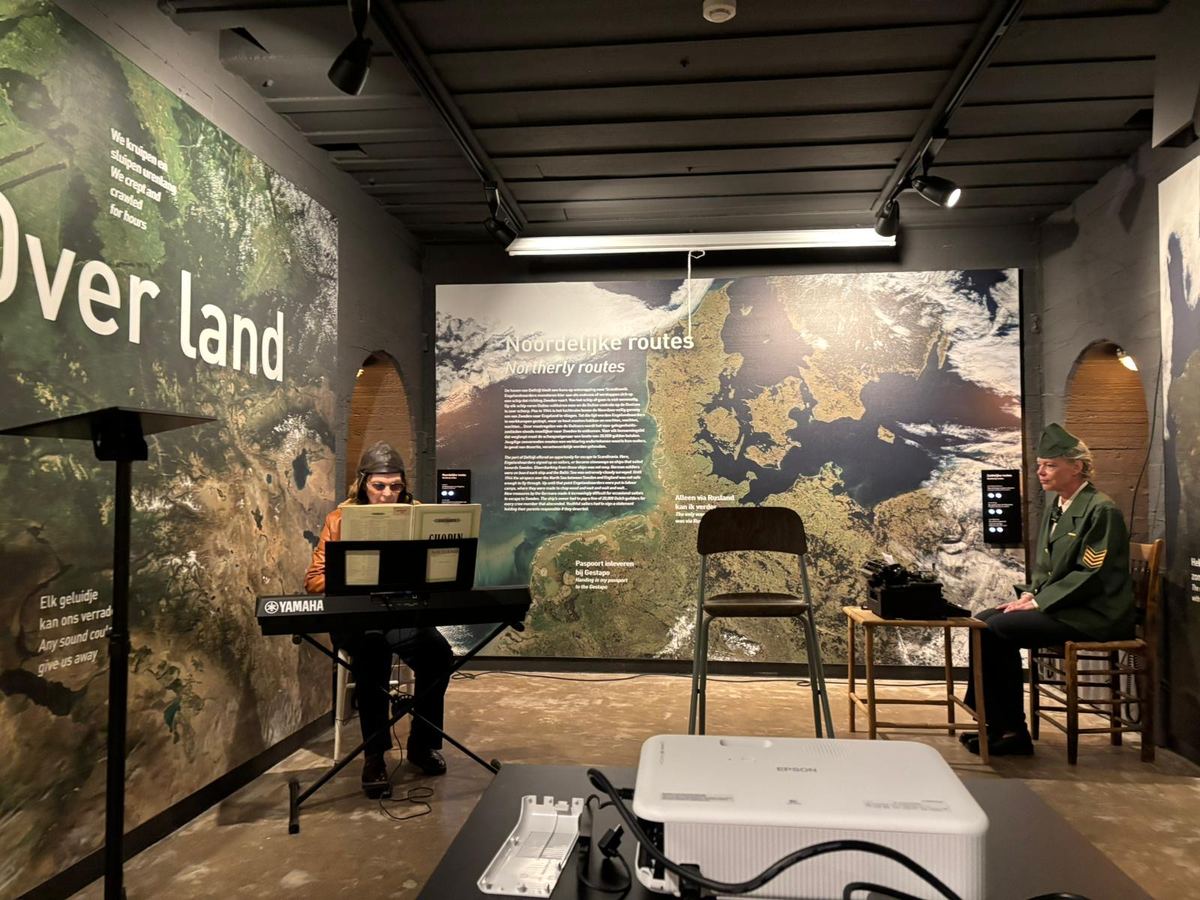
Before the talks, actress Heleen Planje of TheaterHuis performed a scene from the life of the pilot and “Engelandvaarder” Ida Veldhuyzen van Zanten, as a teaser for the theatre walk “Zonder strijd geen vrijheid” (No freedom without a fight) through Noordwijk on 4 and 5 May.
Heleen gave a powerful portrayal of the obstacles Ida faced as a woman pilot, and of how she nevertheless logged more than 500 flying hours. As the only woman among 731 male pilots, she was awarded the Vliegerkruis (Airman’s Cross), a prestigious decoration for bravery. Her work – ferrying military aircraft from one British airfield to another – was not without risk: 2,000 aircraft were lost in the process and 173 pilots killed, 16 of them women.
Afterwards a boy said he was impressed by all the stories. “But I didn’t know so many people died trying to get to England.” Sad, but true.