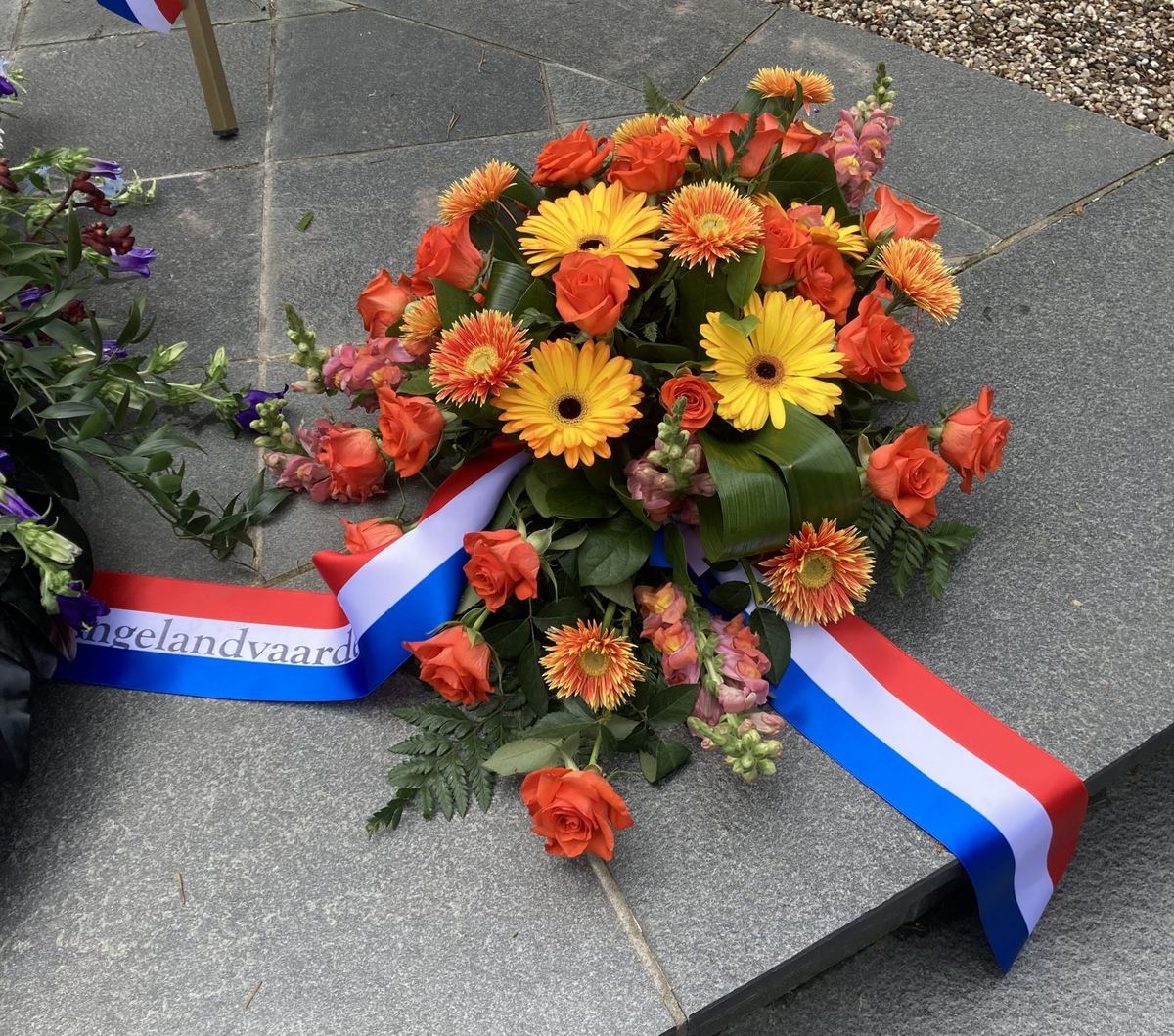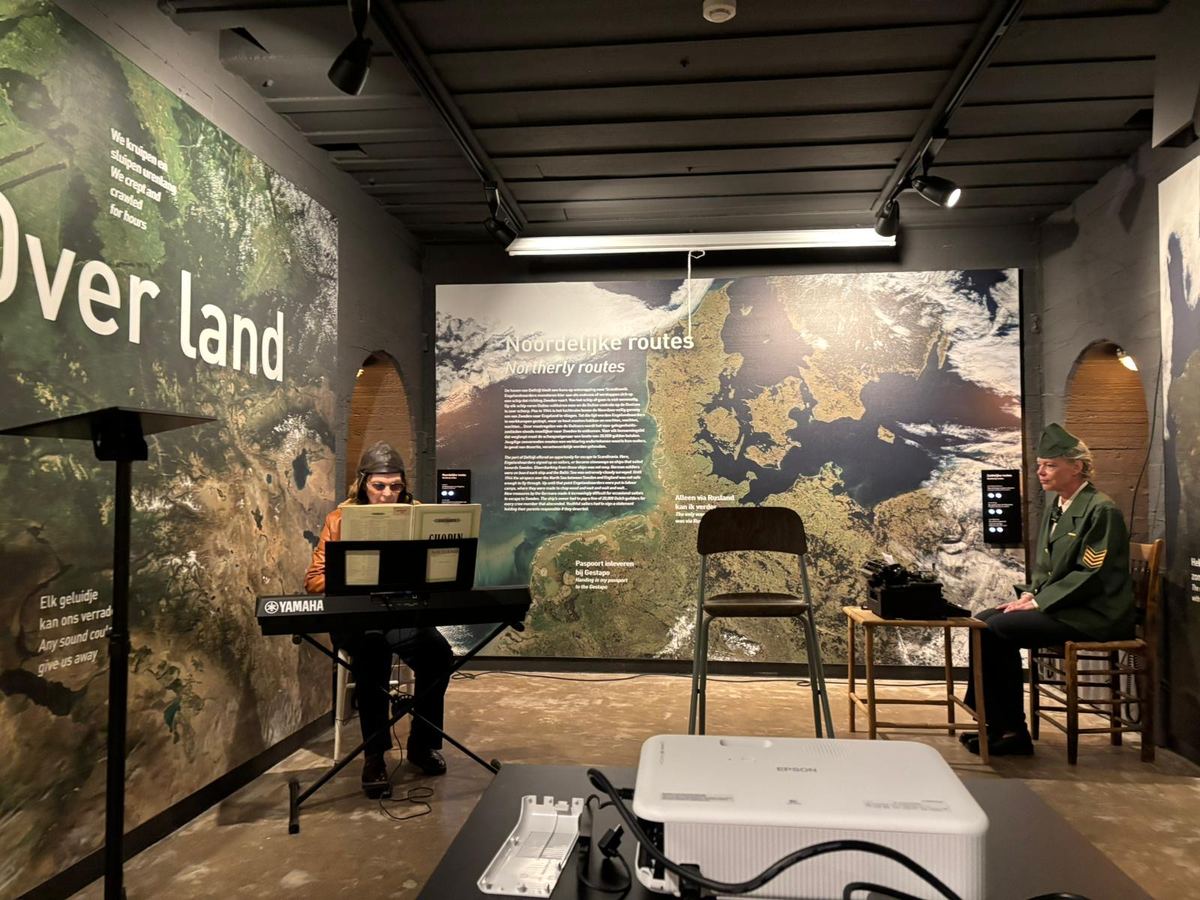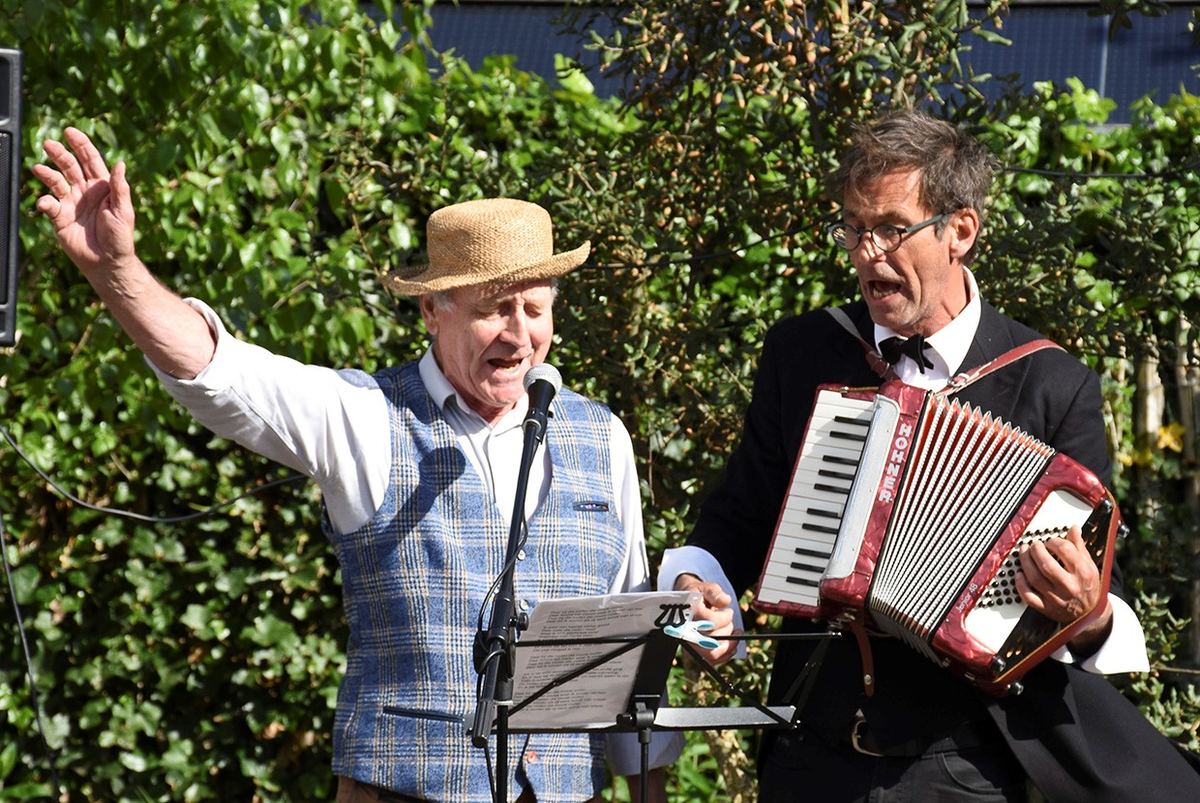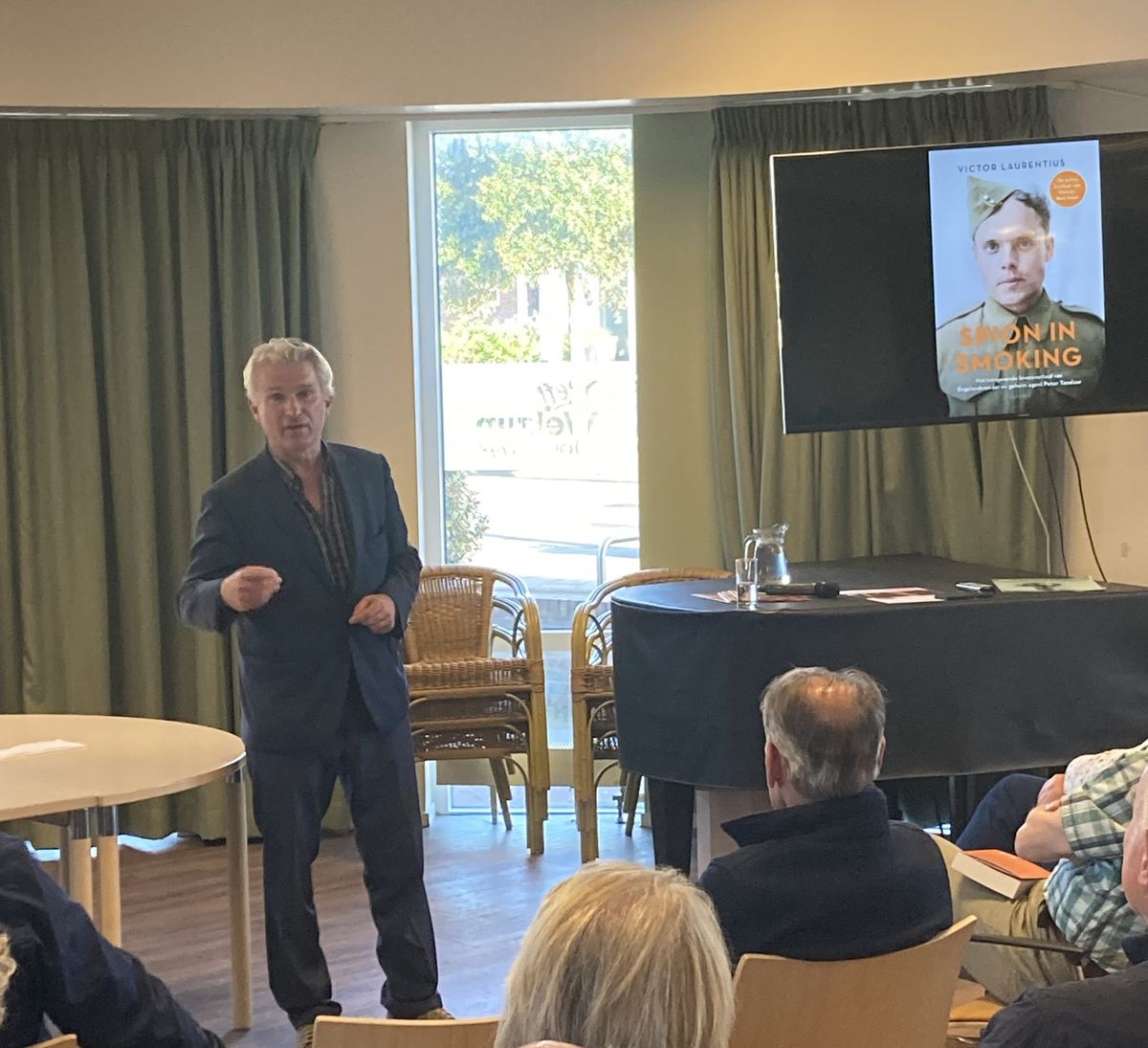
On Wednesday 30 April, Victor Laurentius gave a fascinating talk in Noordwijk aan Zee about his recently published book “Spion in smoking” (Spy in a Dinner Jacket), the intriguing life story of “Engelandvaarder” and secret agent Peter Tazelaar. It was the first in a series of talks Museum Engelandvaarders is organising this year.
Victor began by explaining that, as a 15-year-old on holiday, he read “Soldaat van Oranje” (Soldier of Orange) by Erik Hazelhoff Roelfzema. He was immediately intrigued by the figure of Peter Tazelaar, who keeps turning up at key moments in Hazelhoff Roelfzema’s life, starting with their joint escape to England aboard the Swiss freighter Saint Cergue.
Tazelaar ended his life an alcoholic, traumatised by his experiences in the war and the years that followed, and never helped by the bodies that could have supported him. How different from Hazelhoff Roelfzema. While Hazelhoff Roelfzema was celebrated as the Soldier of Orange, Tazelaar sank into obscurity – wrongly so, in the view of his great-nephew Derk Sauer, who sees Uncle Piet, as he called Tazelaar, as the real Soldier of Orange.
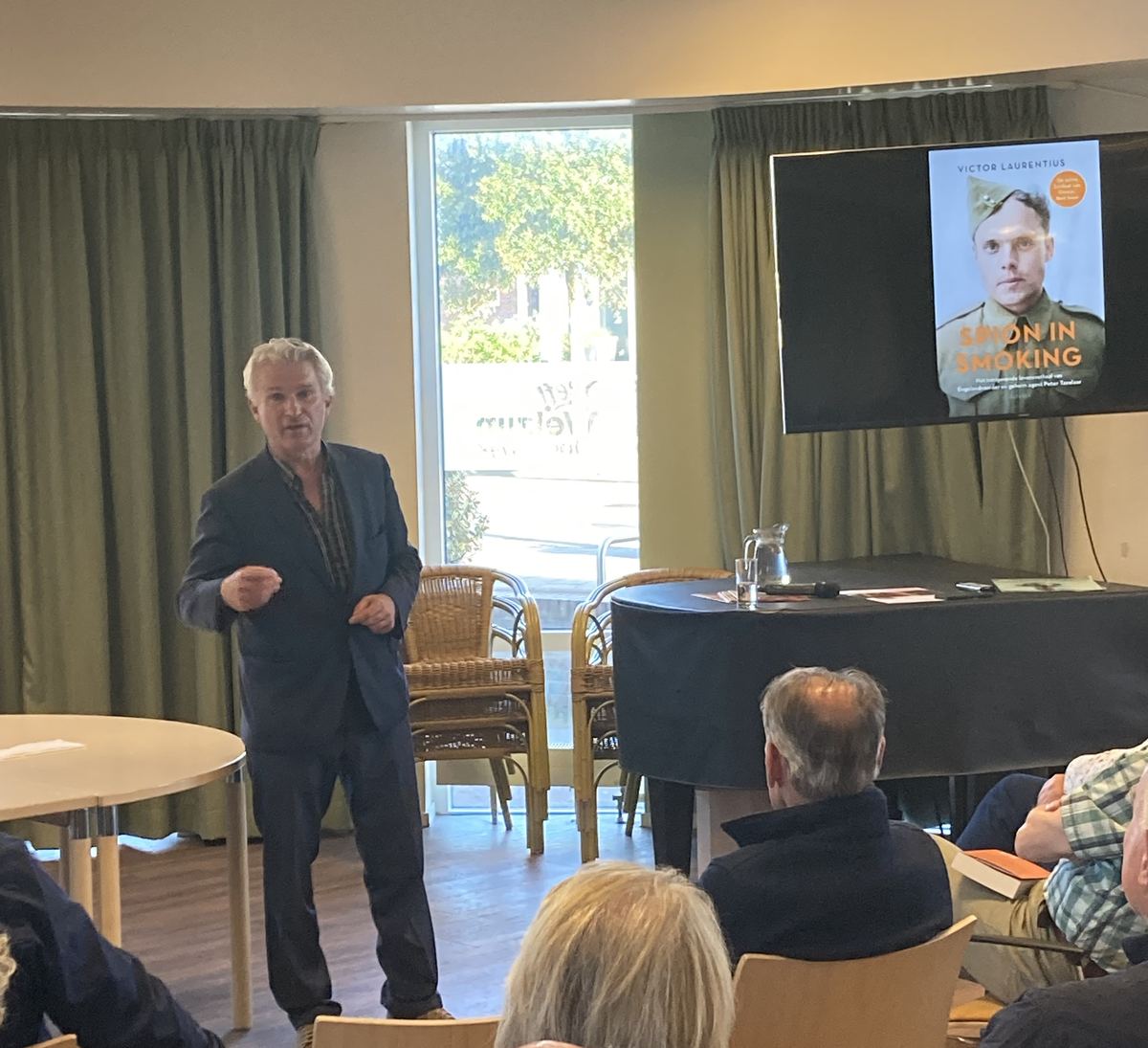
In 1976, Victor told the audience, Tazelaar was dragged back into the war against his will by the premiere of the film “Soldaat van Oranje”. It provoked a storm of indignation among his fellow cadets from his naval academy year, who felt the film distorted Tazelaar’s courageous wartime role and gave it far too little attention.
That role reached its peak in 1941 with Operation Contact Holland, the plan to land Tazelaar as a secret agent on the beach at Scheveningen. Once ashore, he was to track down two people whom Queen Wilhelmina wanted at her side in London and bring them back. It was this landing that made Tazelaar the spy in a dinner jacket: under his diving suit he wore a dinner jacket sprinkled with alcohol, so that if the Germans stopped him he could pass himself off as a reveller who had lost his way on the beach. In the film this operation gets an orange gloss, as Victor put it, when in fact it was a British operation.
Both Hazelhoff Roelfzema and Tazelaar grew deeply frustrated by the vast bureaucracy in London. But whereas Hazelhoff Roelfzema knew how to handle it deftly, Tazelaar proved less adept socially. On his return to England he made the big mistake of letting the British debrief him first. The Dutch government then ignored all his advice on improving Operation Contact Holland for later attempts. The frustration ran so deep that in 1942 Hazelhoff Roelfzema and Tazelaar drew up a plan for a coup, which was never carried out.
At the end of the talk, Victor described an incident he sees as typical of Tazelaar. At the end of 1941, while still in the Netherlands after his landing, Tazelaar saw a group of Hague locals attacking several wounded Dutch SS men returning from the Eastern Front at Station Staatsspoor in The Hague. Angered by the cowardice of the attackers, Tazelaar stood up for the wounded SS men. There is so much more to tell about Tazelaar, Victor concluded, but for that he refers listeners to his book.
Some eighty people listened to him with rapt attention, among them members of Peter Tazelaar’s family: his daughter Eva Taylor-Tazelaar, his son Peter Tazelaar Jr and his grandson Tjarda Tazelaar. Afterwards Victor signed nearly fifty books. The book is now also on sale in the museum shop.