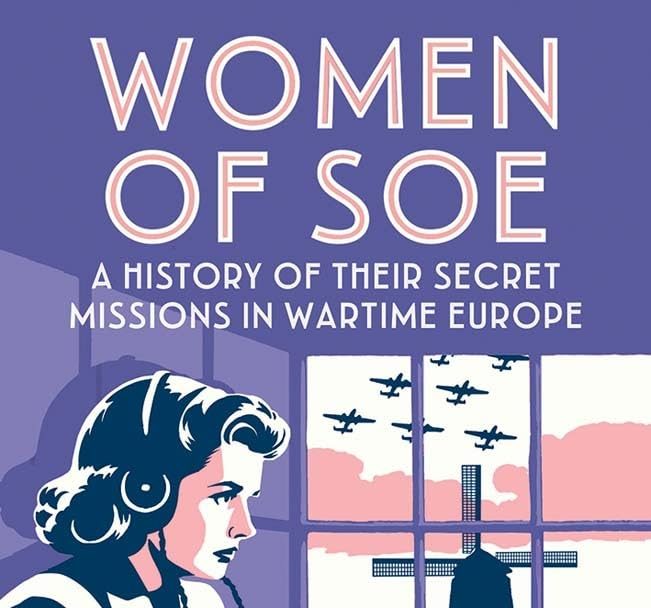
Op 12 mei heeft Paul Bartelings, voorzitter van de Stichting Museum Engelandvaarders, een interview gehouden met de gerenommeerde Britse historica Kate Vigurs. Zij schreef onder meer twee boeken over de Special Operations Executive (SOE): Mission France en Mission Europe. De SOE was tijdens de Tweede Wereldoorlog een geheime Britse inlichtingen- en sabotageorganisatie die missies uitvoerde op het Europese vasteland. Voor de SOE werkten ook Engelandvaarders, onder wie een aantal vrouwen. Hier volgt een impressie van dit interview.
From museum curiosity to years of groundbreaking research, Kate Vigurs has devoted her work to bringing the women of the SOE back into view, revealing stories of resistance, resilience, and remarkable moral courage that still resonate today.
How the women of the SOE are finally being brought out of the shadows
Kate Vigurs: “I want the younger generation to have role models who have done something remarkable.” Sometimes a single question is enough to change the course of a life. For Kate, an initial curiosity about the SOE opened the door to a hidden world of bravery, secrecy, and women whose stories have too often been left untold.
“The expression in English is I fell down a rabbit hole. So I just fell into a pit of research.” That journey started in a museum, where history suddenly felt immediate and alive. One question about the French Resistance led to another, and before long it had grown into years of research, a master’s degree, a doctorate, and several books.
At the centre of that work is a simple but important mission: to make sure these women are remembered not just as a few famous names, but as a much wider group whose courage and contribution deserve to be seen. “There were 39 women in F section [the French section of SOE] … I wrote Mission France with the aim of bringing the other 36 women kind of up to the same level.”
Following the story across Europe
Researching Mission Europe meant going far beyond British archives. With support from the Gerry Holdsworth Special Forces Charity, the search stretched across Hungary, Poland, Denmark, and the Netherlands, uncovering new stories and fresh perspectives along the way. Every country revealed something different. In Hungary, for instance, the story of Hannah Szenes highlighted the striking gap that can exist between national memory and individual courage. “Despite the fact she was Hungarian, the Hungarians don’t particularly remember her… but to me, she trained, she went, she tried be enough.”
In Denmark, post-war audio recordings offered something rare: the chance to hear women speak in their own voices. In the Netherlands, that kind of closeness was often much harder to find. And the research was not only shaped by documents and archives. It was also made possible by the generosity of people across Europe who helped open doors, point the way, and share the sources that brought these histories into focus. “I’ve been so, so lucky… the generosity of people helping me get to the right place and the right source material.”
A bigger story of women in resistance
One of the most striking things this research reveals is how incomplete the familiar picture can be. Women in the Second World War were not only couriers or wireless operators; their roles were broader, more varied, and often far more central than many people realise. In the Netherlands, for instance, resistance work frequently centred on underground newspapers, clandestine printing presses, and escape lines. “I believe there were 24 newspapers in the Netherlands at the height of the war. Huge, huge distribution networks.”
What stands out, again and again, is not just the scale of that work, but the determination behind it.
“I noticed the real perseverance and the determination… ‘So what, we’re going to keep going.’”
That resilience endured despite the very real dangers these women faced, particularly in the shadow of the Englandspiel betrayal. “They rebuild. And there’s this inherent bravery.”
The woman who stayed with Kate
Of all the women she has studied, one has stayed with her more than any other: Trix Terwindt. Trix’s story holds both glamour and hardship, courage and cost. Before the war, she was a pioneering KLM stewardess. Then conflict changed everything. After witnessing devastation up close, she briefly stepped back, only to return when resistance called. “Even knowing that she needed a break… when she’s approached by the resistance, she says, ‘yep, here I am, I’m ready.’”
Her personal philosophy remains strikingly resonant: “If you want to change the world, you have to start with yourself.” From her work on escape lines to her imprisonment, and from her courage under interrogation to the difficulties she faced after the war, her story reveals a life marked by complexity as much as bravery. “Through all there’s just this charisma and bravery.”
Trix Terwindt
Fear, duty, and trust
How do ordinary people find the courage to face extraordinary danger? Again and again, the answer seems to lie somewhere between fear, duty, and trust. “At some point you’ve got to trust somebody.” Even the bravest among them acknowledged fear. Trix herself questioned whether she should go ahead with her mission: “They know too much. I shouldn’t be going. But… they were confident, so I went.”
Others, such as Jos Gemmeke, lived and worked under constant threat, moving through bombed landscapes and shifting front lines. “At some point… you just do it. And if that’s how you die, that’s how you die. But you die trying.”
The Dutch who refused to stop fighting
The Dutch Engelandvaarders, those who escaped the occupied Netherlands to reach England, form an important part of the wider SOE story. “I didn’t even know what the word meant when I started this.” What set them apart was experience. Unlike some recruits, they had already lived through occupation, hunger, and danger before they ever reached England. “They’ve been there, they’ve done it… they know what they’re fighting against.” Most striking of all, many chose to return.
“They’re not happy just to sit and drink tea… they want to continue the fight.”
Jos Gemmeke
The stories history almost missed
For a long time, many of these stories remained on the margins, especially beside the better-known narratives centred on France. “Everything is overshadowed by France.”
That is starting to change. As archives open up and interest grows, there is new space to tell these stories in richer, more personal ways. “Maybe moving forward… we can look beyond the major battles… and start to turn to the personal experiences.”
Why these stories still matter now
At its heart, this is about inspiration, and about the kinds of people we choose to remember. “I want them to be inspired… I want them to have role models who have done something remarkable.” The point is not to romanticise war, but to recognise the courage it took to choose resistance. “That remarkable thing could just be the decision to do resistance.”
In an age of influencers and constant visibility, these women offer a different kind of example, one rooted in action, conviction, and courage. “You need real models… people to look up to and think, weren’t they inspirational?”
Perhaps the most enduring lesson is this: “You can make the difference you are relevant.”
More than heroes
In the end, what makes these women so compelling is not that they were superhuman. It is that they were not. “They were just like you and me… they weren’t born with this extra special gene.”
Their stories contain bravery, certainly, but also error, frustration, and vulnerability. “I try to make these people relatable and human… not just facts and figures.” That humanity is exactly what gives their stories such lasting power, and why they still speak so clearly to readers today.
Dr. Kate Vigurs FRHistS is a historian, author, and researcher specialising in women in the Second World War and the Special Operations Executive (SOE). She completed her PhD in History at the University of Leeds and is a Fellow of the Royal Historical Society as well as a visiting researcher in Political & International Studies at the University of Warwick.
Her first book, Mission France, The True Story of the Women of SOE (2021), received excellent reviews and was nominated for both the Polly Corrigan Book Prize and the Society for Army Historical Research’s Best First Book Award.
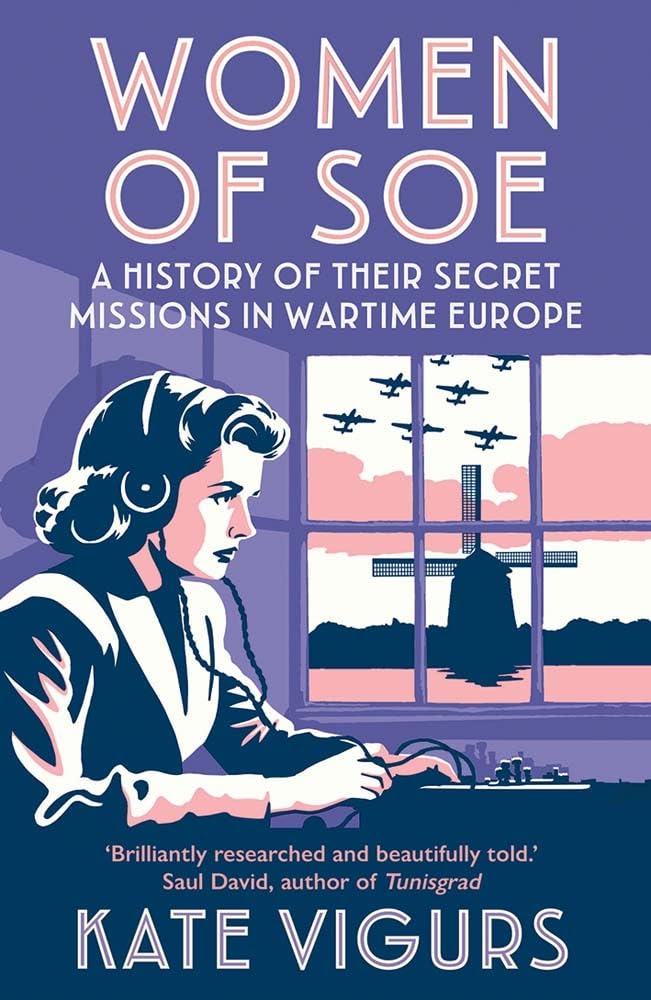
Her second book, Mission Europe, focuses on female secret agents who operated across Europe.
In addition to her research and publications, Kate is a highly regarded speaker. She regularly appears in podcasts and on television, including A House Through Time, D-Day: The Unheard Tapes, Lost Female Spies, and WWII in Colour: The Road to Victory on Netflix.
She also leads historical tours and visits to important Second World War sites. Through her research and storytelling, she brings the often overlooked role of women in the war vividly to life.