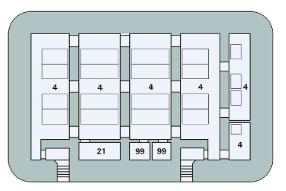
Museum Engelandvaarders is housed in an ammunition bunker. The FL246 is a widely used type found all over Europe: a large ammunition bunker, originally built for the air force (Luftwaffe), which was responsible for anti-aircraft defence on the ground. Later it was also used by the navy, which was responsible for coastal defence. The four large compartments are where the ammunition was stored. The rectangles are the ammunition racks; the small squares are the posts that anchored them to the ceiling and floor.
Three passageways led past all the compartments and ammunition racks. The lower rooms were used to store fuses. There was also a stove room and a room for gas filters.
The entrance was designed so that a direct hit from the side could never reach the ammunition (a Z-shaped entrance). Finally, all the walls and the ceiling are made of concrete at least 2.5 metres thick.
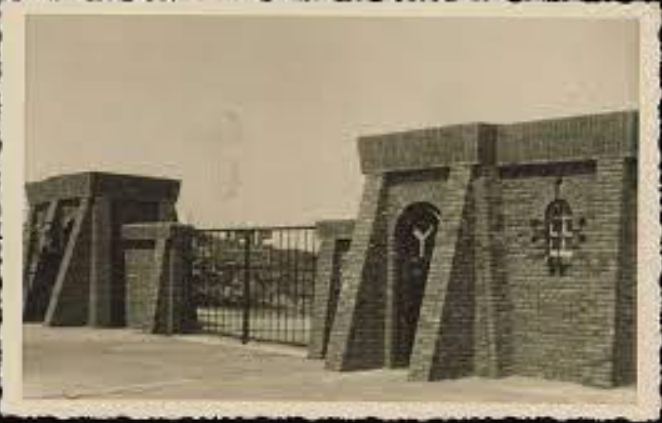
During the Second World War the entire coastal strip and the dunes north of the lighthouse were sealed off. In effect it was one big military barracks, closed to the public: a “Sperrgebiet” (restricted zone).
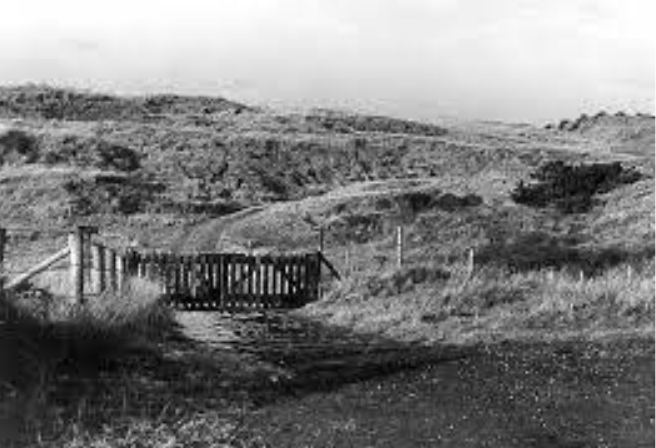
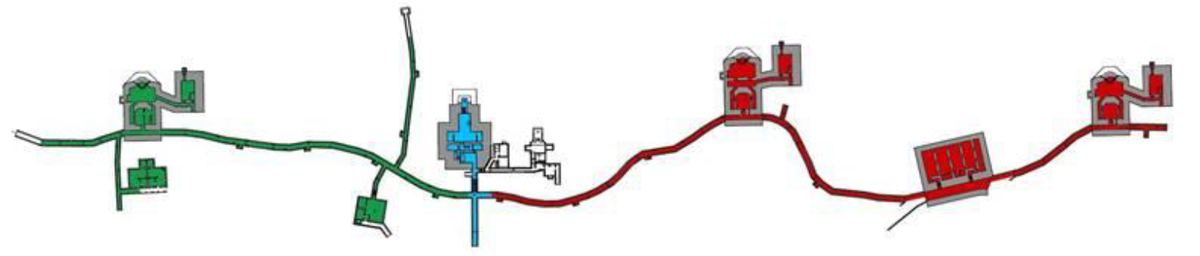
Noordwijk coastal battery & the Atlantic Wall
Work on coastal batteries began shortly after the German occupation of the Netherlands in 1940. While fighting continued in Belgium and France, the Kriegsmarine (German navy) placed a number of gun batteries along the coast to keep Allied ships away from the English Channel during Operation Sea Lion (the planned German invasion of Britain). When the tide of war turned in the Allies’ favour, the battery’s role became more defensive and it was eventually incorporated into the Atlantic Wall.
To build 14,000 concrete colossi in roughly 1.5 to 2 years, the bunkers had to be standardised. A number of standard designs were drawn up for each kind.
Construction was contracted out to local firms, which were ordered to build. They received a set of drawings with a list of the materials and labour hours needed, and could get to work. Contractors were forced to take on many hundreds of people to get the job done. Most were unemployed locals, who in this way kept an income and so secured a home in Noordwijk for themselves and their families. After all, the alternative was work in a dark German factory, often until death followed.
After the liberation the guns were dismantled and all the bunkers were covered with sand. The FL246 ammunition bunker, which now houses Museum Engelandvaarders, was kept during the Cold War as a secure store for art treasures.
Sources: Wikipedia, Battlefields WW2, Museum Engelandvaarders archive
Events calendar, news and stories by or about the “Engelandvaarders”. Stay up to date! Sign up for the newsletter here.